
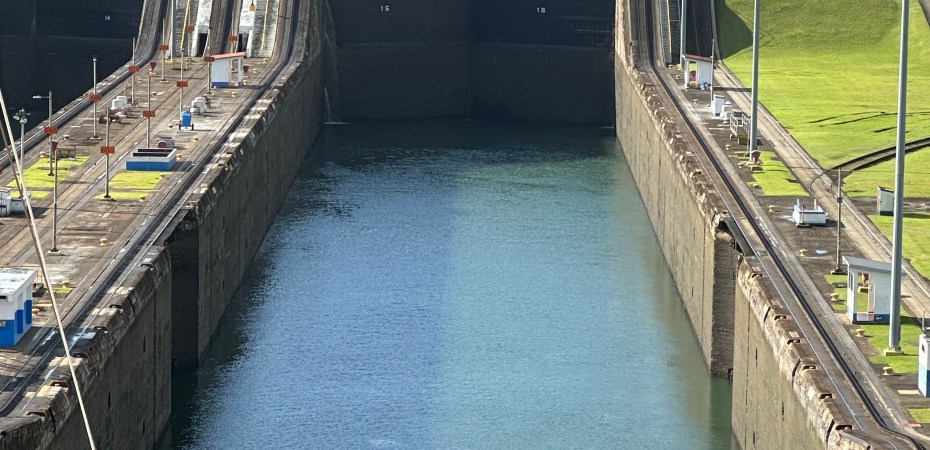
January 9, 2023 – Panama Canal
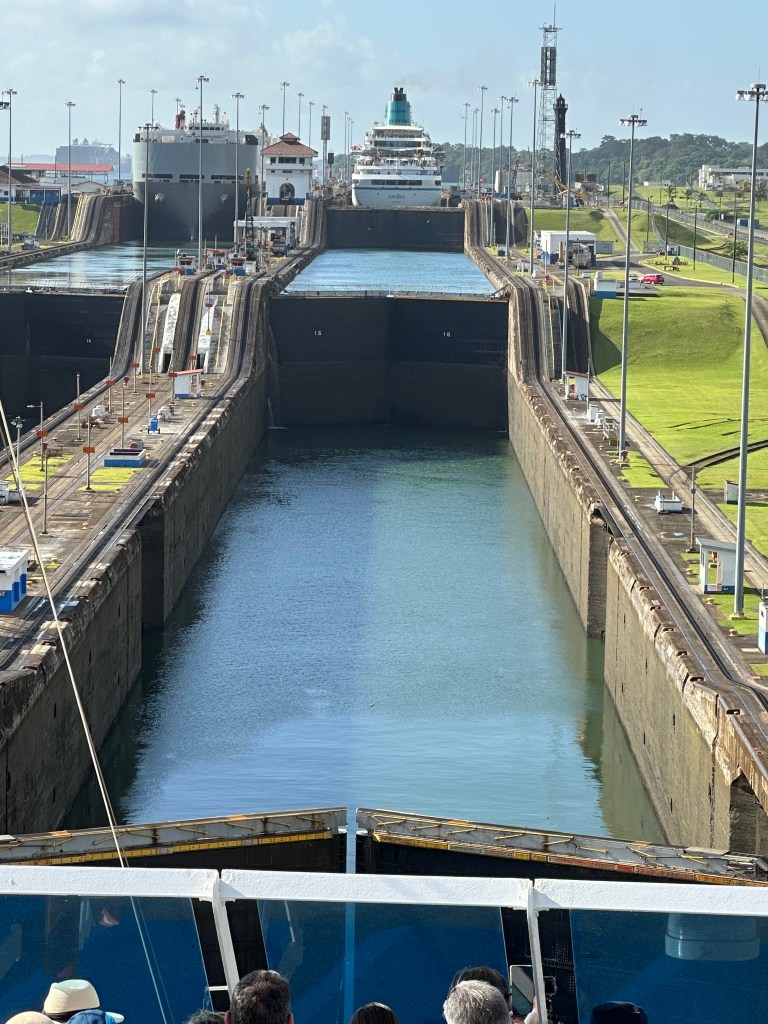
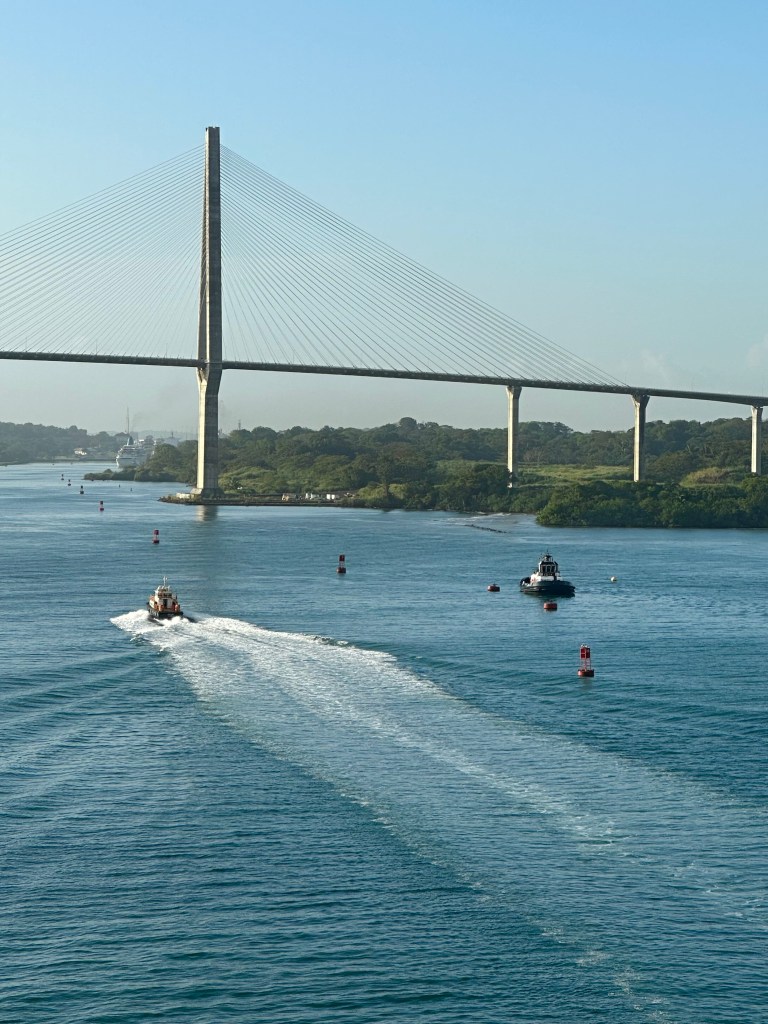
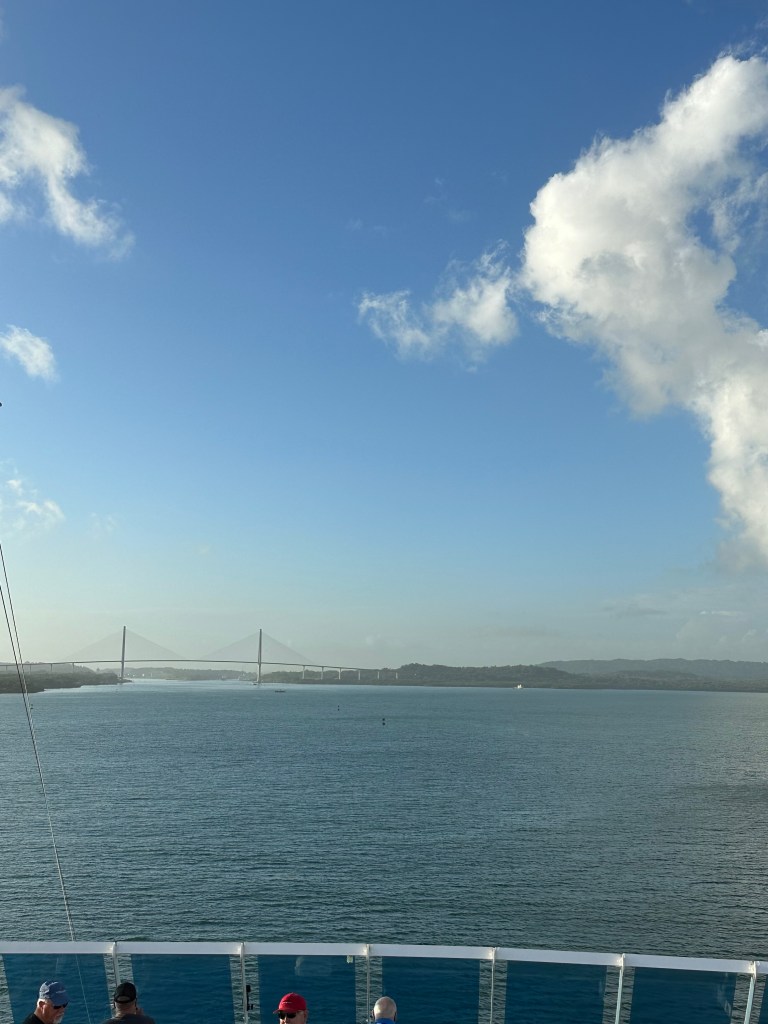
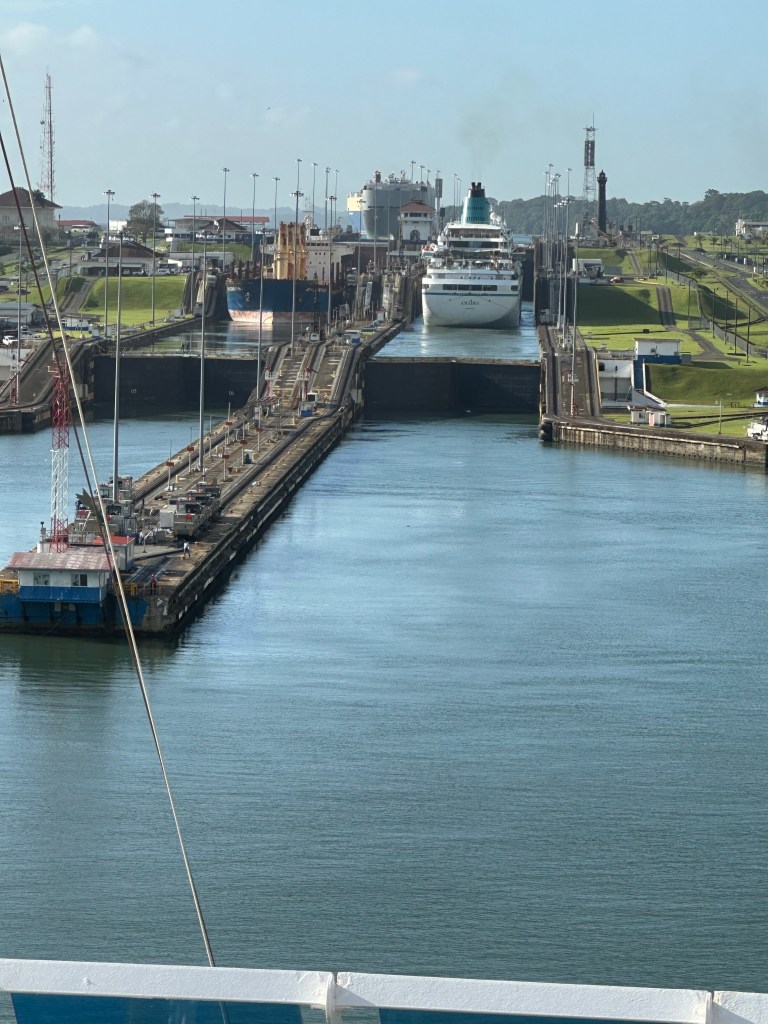
We once again look forward to the Panama Canal transit. What a fascinating process to watch. We went up to deck 15, all the way forward so we didn’t miss a thing. When we entered in the canal in 2020, it was much earlier and it was still dark. This time, it was dawn with a beautiful sunrise. We could see the Atlantic Bridge off in a distance and watched as it got closer. Ahead you could see the canal. The historic canal (original) to the right and the new canal to the left that handles the mega cargo ships. Two ‘pilots’ were onboard our ship for the transit (ship is handed over to the pilots) and the only place where pilots are legally responsible for damage to the ship. It’s absolutely fascinating to watch as the gate opens, the ship slowly moves forward into the locks by powerful diesel/electric ‘mules’ that have cables keeping the ship perfectly centered left/right and front/back. Our ship is the largest allowed into the historic canal. It’s really only an arm’s reach to the wall of the canal and a very delicate process to keep the ship from hitting it.
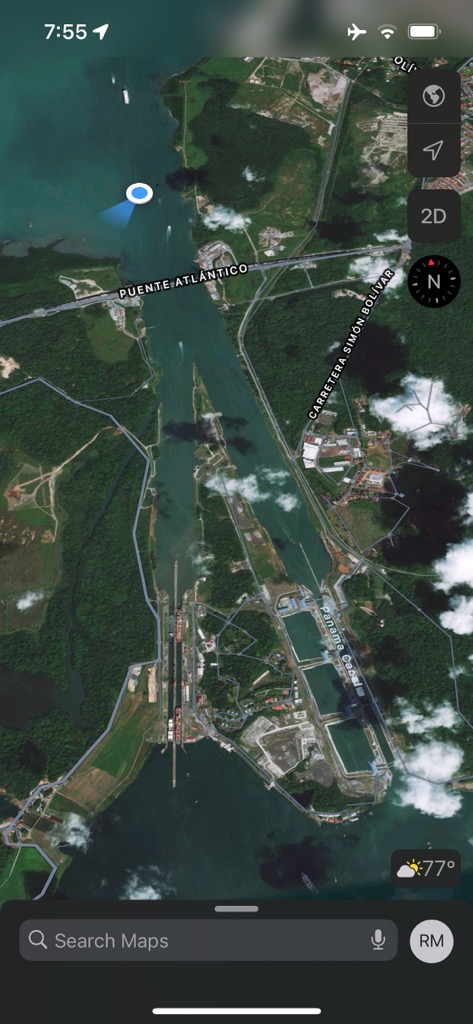
(GPS of our ship entering the canal this morning)
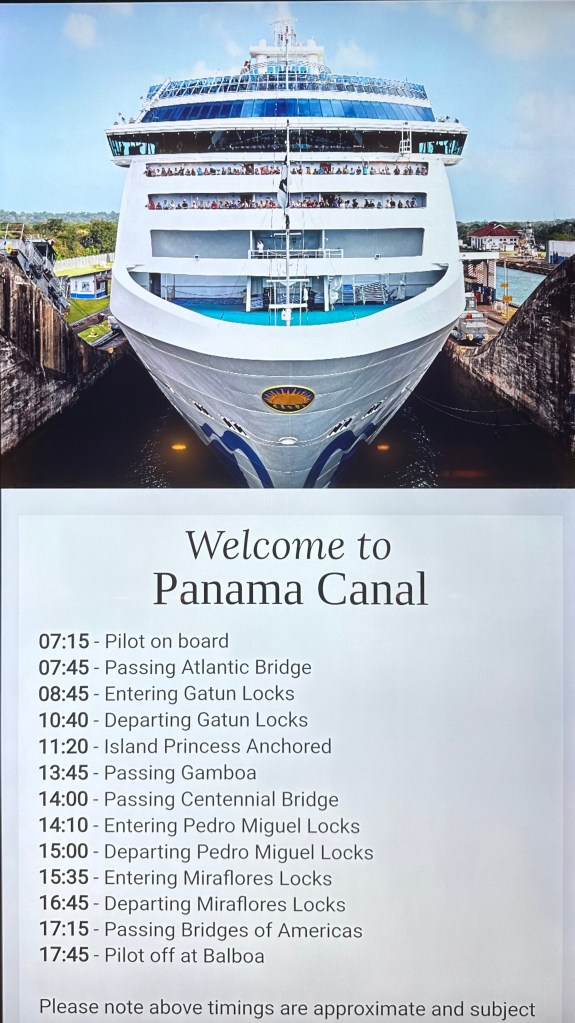
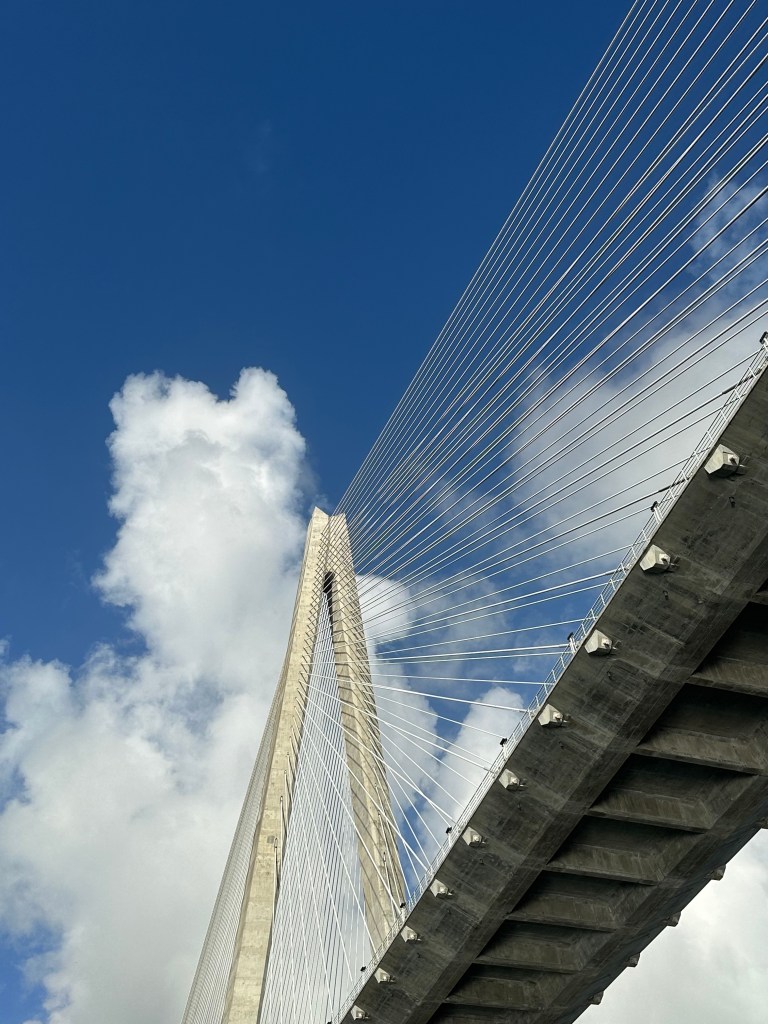
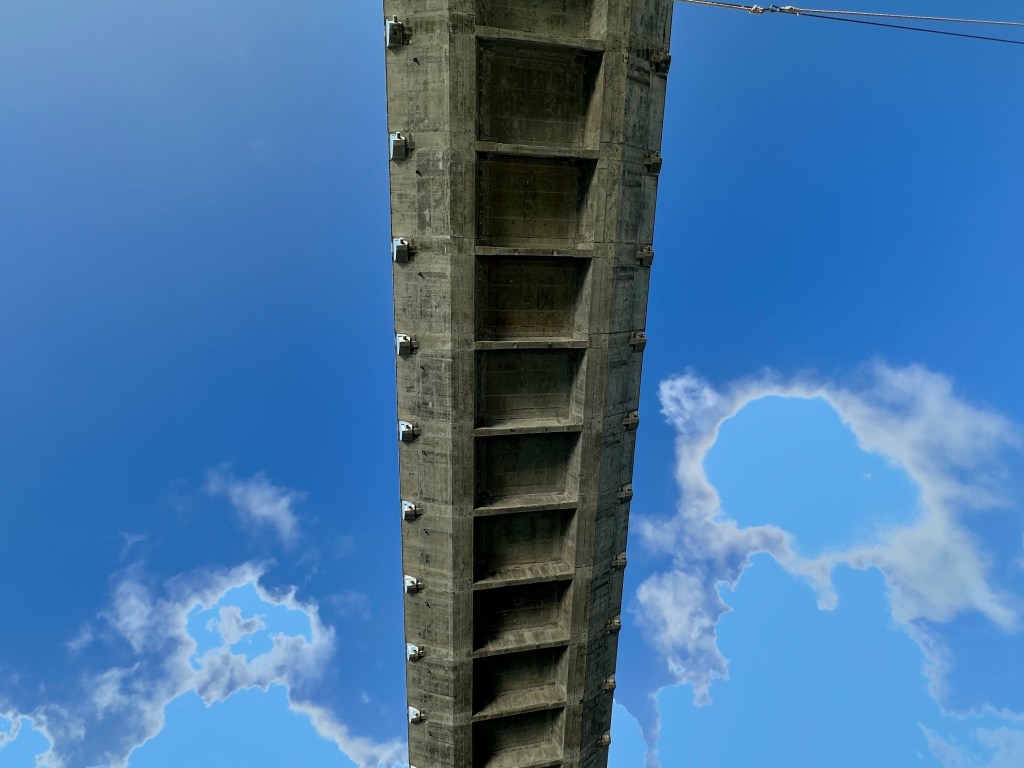
We went through the locks into Gatun Lake. Walked the deck and enjoyed the view. As we left the lake, it becomes narrow, like a river with steep, rocky areas. We went under the Centennial Bridge that crosses the culebra cut. As we approached the Pacific, the sky grew dark and stormy. We passed an observation platform with hundred of people there to view our ship as it went by. We all waved to each other as the ship went through another lock. We passed under the third bridge, ‘Bridge of Americas’ and could see many cars crossing above us. We continued and could hear thunder and saw lightning. Panama City was just barely visible. The wind picked up and as we exited the locks and our ship started drifting. No worries. The pilot requested a tug to give us a push and off we went.
It took more than 34 years to complete and cost the lives of over 27,000 who died of either tropical diseases or landslides. The canal opened in 1914, fulfilling a dream of 400 years in the making. The 51-mile route cuts through sheer granite and dense jungle, creating the link from the Atlantic to the Pacific and reducing distance between NY and San Francisco by more than 7,800 miles.
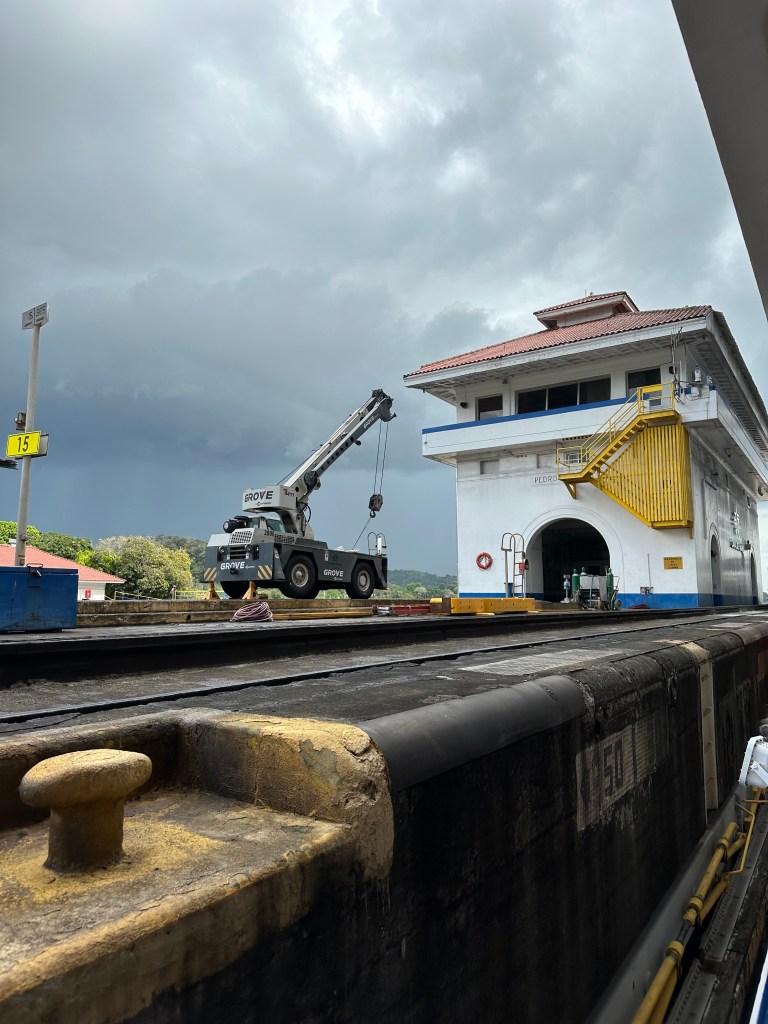
Before entering our que this morning, it’s interesting to look around at all the ships anchored, waiting their turn in line. Cannot imagine being late and missing your turn or when you might even be rescheduled. I believe the Captain said our toll was $350k for our ship to go through all the locks today. Gatun Locks are the first set of locks on the Atlantic side. The three step process lifts the ship 85 feet above sea level and into Gatun Lake. The complete transit to Pacific would include two more sets of locks. The Pedro Miguel Locks step down 31 feet and Miraflores Locks has two more steps down, lowering vessels another 58 feet. Absolutely one of the greatest engineering feats of the 20th century.


Panama is located just 7 and 9 degrees north of the equator so the temperatures vary little from month to month. The rainy season occurs April through December, so we are in the dry season. It is noticeable that the vegetation seems a dull green instead of the lush green during rainy season.



Did you know?
1) The currency is the US dollar.
2) Panama City is a big, modern looking city from a distance. Funny fact – most residential streets either have no name or three different ones! Some say that’s the reason that Panama City never developed a postal delivery system. Residents have post office boxes, called apartados.
3) The canal does not run east/west but northwest to southeast.
It was an exciting day and we enjoyed the transit from the Atlantic Ocean to the Pacific in a matter of 8 hours.
 Bob and Karen's Wild Hair Journey
Love how you are blending history with your blog and sharing the photos!! Fascinating how it can move a ship that size through there!!
Thank you again for taking us on your trip with you!! 🙂💕🙂
LikeLike
❤
LikeLike