

March 11, 2023 – Colombo, Sri Lanka
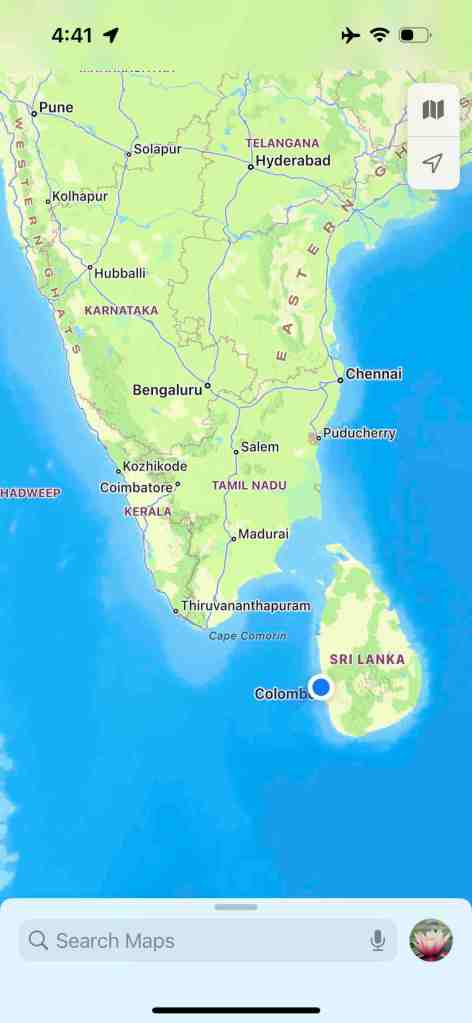
Sri Lanka is an island country that is south east off the coast of India. The language is Sinhala and Tamil.
We arrived in Colombo, Sri Lanka at 6:30 am. It brings back memories from our 2020 World Cruise. This was our very last port but we were not allowed to disembark. The scare of Covid caused authorities to send armed guards to the port to make sure we stayed on the ship. We certainly had no intentions to disembark. We spent the day swimming in the pool and sightseeing by binoculars. They fueled the ship, loaded food and 8 hours later we sailed away. I recall the city being very smoggy.
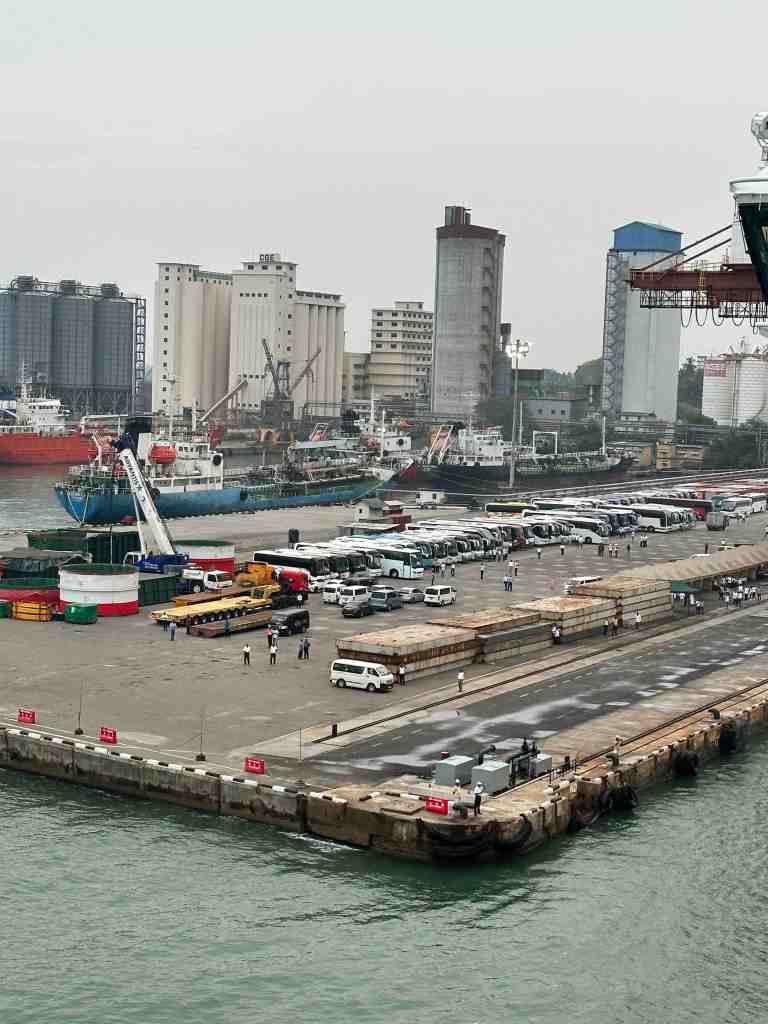
Our arrival this time was quite different. About 40 buses, several vendor tents and a local dance company awaiting our arrival. Reporters from the local TV station were there to film the arrival of our ship and visitors. Yes, the city is still very smoggy. Air quality is poor so I booked a tour out of the city and into the countryside. Bob and I boarded a bus that took us through part of Colombo and out to the countryside. Our guide was very informative.
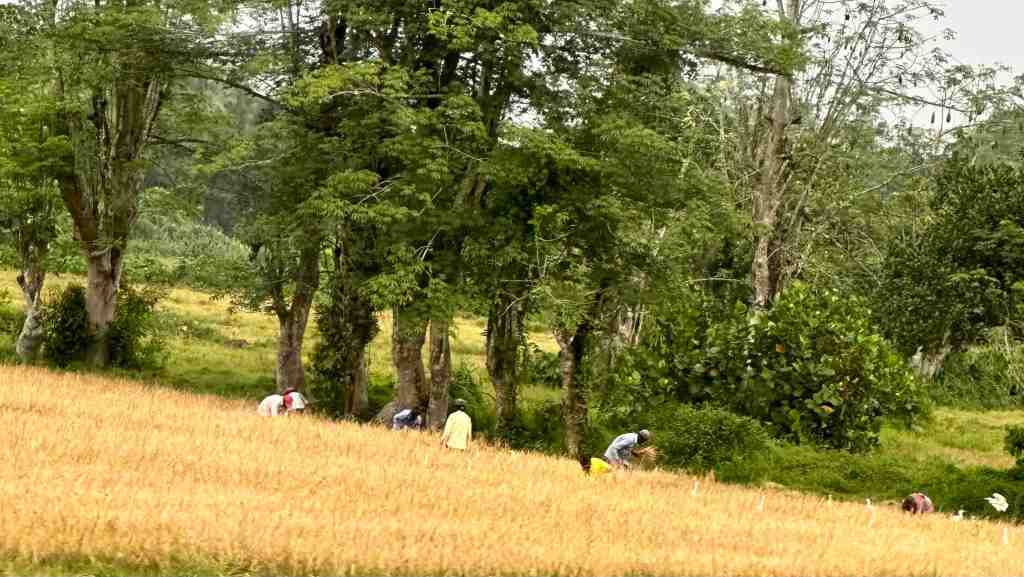
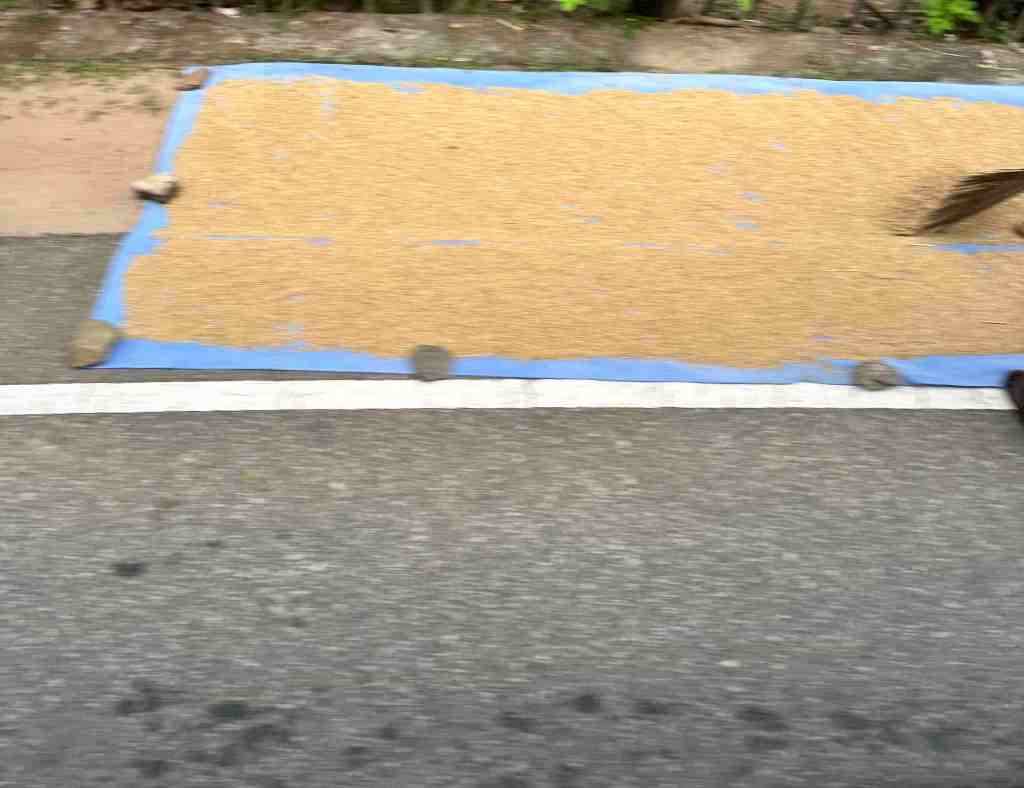

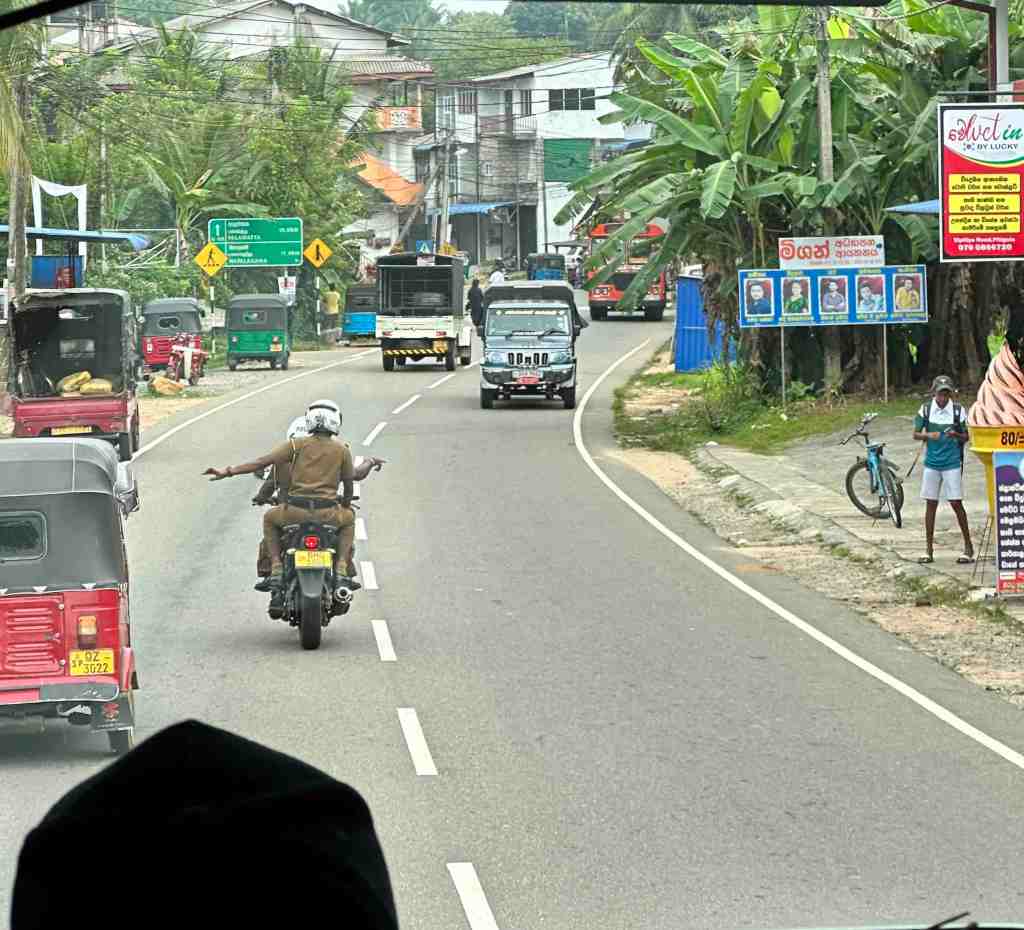
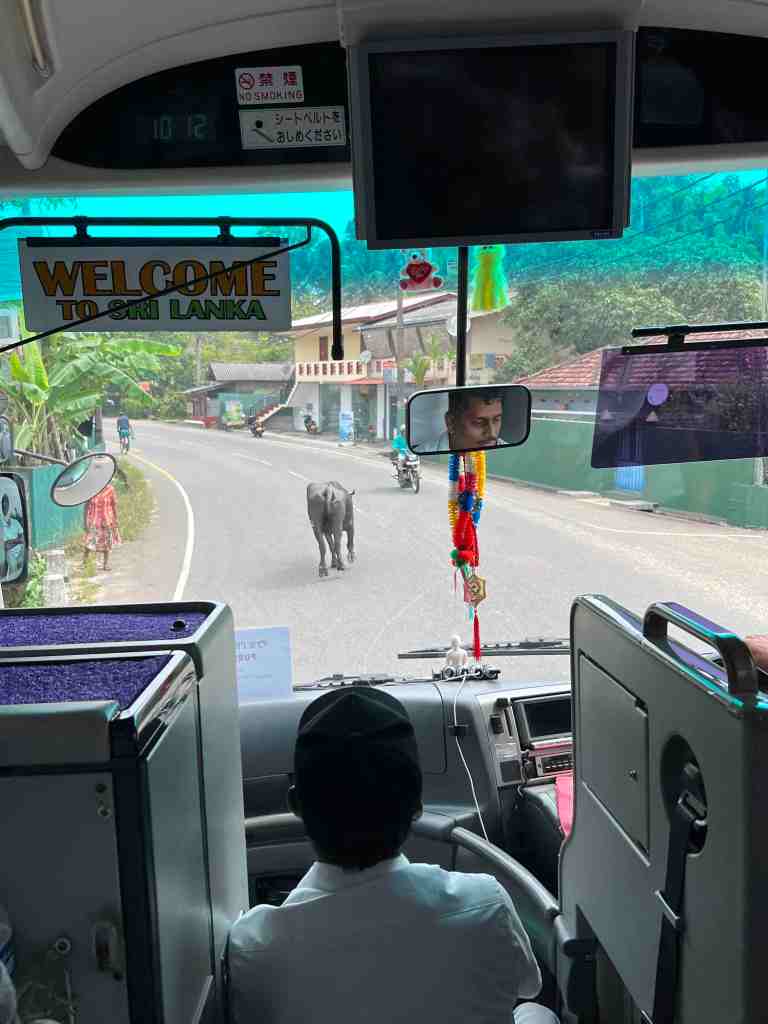
As we drove past rice fields, we saw locals out harvesting by hand. Along the side of the road were piles of rice drying. The road grew narrow as we went on and seemed we were almost driving through their rice along the road. Water buffalo wandered freely. Many road side stands selling fruits, vegetables and piles of fish. As we got closer to a small town, we noticed a motorcycle with 2 men in uniform. Our guide explained that we had a police escort to the tea plantation. The police would blow their horn and wave people to pull to the side of the road so our bus could easily drive through. We followed the escort and soon arrived at the tea plantation.
Sri Lanka is home to some of the lushest tea estates you can visit. It remains the 4th largest tea producer in the world, producing just under 350,000 tons of tea in 2020. It’s reputation for producing the cleanest teas in the world due to stringent pesticide restrictions. They have various types of tea but the most famous is Ceylon tea, prized for having a distinct aroma and delicious full-bodied flavor.
In 1824, a tea plant was smuggled into Sri Lanka, or ‘Ceylon’, as it was known by the British and planted in the Royal Botanical Garden for display. Over time, plants were brought from India. It was discovered the humidity, rainfall and cooling temperatures of the country’s central highlands provided the perfect climate to yield quality tea crops.
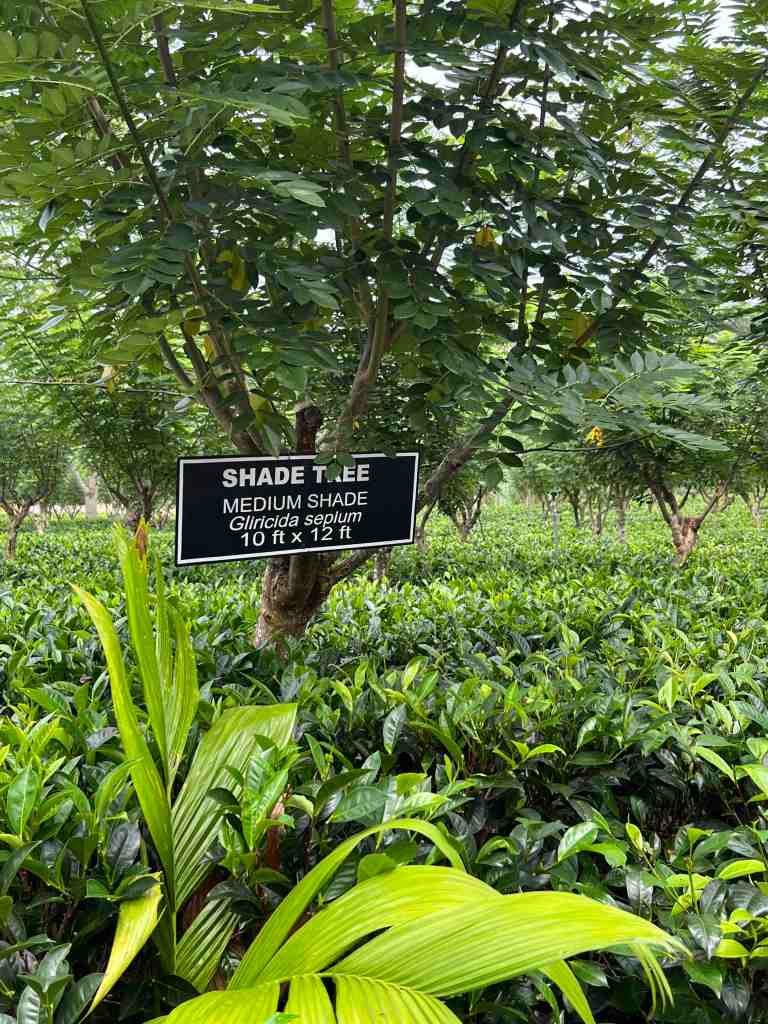
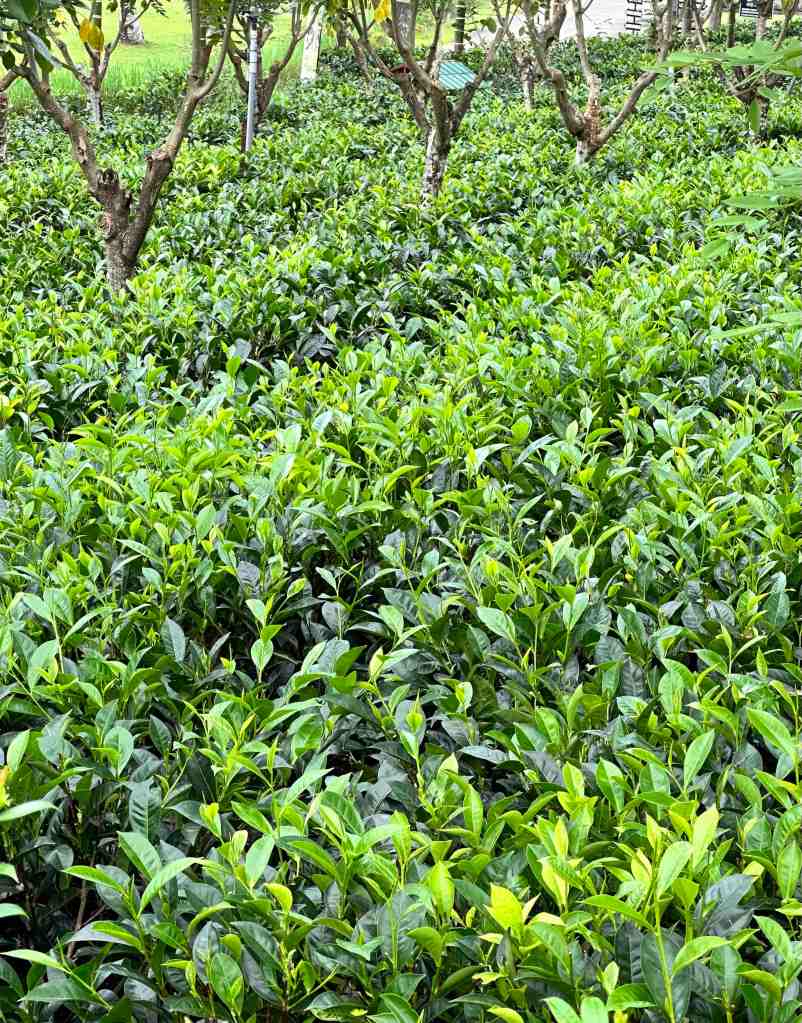
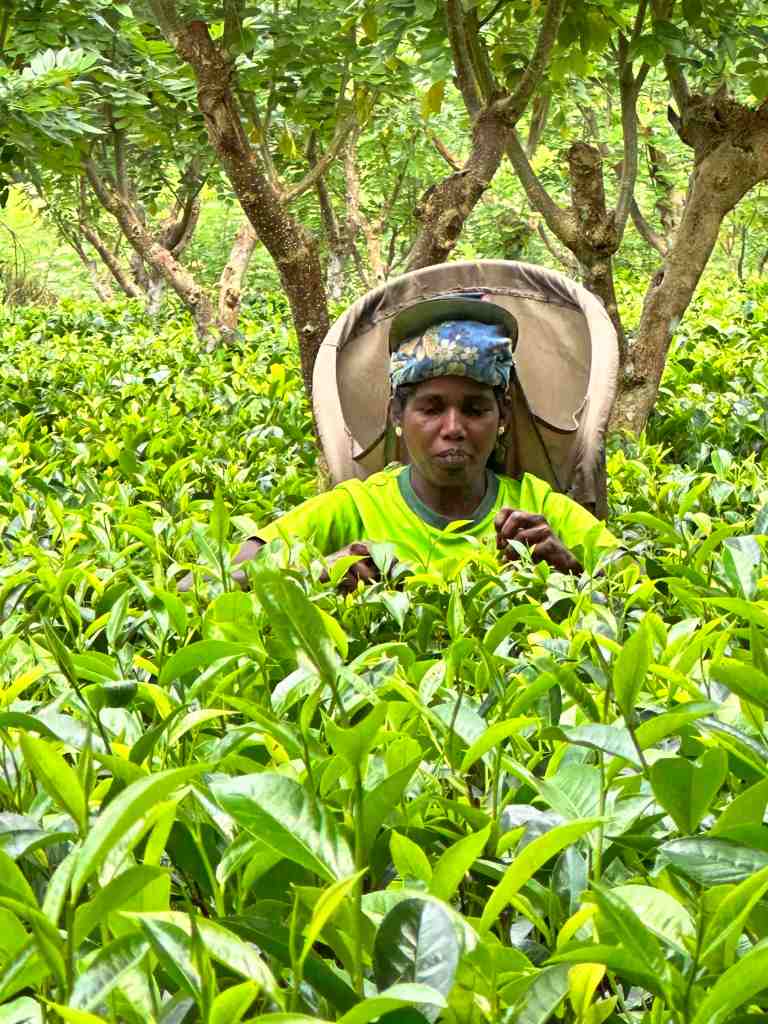
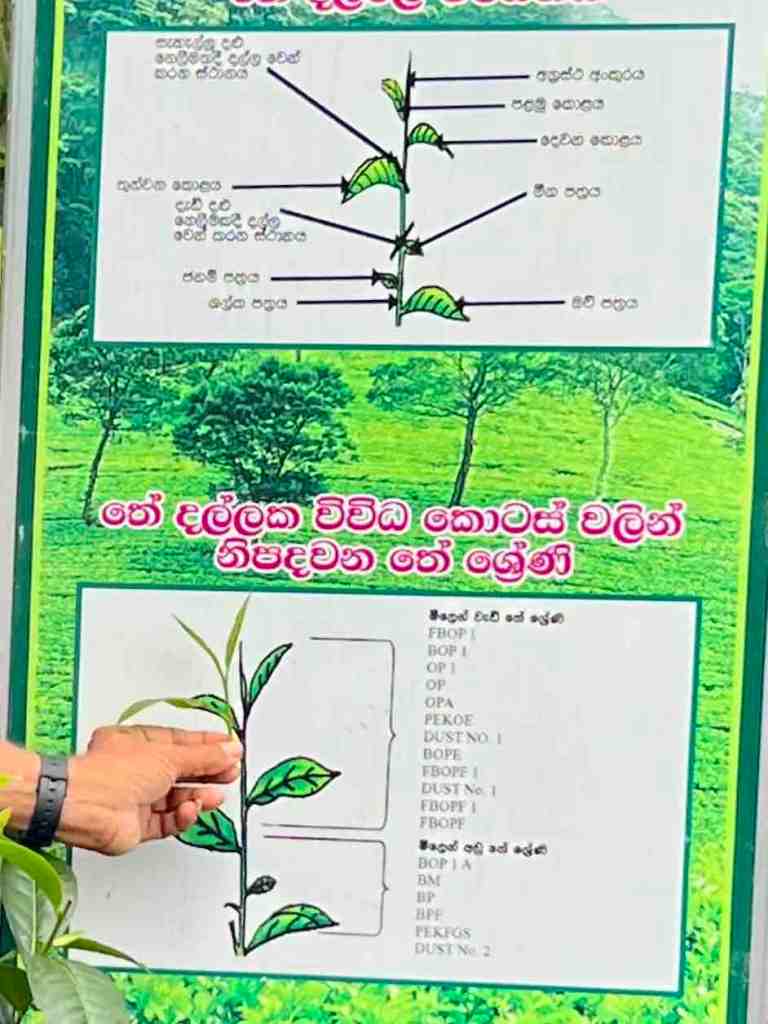
We are visiting a low land tea plantation today. We learned that there are many highland tea plantations and tea tourism is now ‘a thing’. You can stay at these plantations in the mountains and stay in colonial bungalow’s, breathe fresh air and enjoy sipping tea. We got off the bus and noticed many people coming out of a building to greet us. The plantation was beautiful with row after row of tea plants. We met another guide and he walked us along a field and explained how many types of tea they grow here. We then saw a few women walking through the field and harvesting the tea leaves by hand and putting them in a basket on their back. The professional pluckers know what part of the plant to pluck at what time. I didn’t realize different parts of the plant make different tea.

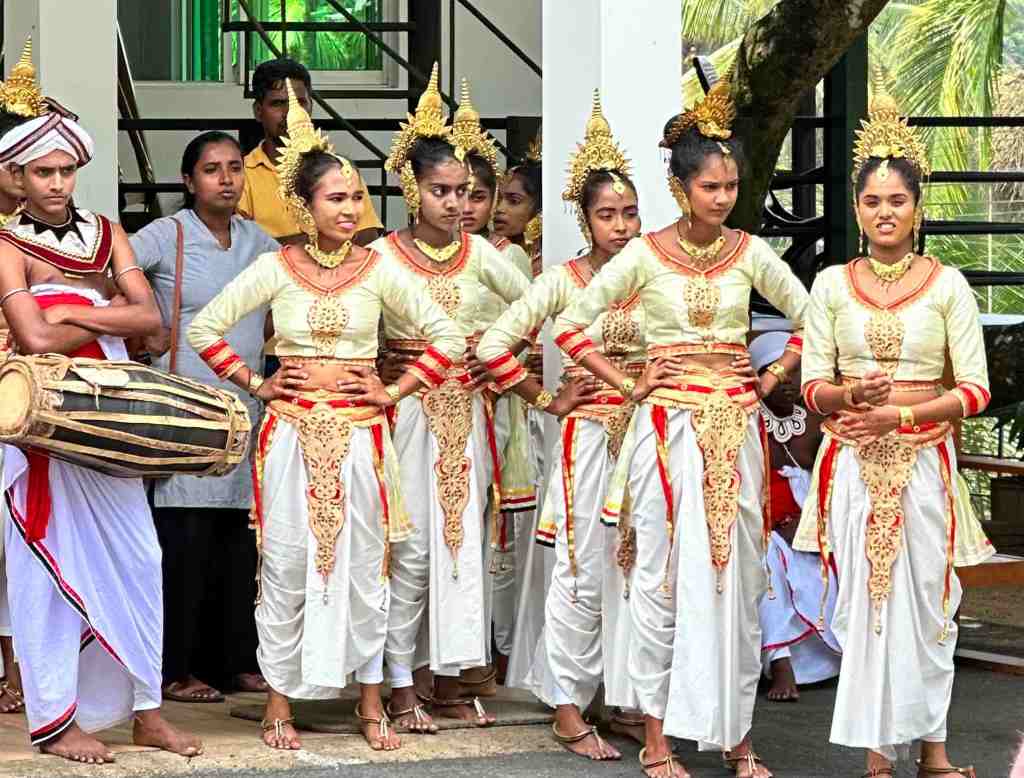
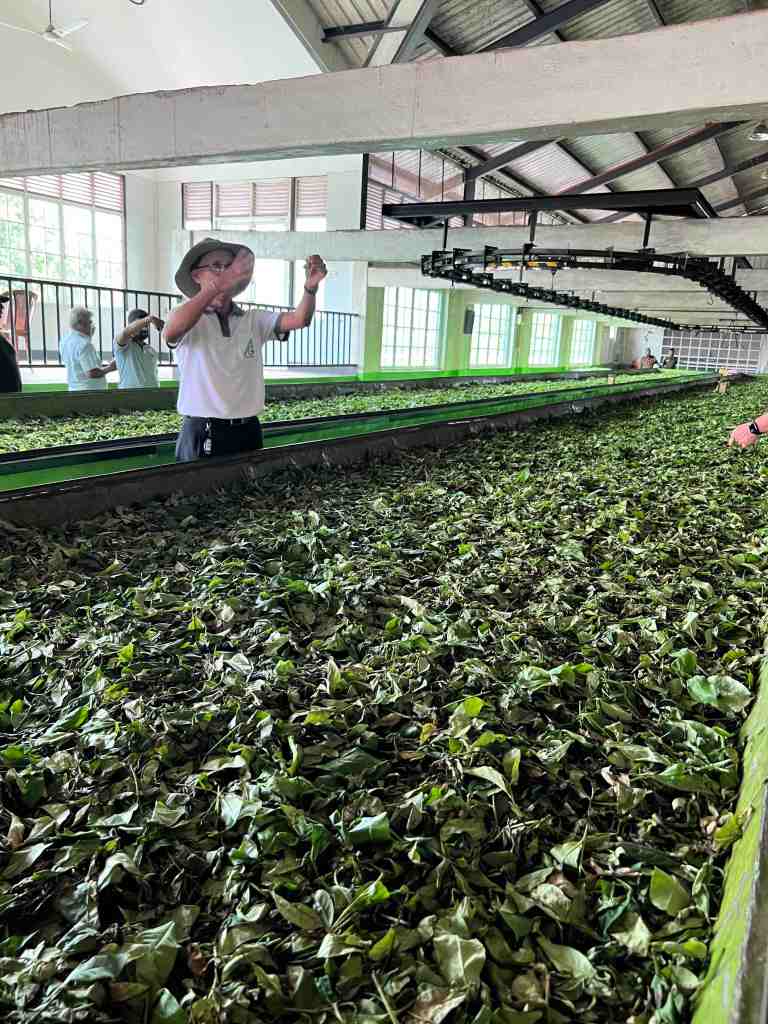
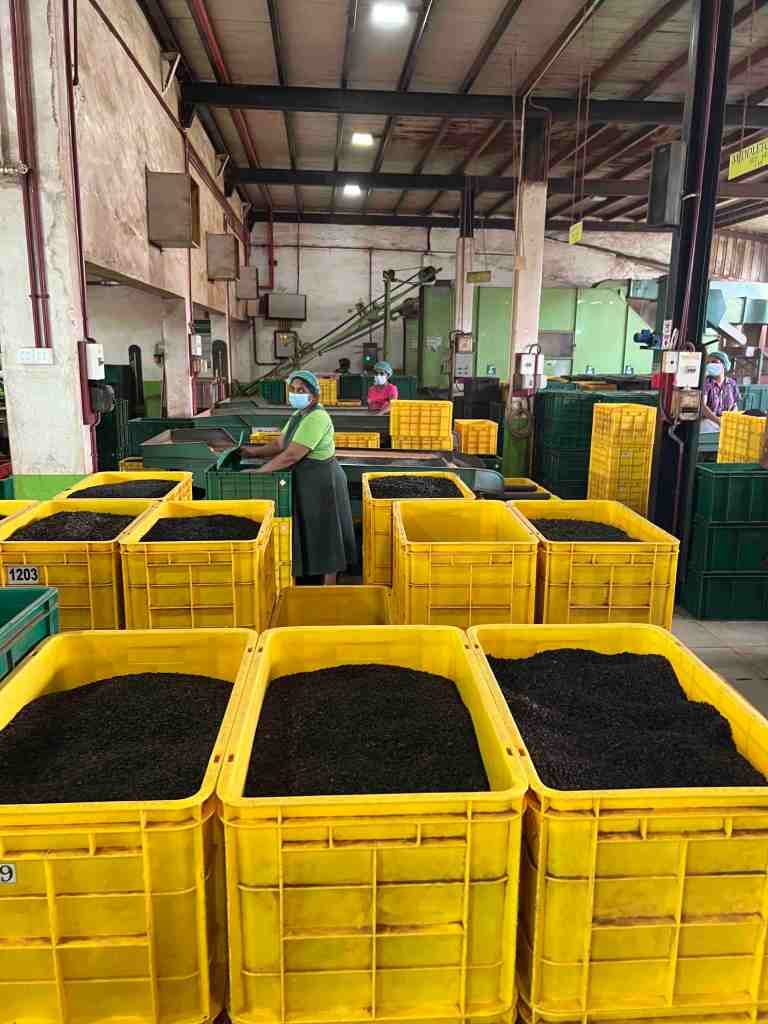
Once we reached the processing building, there was a group of dancers and musicians in beautiful, native costumes, that danced their way to the building and we followed them. The reporters were there again to record our visit. I wasn’t sure why. Maybe we’re the first cruise ship since covid? I don’t really know. We entered the building and walked upstairs. They had prepared snacks for us (small sandwiches, cookies and tea). The tea was very pleasant and now we’re going to see how the tea leaves are processed. We were given paper booties to go over our shoes, face masks and paper cap to go over our hair. We followed our guide to a long room with several rows of troughs that shook and had air blowing through them. They were filled with green tea leaves and this was the drying process. They then went into another dryer and rolling machine. The heat would take out the moisture and you could see steam rising. It was then sorted by size on shaker tables and put into appropriate bins. As we walked by, you could see bins with large pieces that included the stem and other bins with smaller and smaller pieces (grading the tea). The bins were color coded, either for quality or size and then sent to be packaged. We took some pictures of the woman working. We waved at them, they smiled and giggled. They were like celebrities and enjoying the lime light.


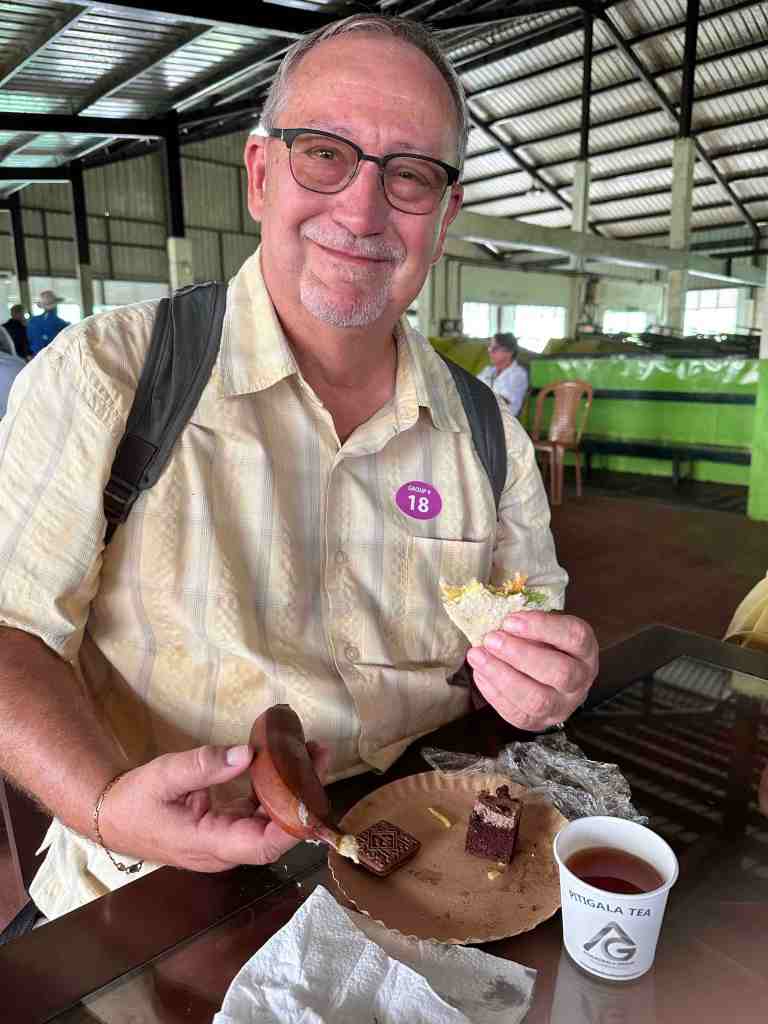

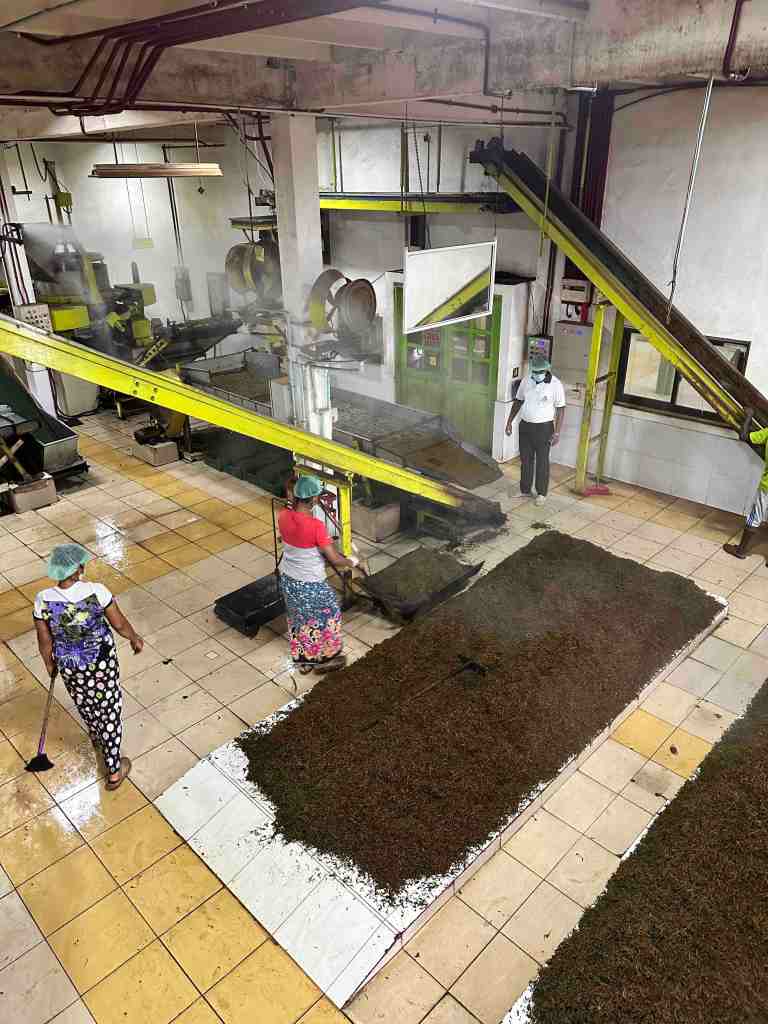
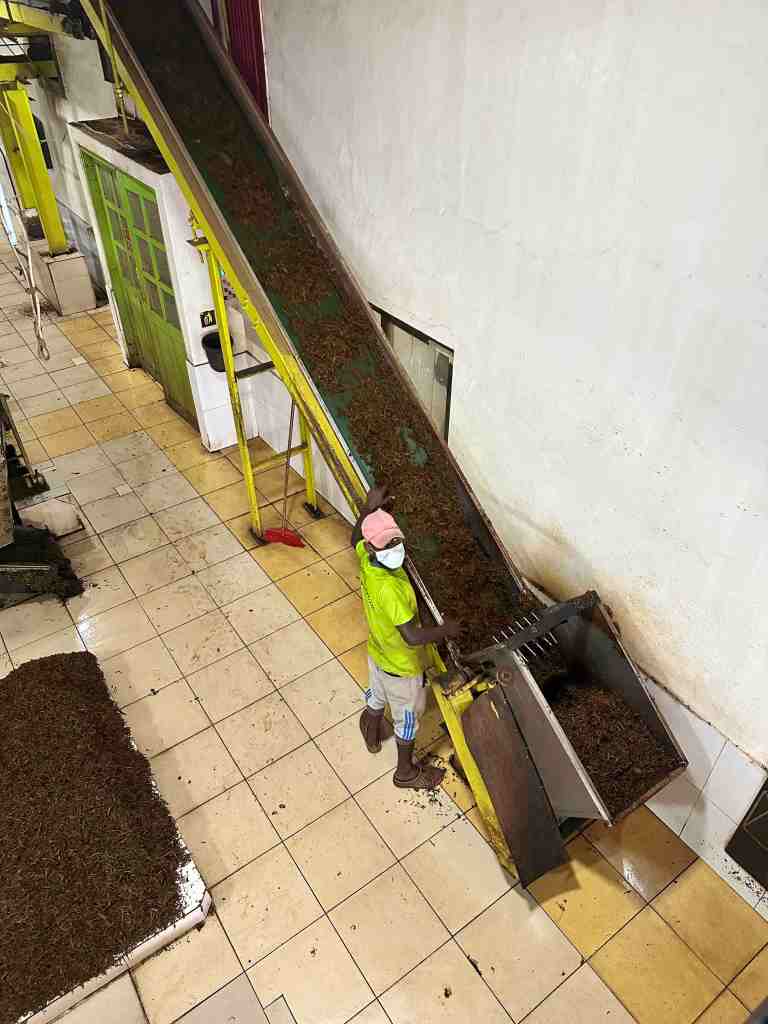
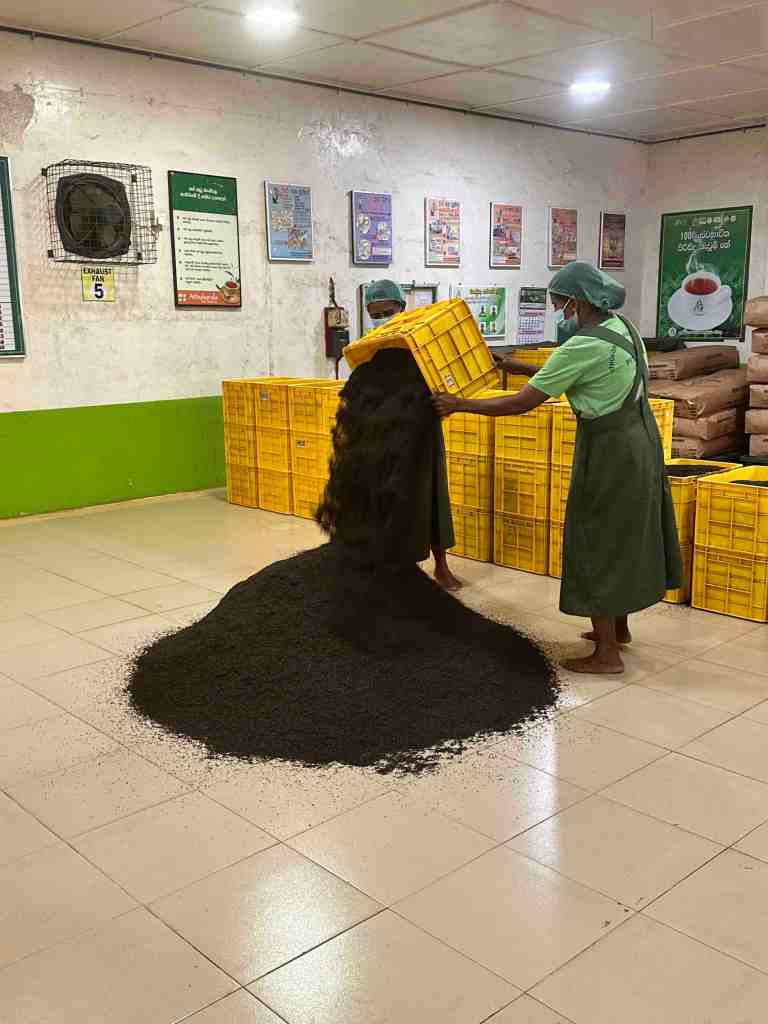

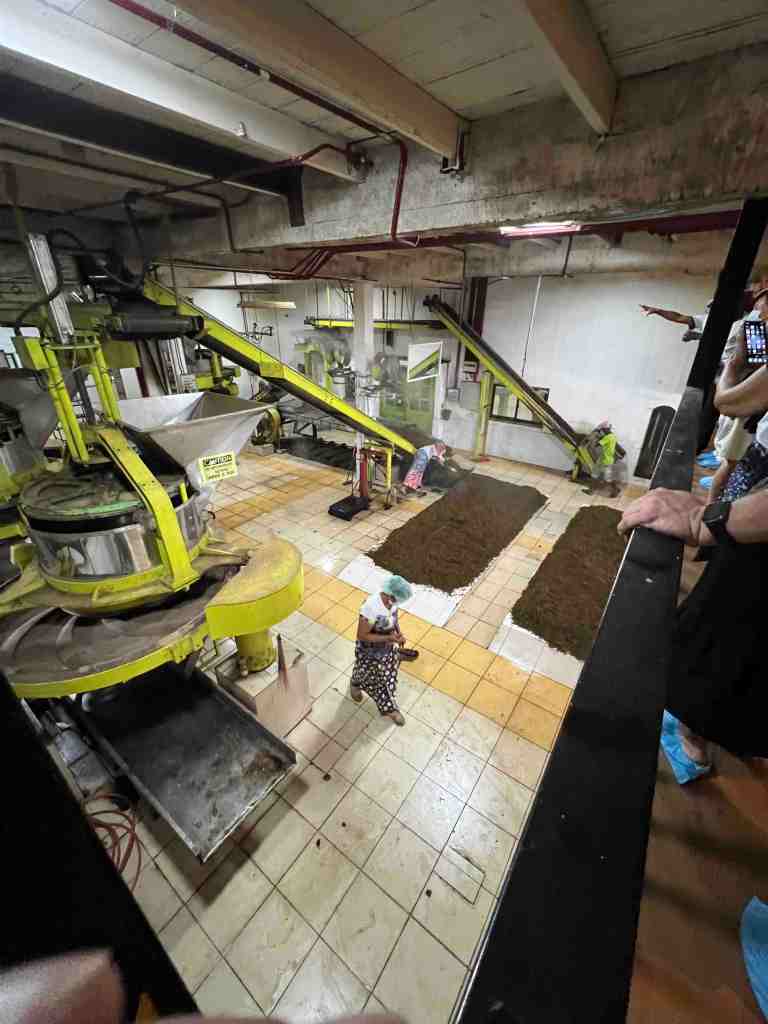

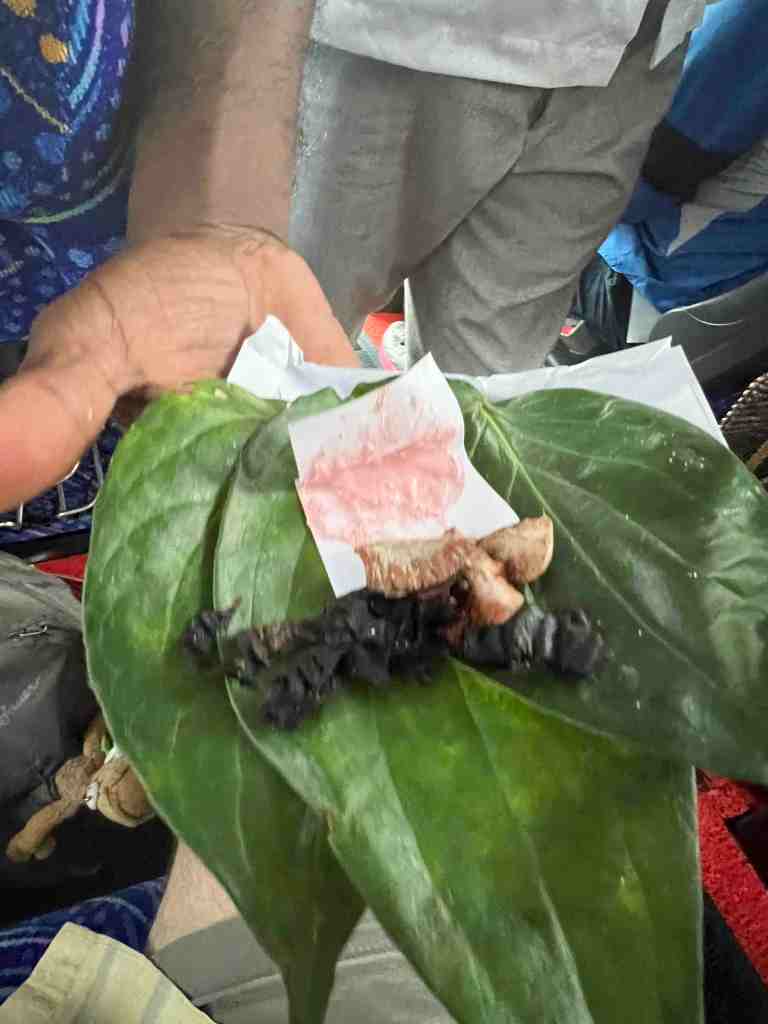
We left the processing plant and walked next door to the Tea Center. Air conditioning. O, how refreshing. I felt sympathetic for the workers. It was blasted hot in that tea factory. We entered the Tea Center where they had several kinds of tea to sample. We bought some tea, thanked our hosts and got back on the bus. As we traveled back to Colombo, our guide told us more stories. He showed us trees called kapok trees. They are very majestic and have many uses. The wood is lightweight and used for carvings and dugout canoes. The silky fibers that disperse the seeds are too small for weaving but great stuffing for bedding, pillows and life preservers. Reminded me of milkweed. Another thing he showed us was a leaf, limestone ground up into a paste, tobacco and betel nut. Unfortunately, many people chew this concoction. In small doses, it creates alertness and function as an antidepressant. Prolonged use creates addiction and the World Health Organization classifies the betel nut as a carcinogen.
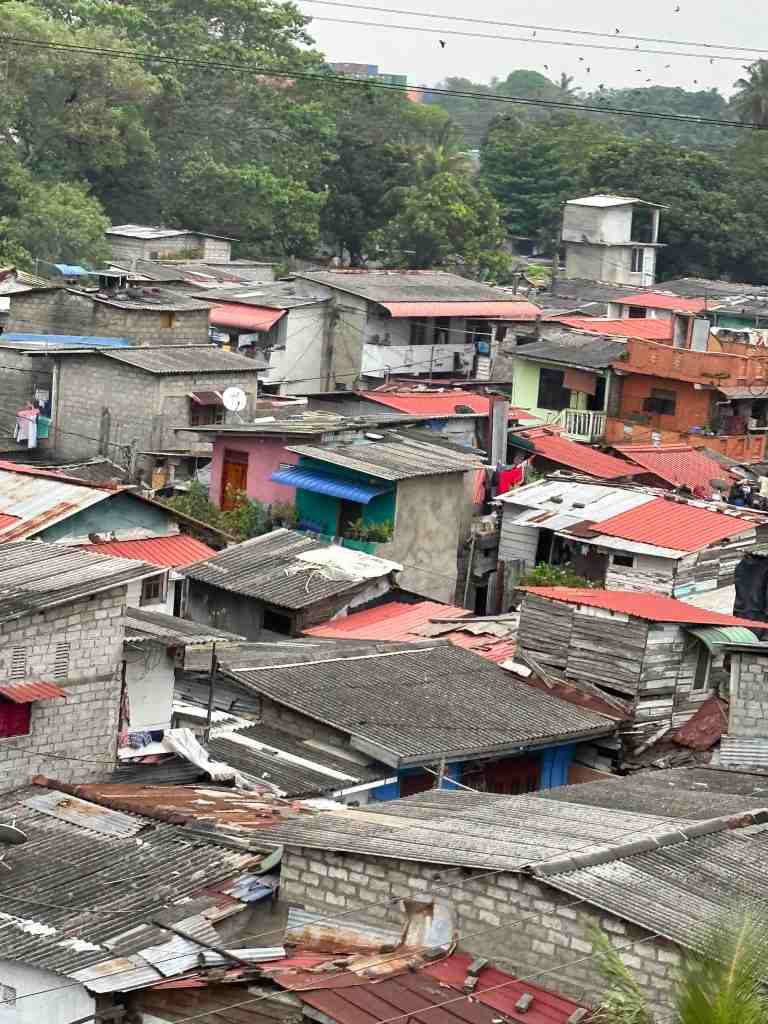
As we got closer to Colombo, the sky had a gray color from the smog. We could look down from the highway and see some horrible areas where people lived in shacks. Incredibly poor living conditions. We entered the dock area and went through a security check point. Above us we could see tall pillars that looked like a new highway being built. Our guide told us the Chinese are building a highway from the newly created Chinese port. Not sure where it goes, but seems to be very common across the world.

When we got off the bus, we went through some of the vendor tents. Sri Lanka is renowned for their work with star sapphires, star rubies, garnets and topazes. Also, known for various spices. We purchases a few bags of their Ceylon cinnamon. I’ve ordered on Amazon before and now I know exactly where it’s coming from. Our guide showed us cinnamon trees growing along the road so I thought it would be great to buy some here.
I was curious about the reporters today so I googled Colombo news and found the front page features a story about our cruise ship.
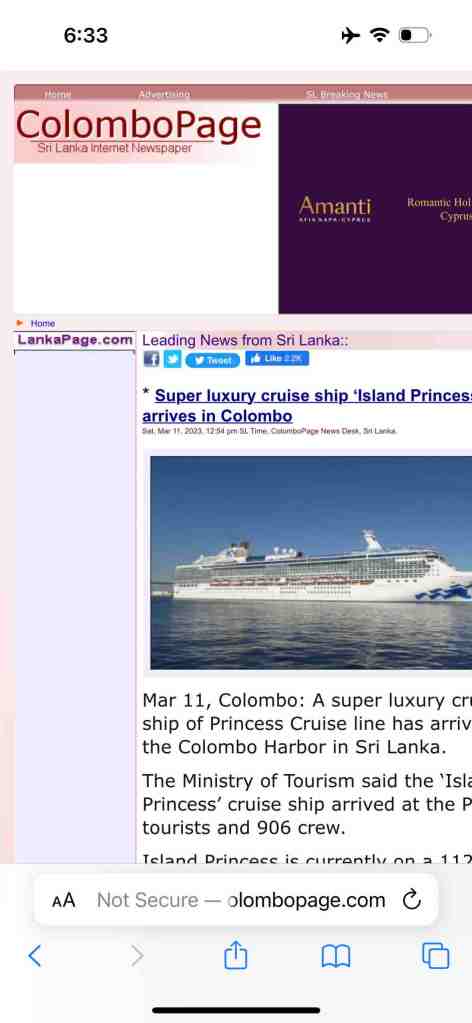
We had a nice day in Sri Lanka. I was glad we were able to see the tea plantation out in the countryside. Now when I drink a cup of tea or use our Ceylon cinnamon, I will think of Sri Lanka.
 Bob and Karen's Wild Hair Journey