
March 18, 2023 – Muscat, Oman
We left the desert of Dubai in the Arabian Gulf yesterday and entered the Arabian Sea to visit Oman. Population is approximately 3.4 million. Language is Arabic, English, Baluchi, Urdu, Indian dialects. The capital of the country is Muscat. Type of Government: Absolute Monarchy.
Archeologists maintain that Muscat has been a crucial seaport for at least 24 centuries with links to India and beyond, dating as early as the 6th century BC. Muscat and Oman have been ruled by the Al Said dynasty since the 18th century. In 1970, Qaboos bin Said ascended to the Sultanate and began an ambitious program of revitalizing Muscat and Oman. Part of the revitalization process has been the development of tourism.
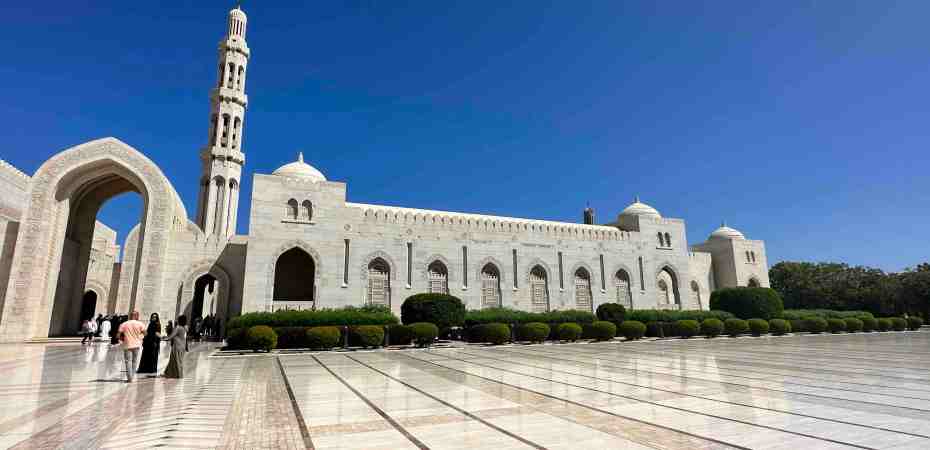
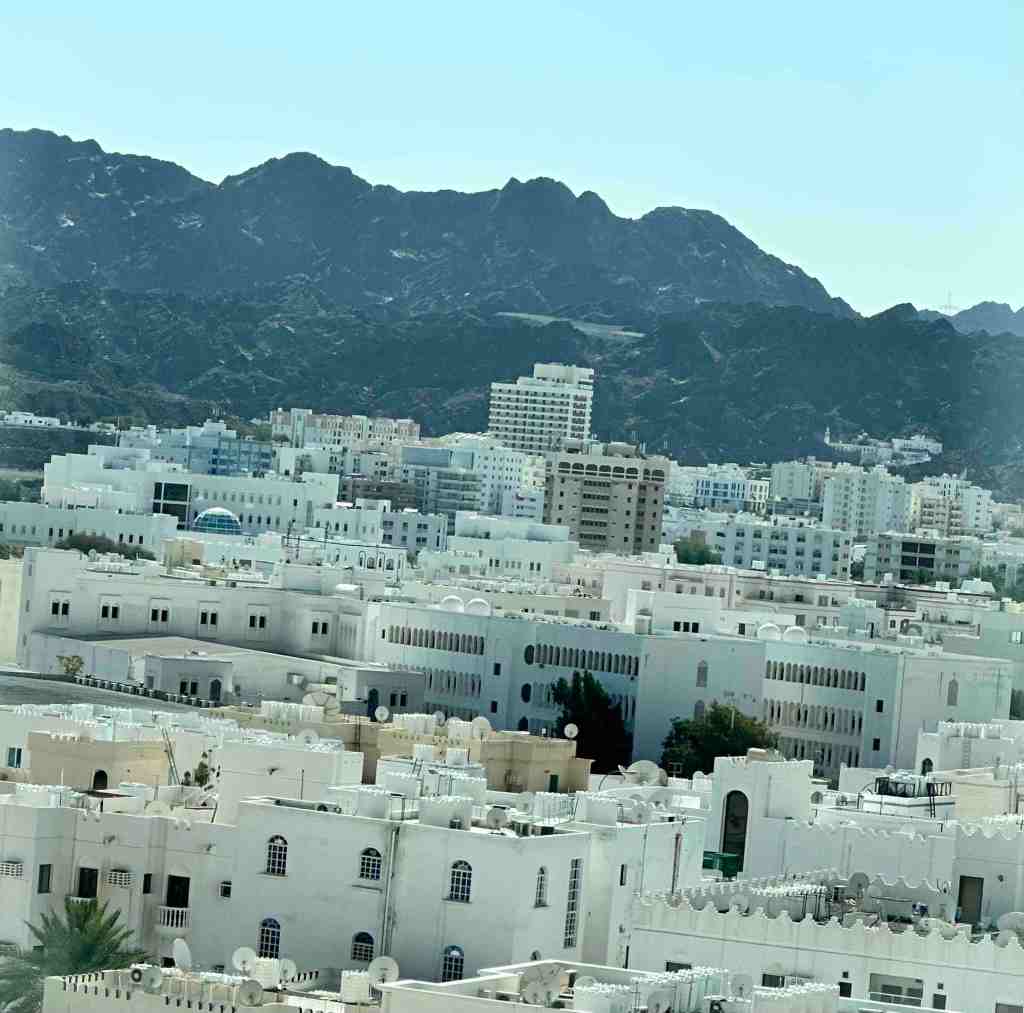
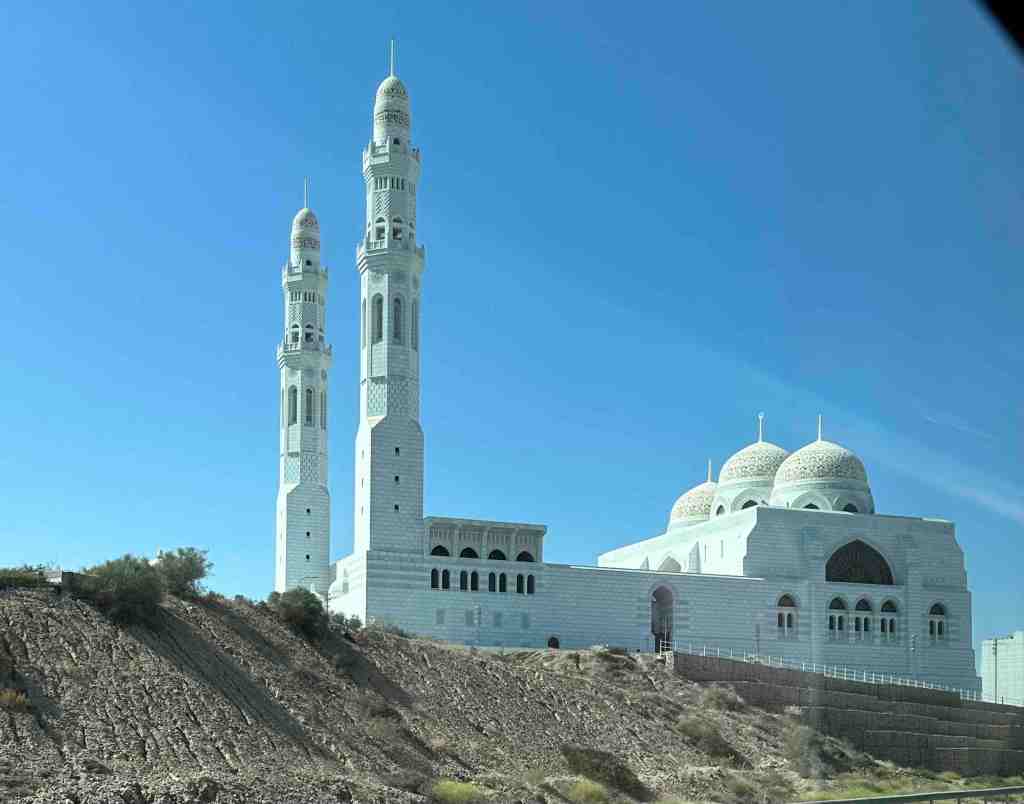
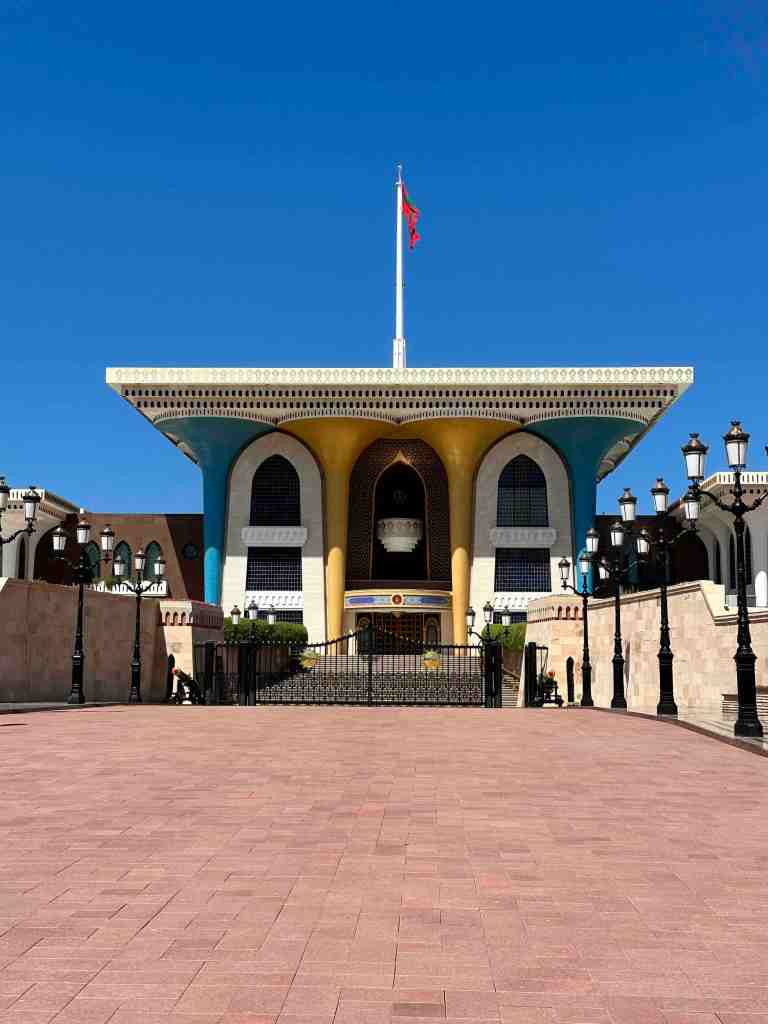
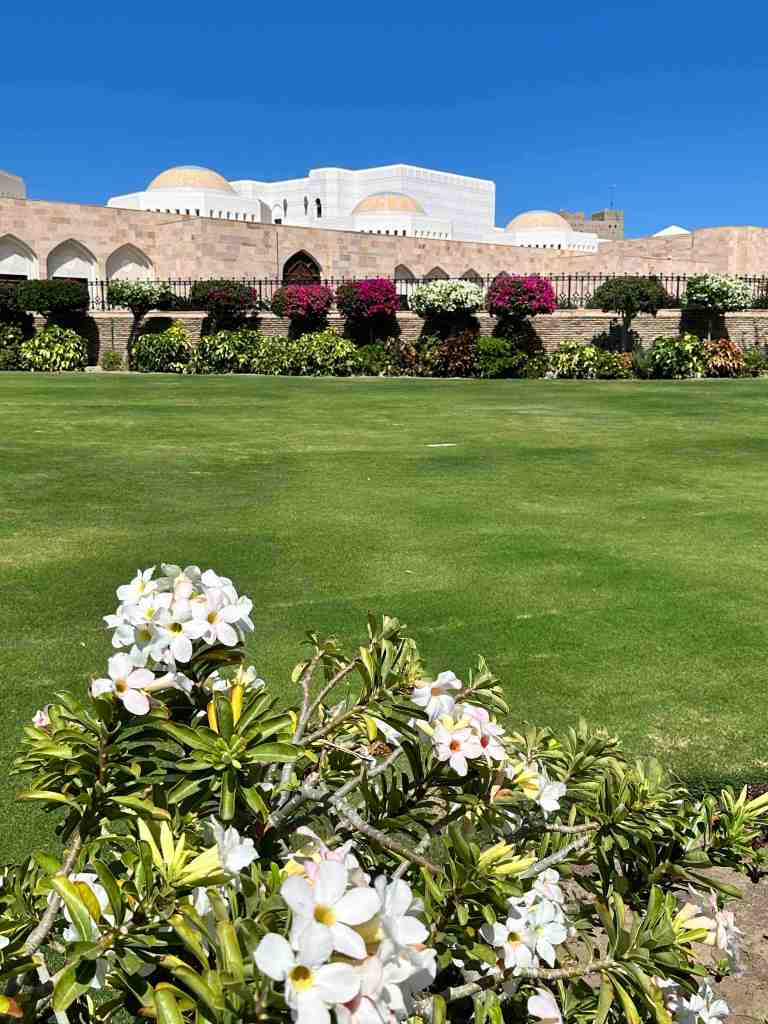
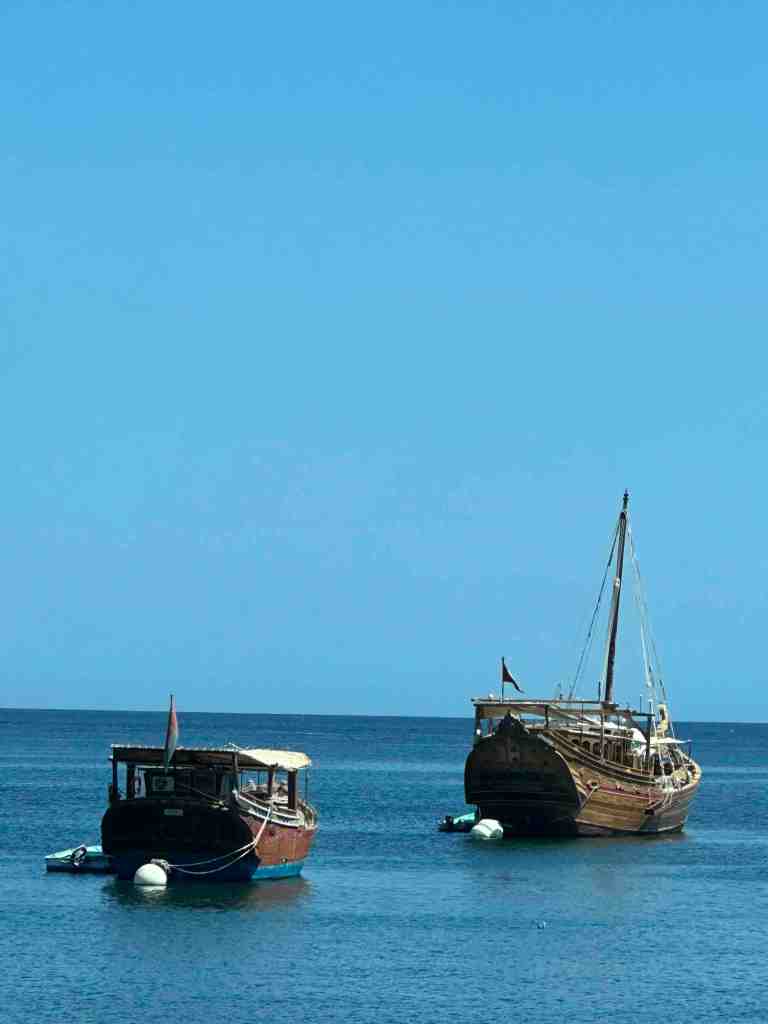
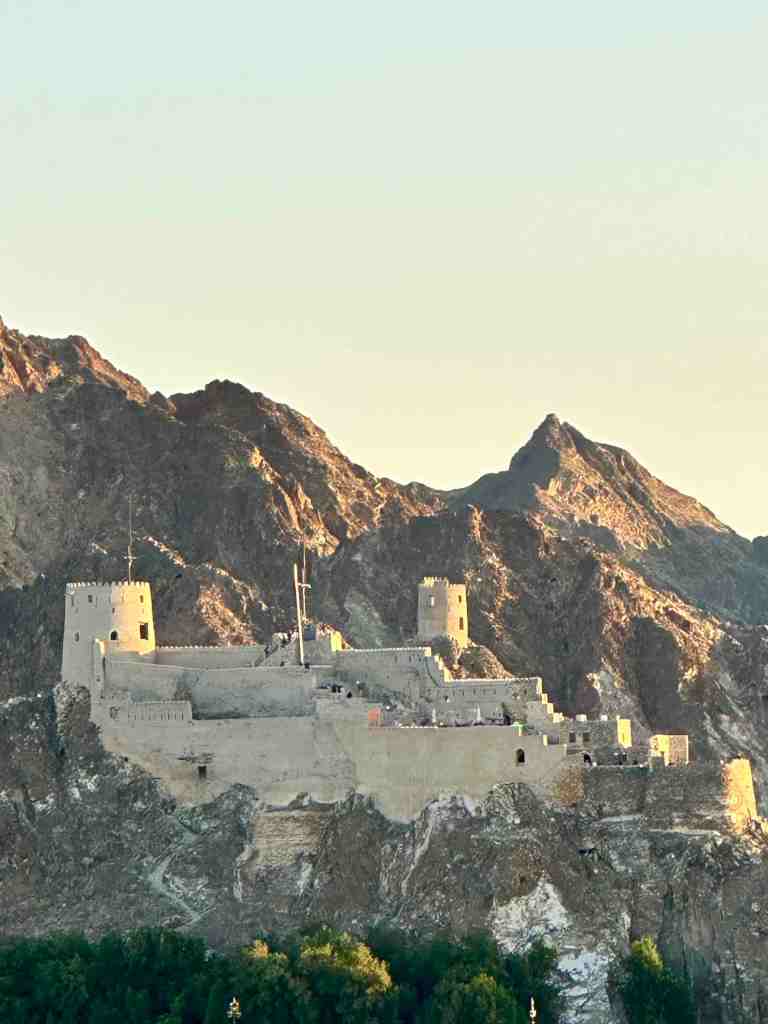
We docked early this morning in Muscat. What a drastic difference in landscape compared to Dubai. Steep, sharp mountains vs a flat desert. The harbor is beautiful and guarded by two 16th century forts. Between the 2 fortresses stands the modern Al Alam Palace. The official residence of Sultan Qaboos bin Said, the palace blends classical and contemporary Islamic architectures. Vendors still offer frankincense and myrrh in the souks (markets), while the regal Grand Mosque, completed in 1999, stands as the symbol of contemporary Oman.
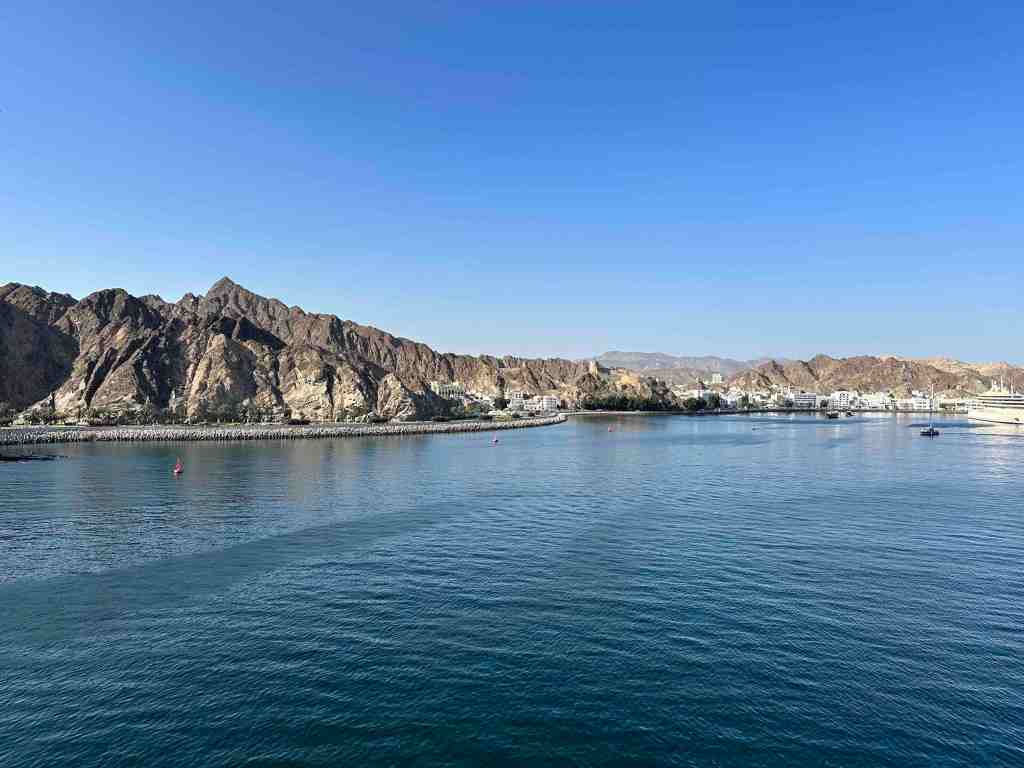


Palaces and souks, museums and mosques – but beyond the city of Muscat lies the vast reaches of the Arabia Desert. One hour drive leads the traveler into a region of stark mountains, seasonal wadis (dry creek beds that become full of water during rain) and hidden oases that nurture groves of dates, bananas and mangoes.
Muscat, in short, is a city out of the Arabian Nights.
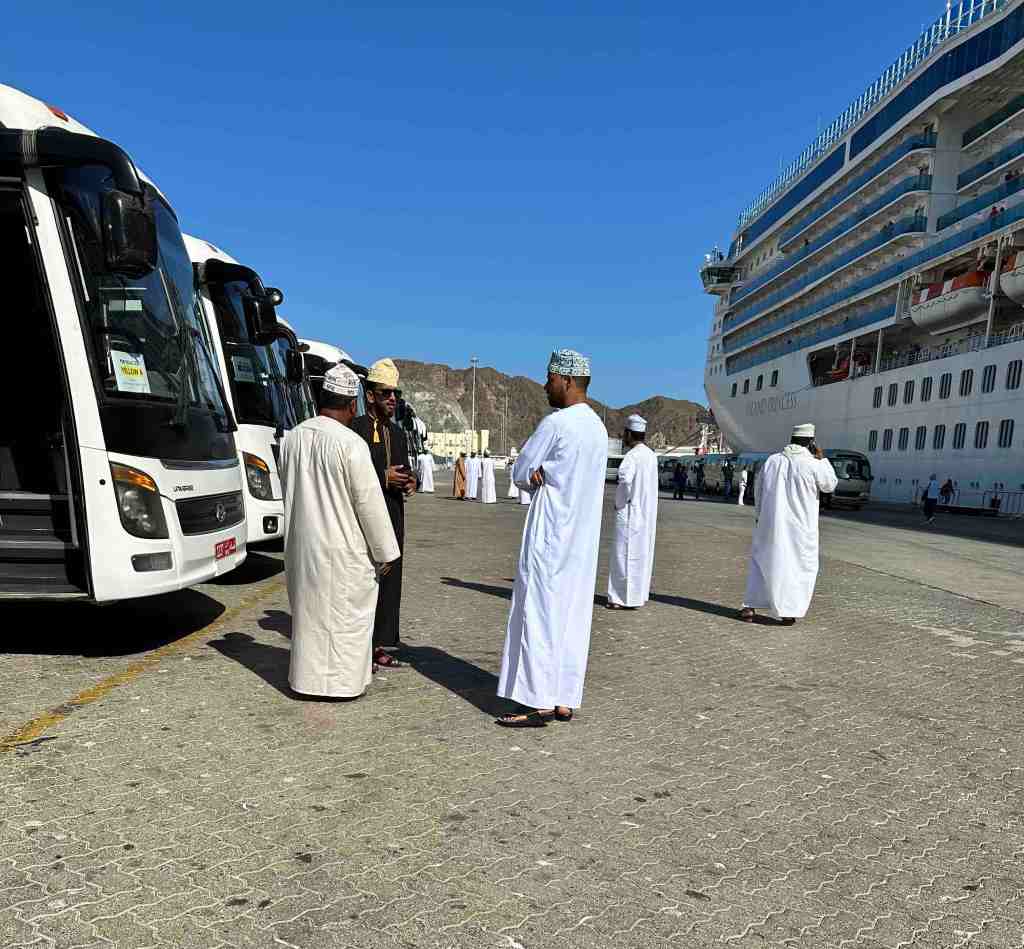
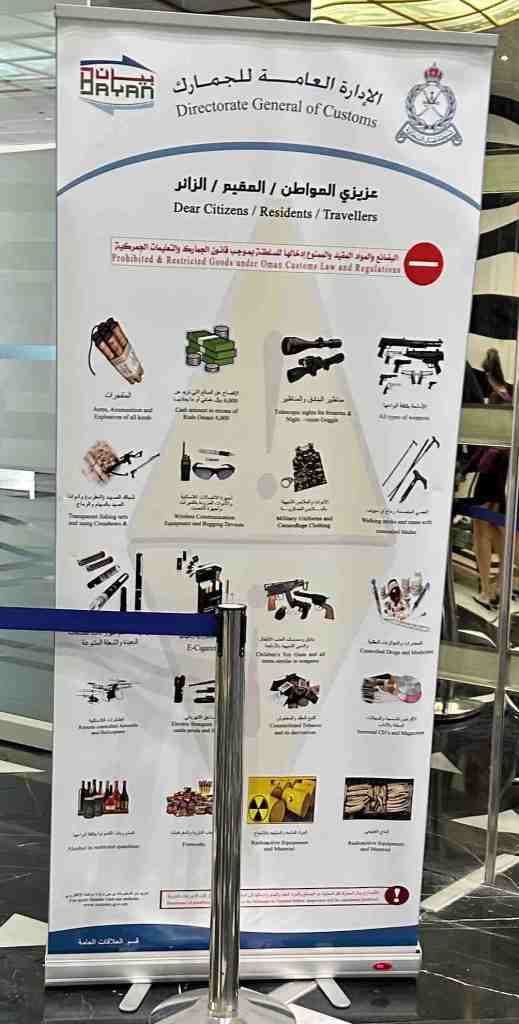
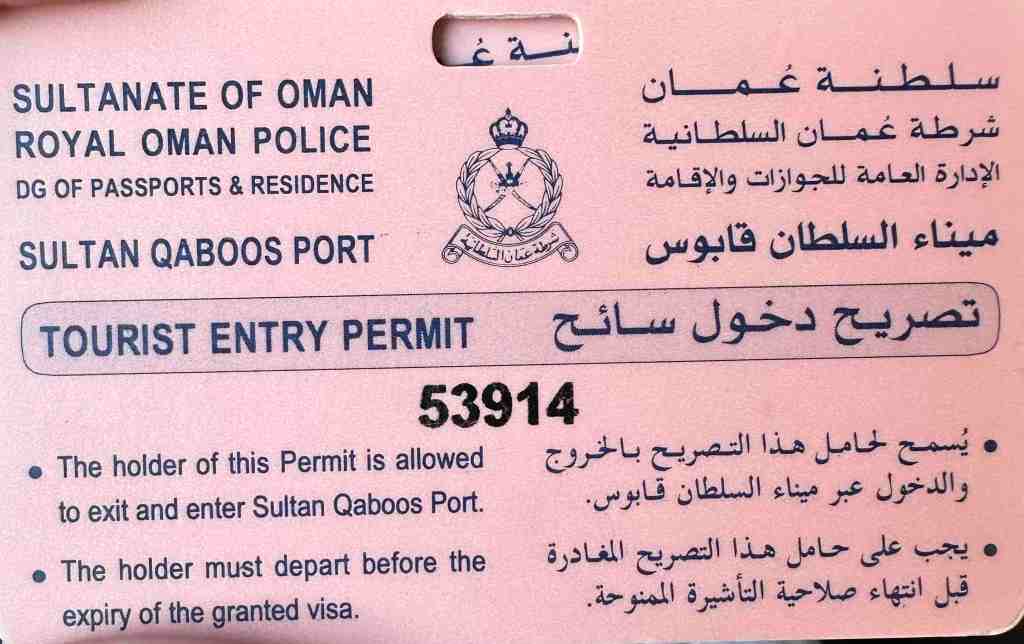
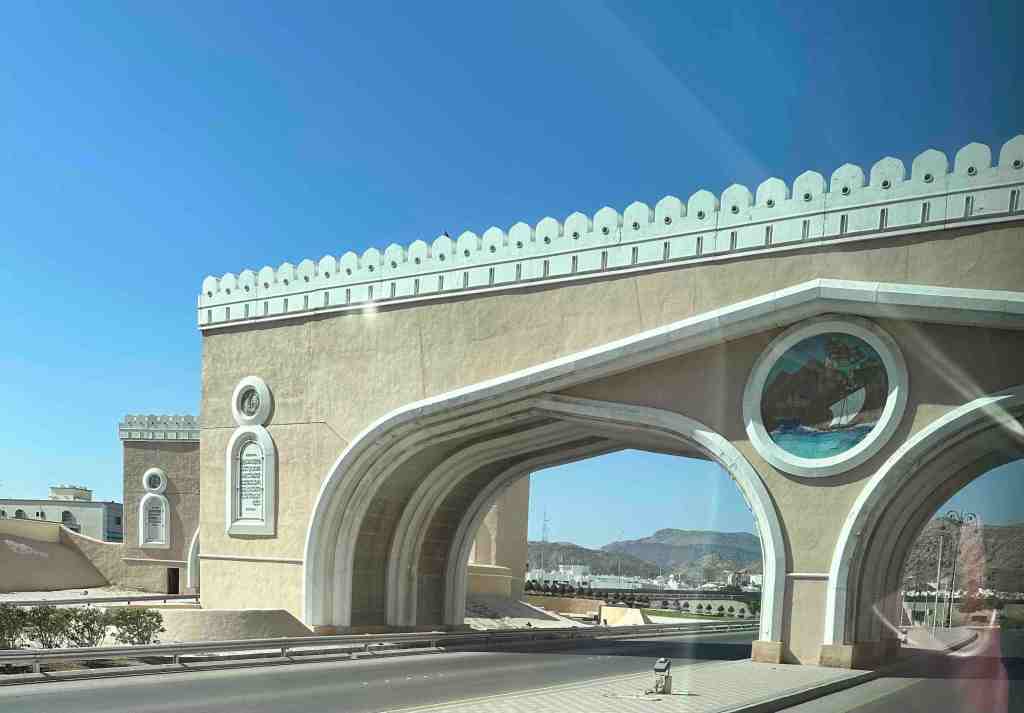
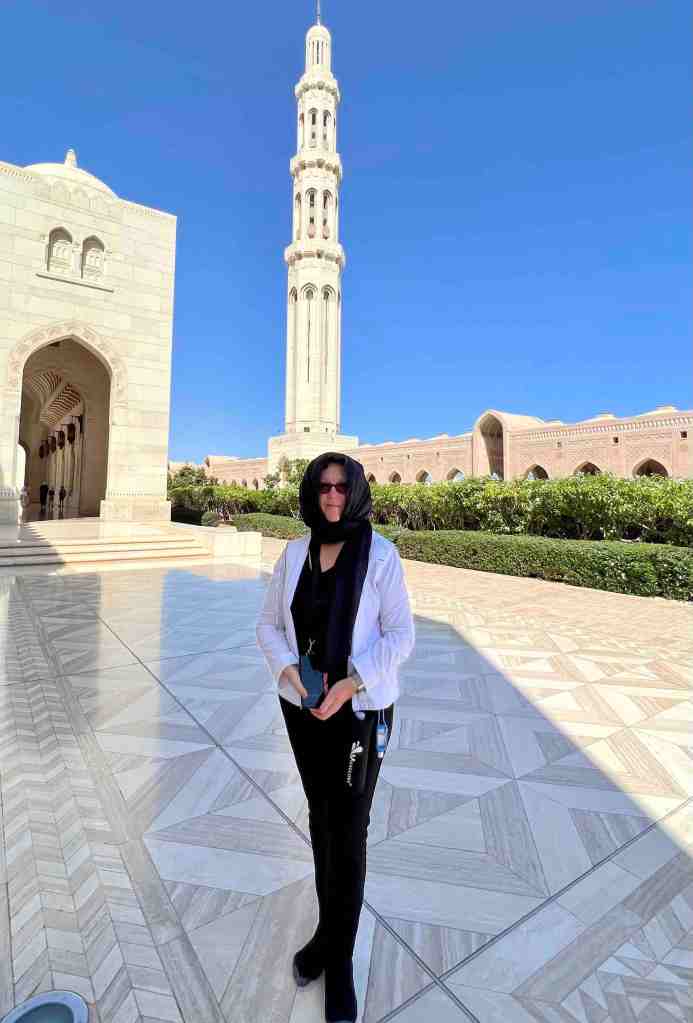
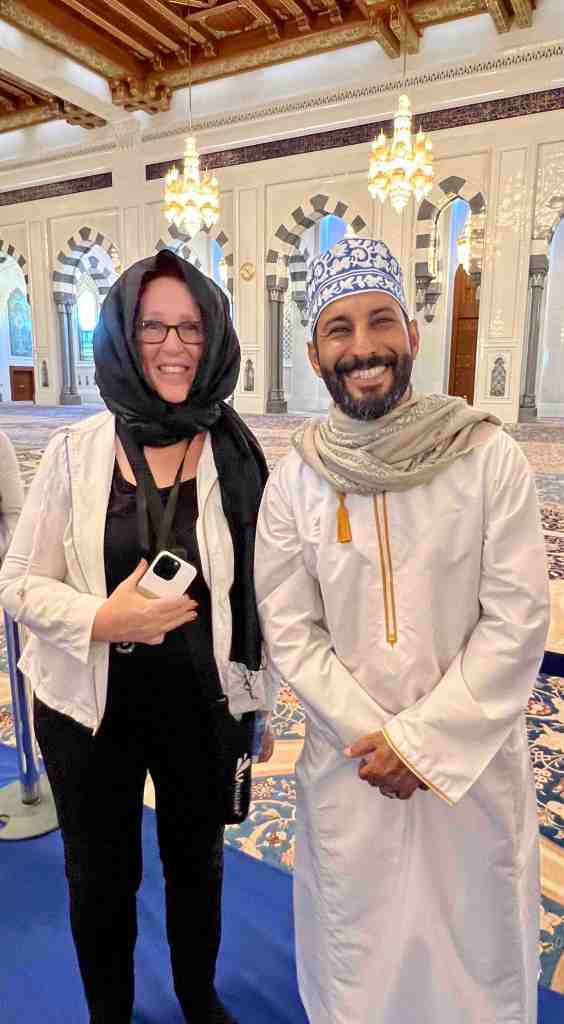
We disembarked the ship and were each handed a Tourist Entry Permit the size of a credit card. We were told to put it somewhere safe because we had to return it when leaving the port. We boarded a bus and drove a very short distance and asked to leave the bus and go through a security checkpoint. We put our belongings through a scanner and then boarded the bus. We met our guide, named Hussein. He was dressed in a traditional Arabic outfit and spoke English very well. As we left the harbor, we drove up and over a hill into a valley, full of white buildings (homes and businesses) of Arabic architecture. It was very beautiful. We headed directly to the Grand Mosque. Our tickets clearly told us that woman must be fully covered to enter the mosque. No skin exposed, accept hands and face. I wore long pants, socks, long sleeves and long head scarf. It’s a hot day, but that’s ok, it will be well worth it. We arrived at Grand Mosque. As we got off the bus, the men and women were separated into two lines. Men were allowed to enter and women had to be inspected by a guard. Some women were turned away if they were not dressed properly. Unfortunately, we had an elderly lady on our tour that fell getting off the bus. She said she was not hurt, but our guide, Hussein, held her hand for the rest of the tour to take care of her. I thought that was extremely sweet. Believe she said she was 91 years old and also forgot her head scarf. Hussein went and got her one and put it on her head properly.
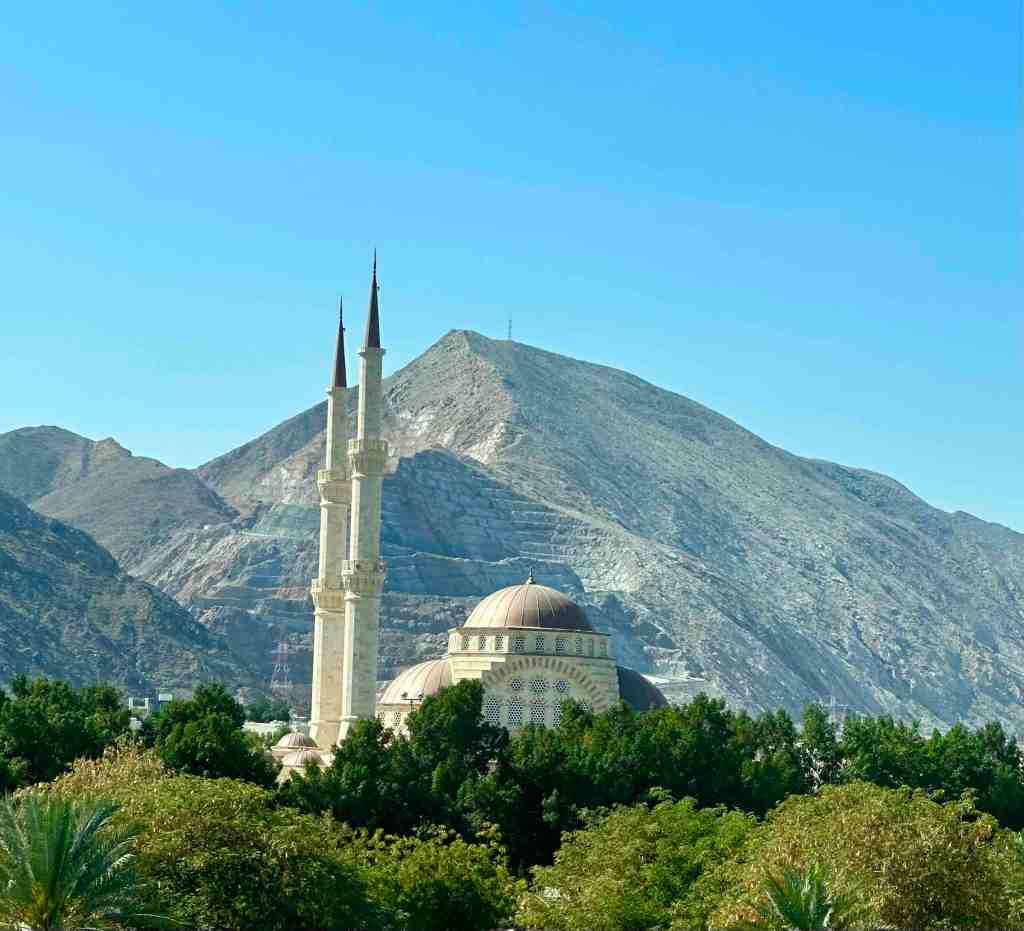

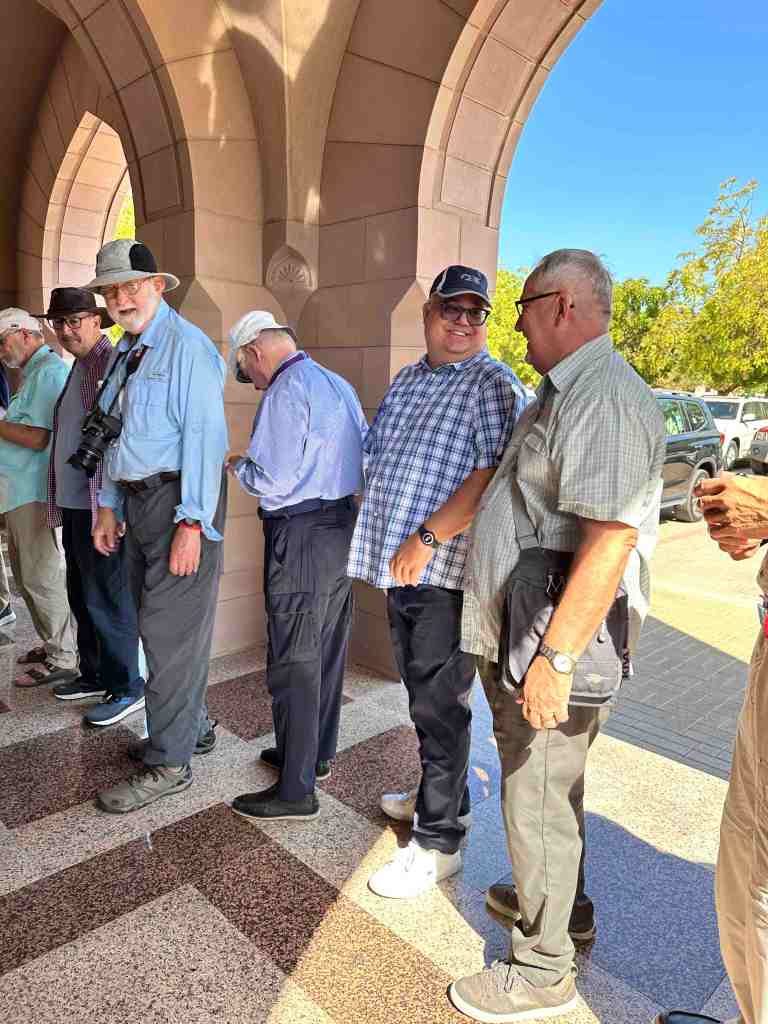
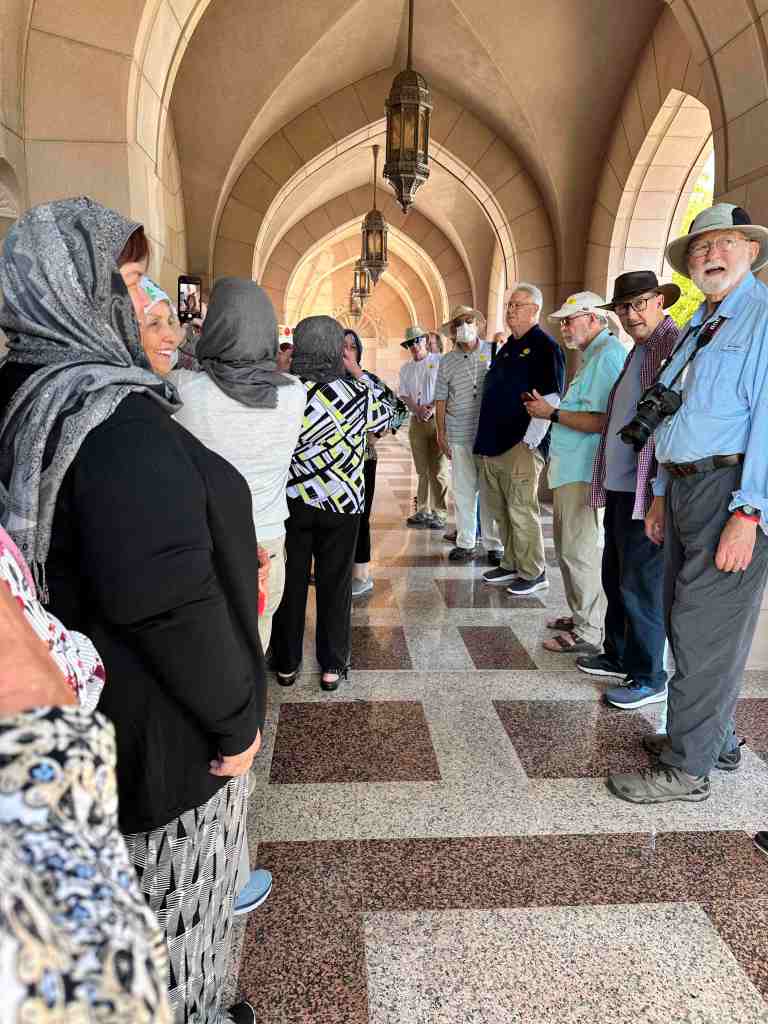
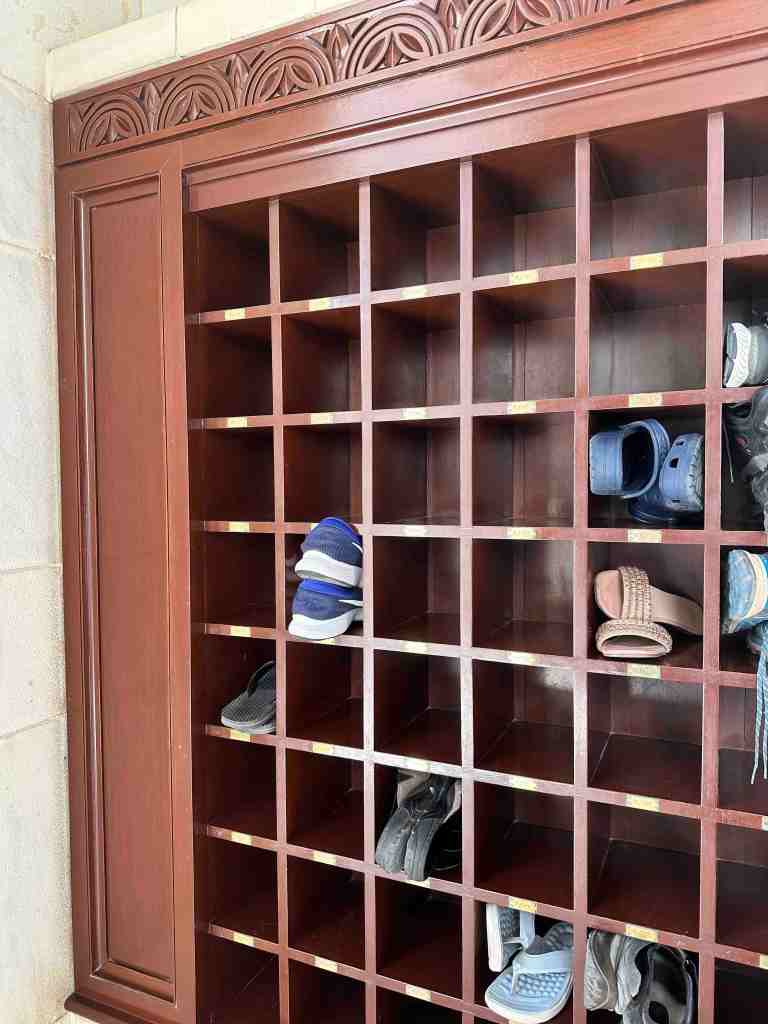
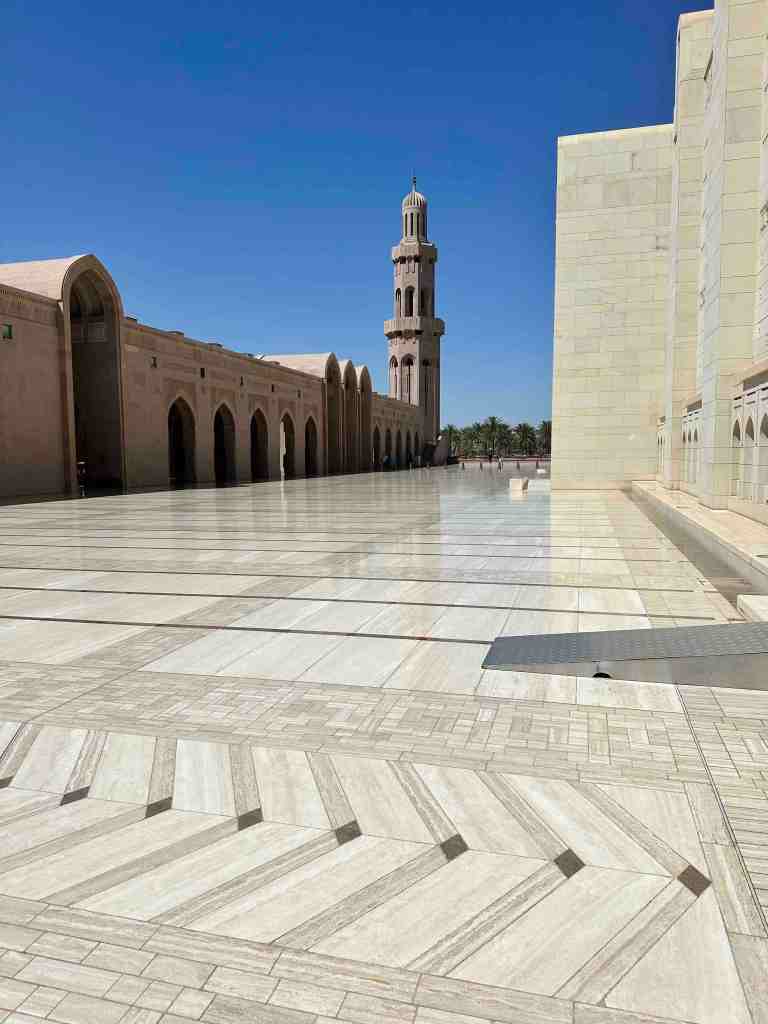
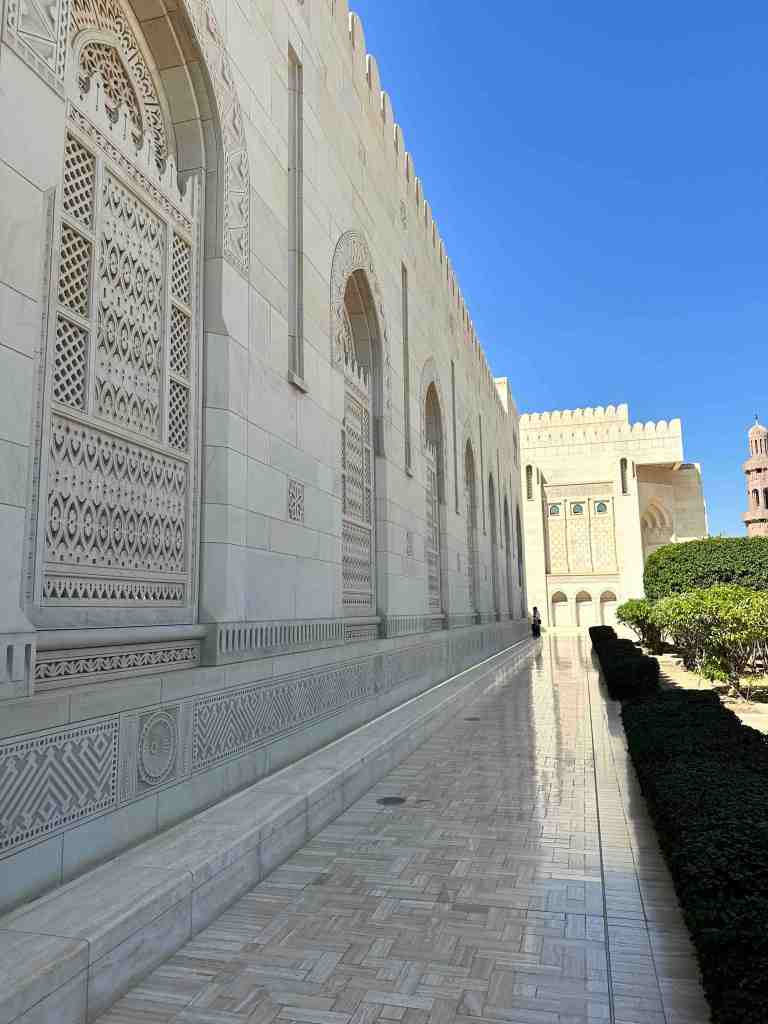
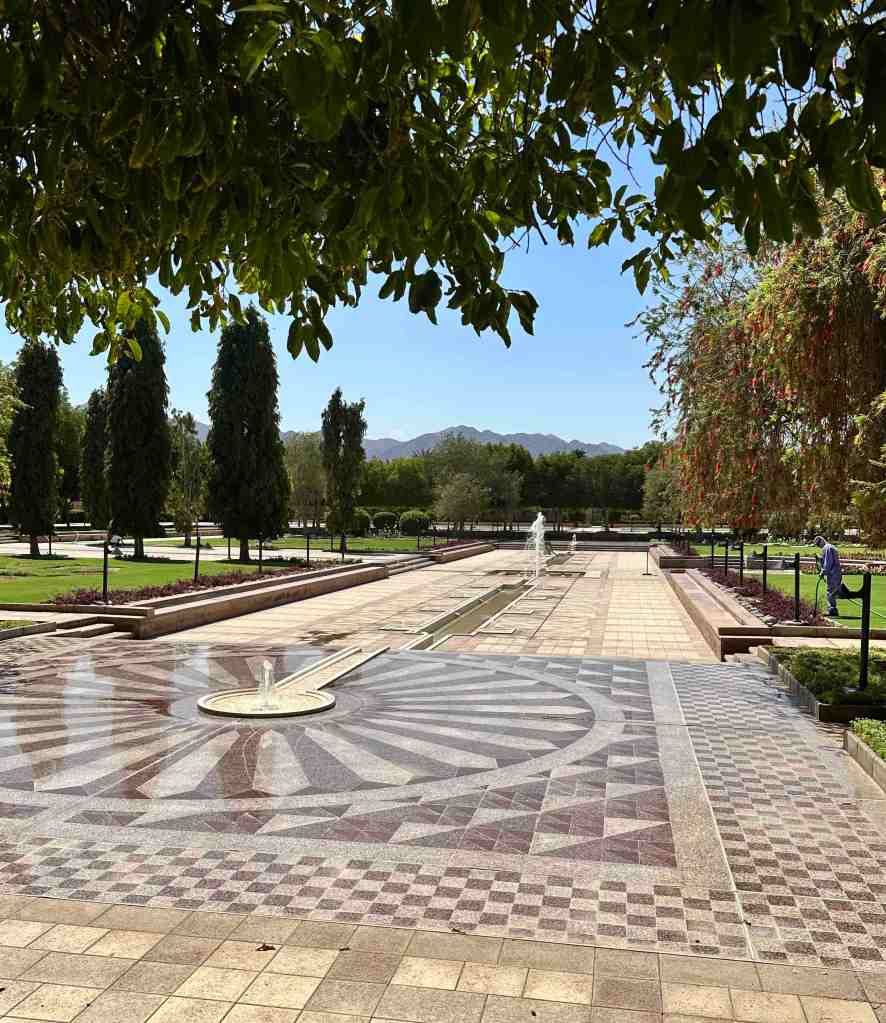
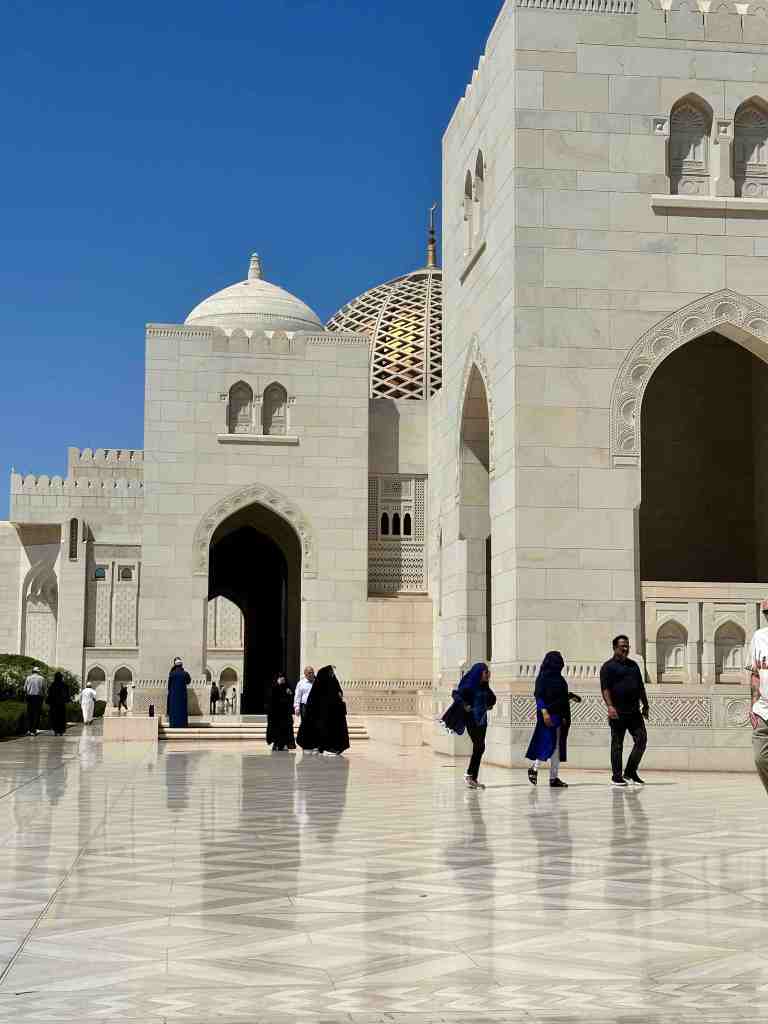
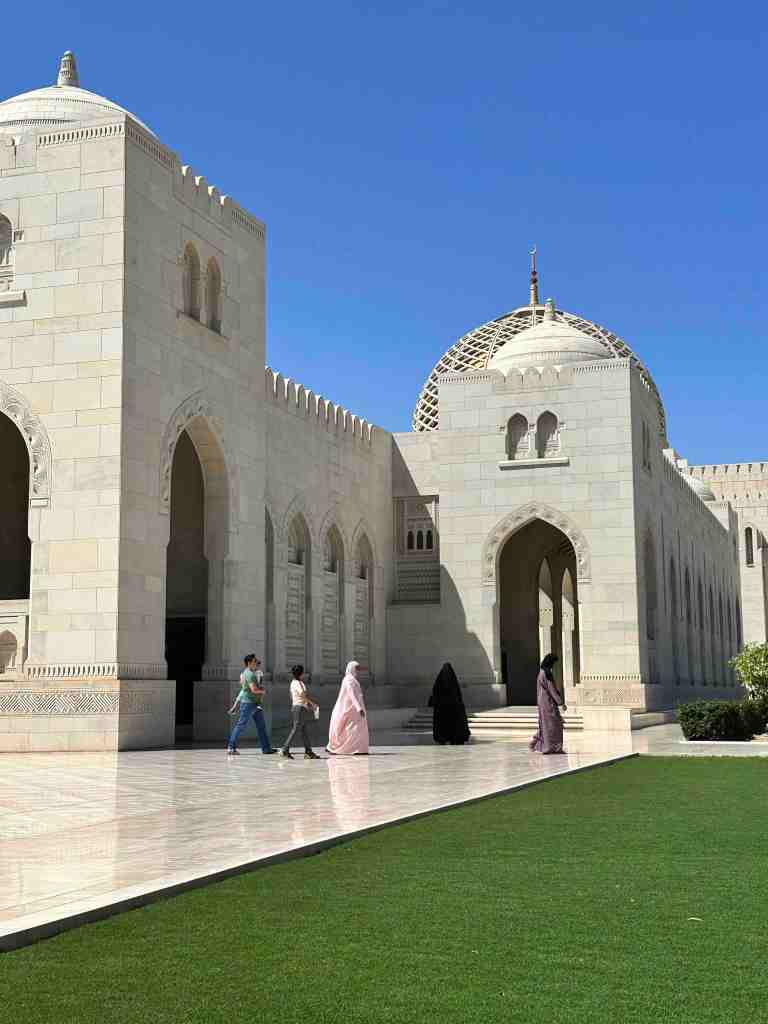
We entered the grounds of the Grand Mosque. The marble that laid in front of us was like looking at a sea of marble. It was shiny and smooth as we walked across to the entrance of the woman’s prayer hall. The grounds are very green and lush with grass and flowers. Not a weed to be found in these gardens. First, we all stopped at a place with cubby holes to remove our shoes and leave them. We entered the hall and saw the glittering chandelier’s and beautiful woodwork.


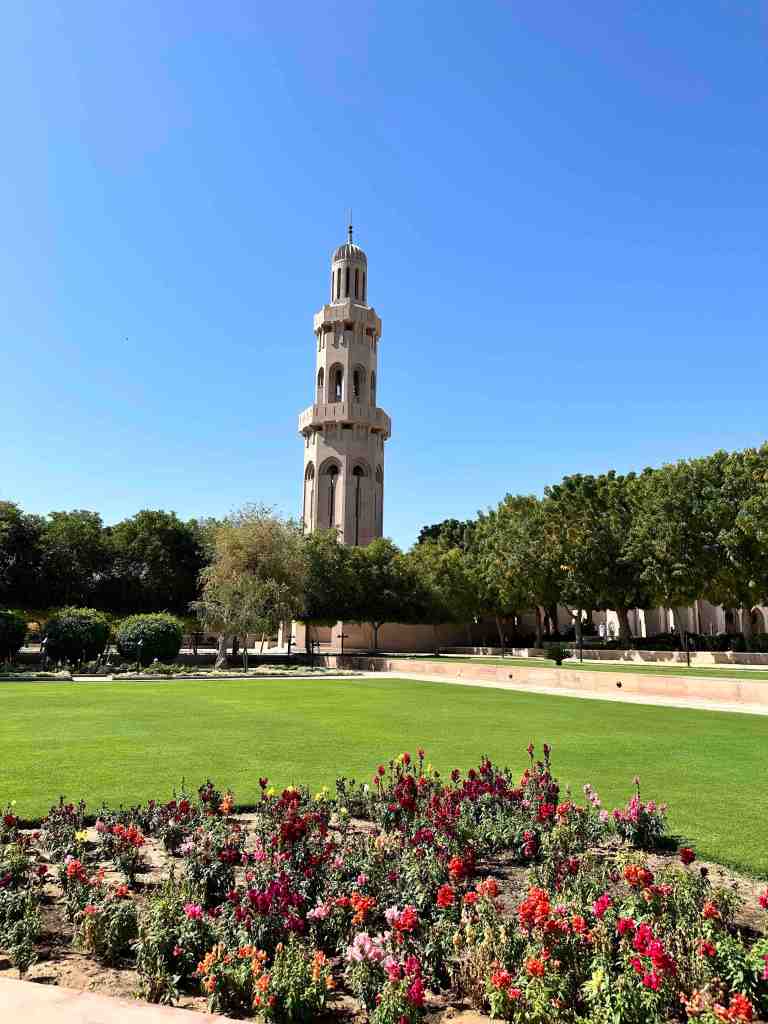
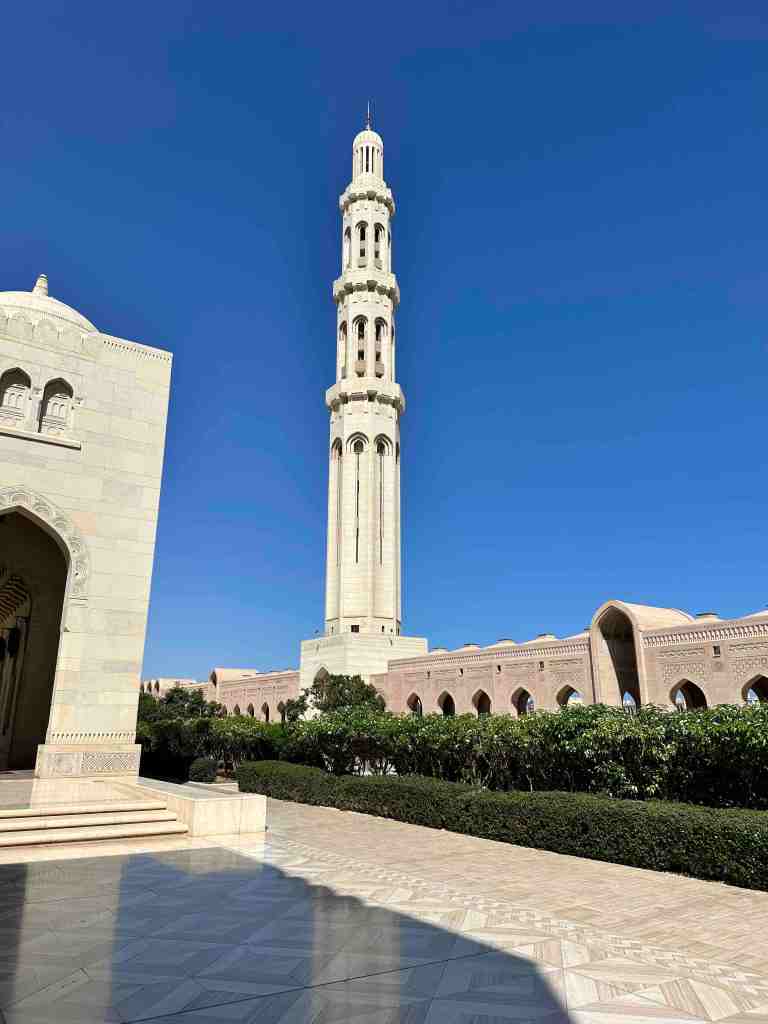
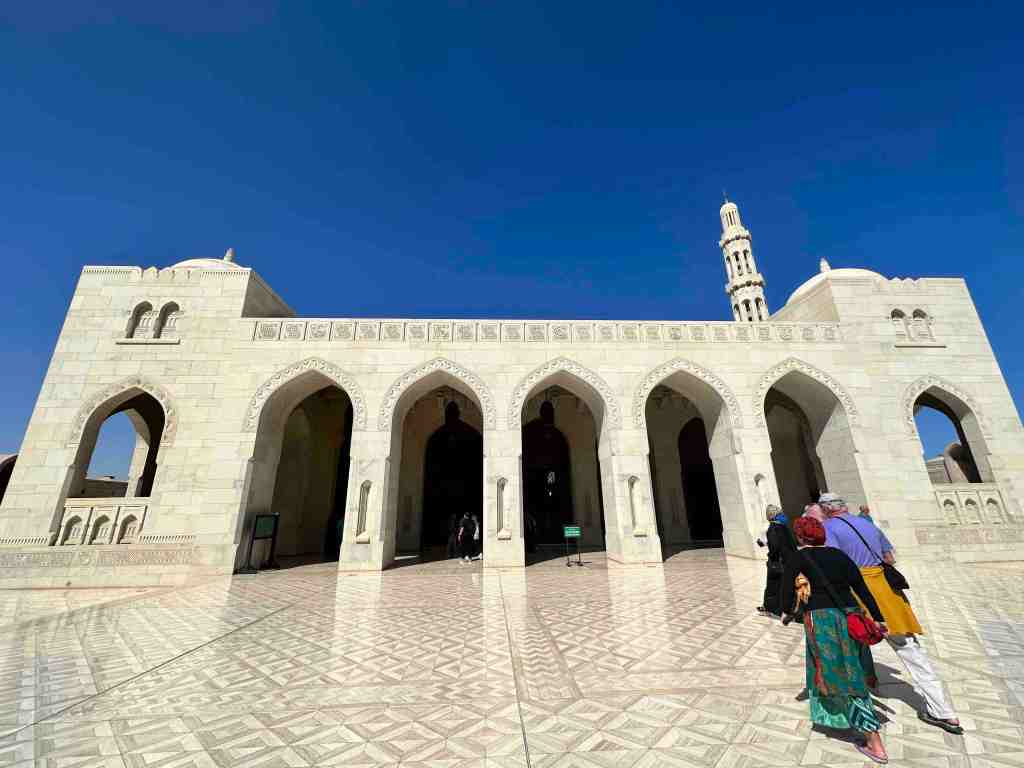

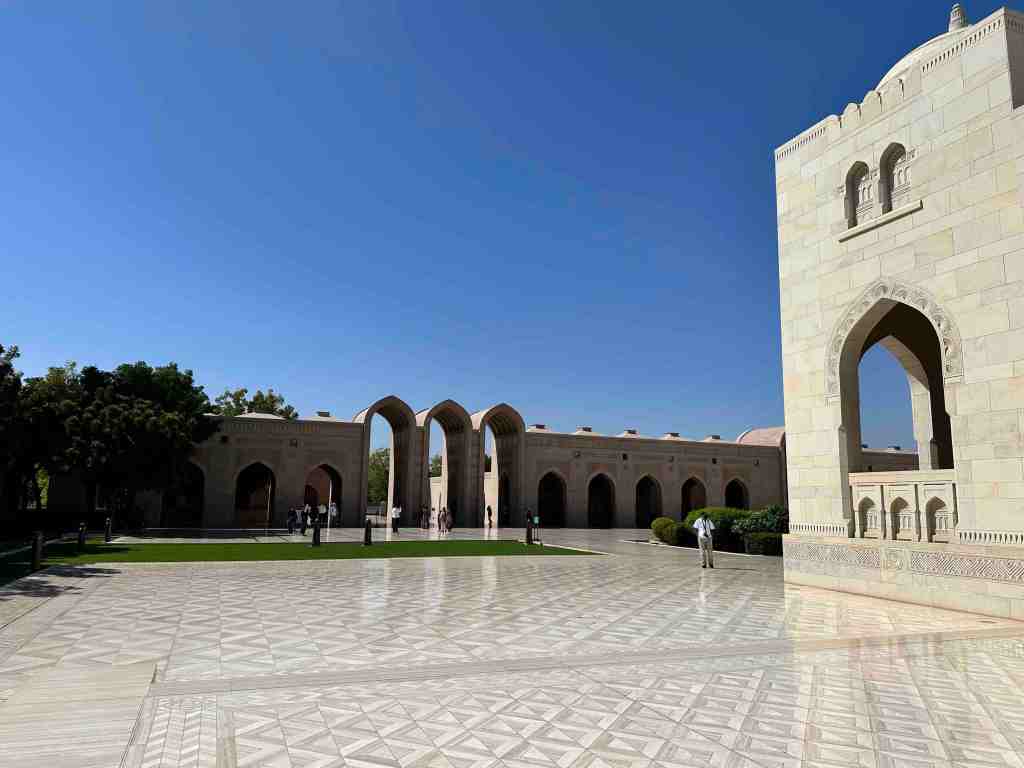
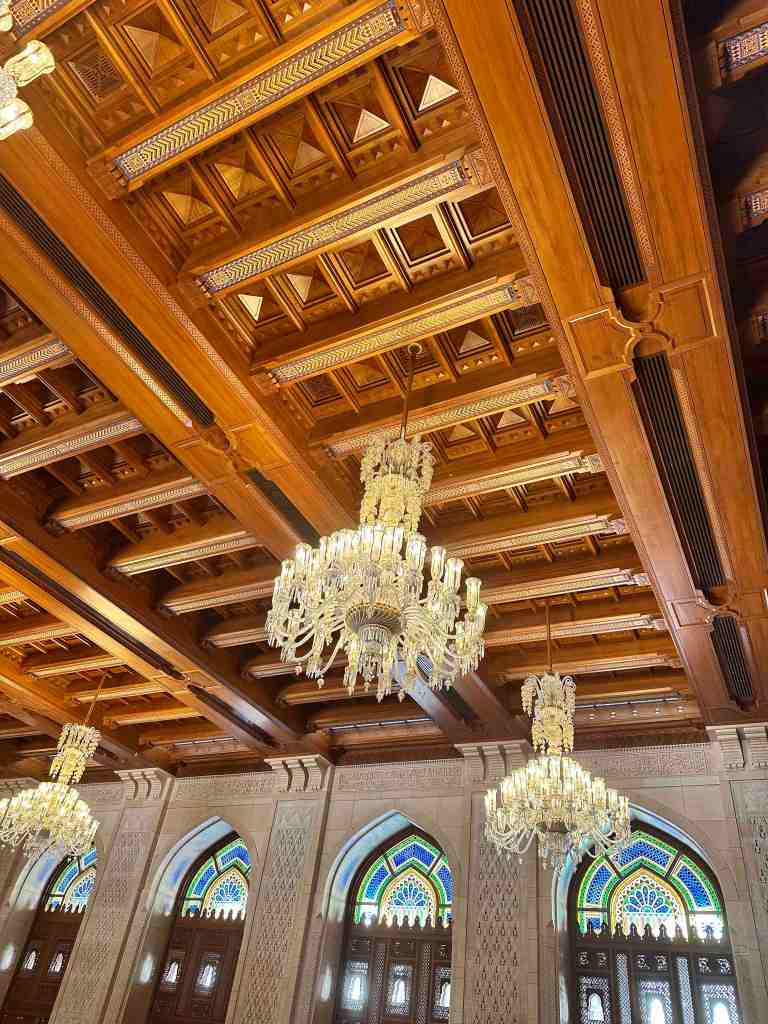
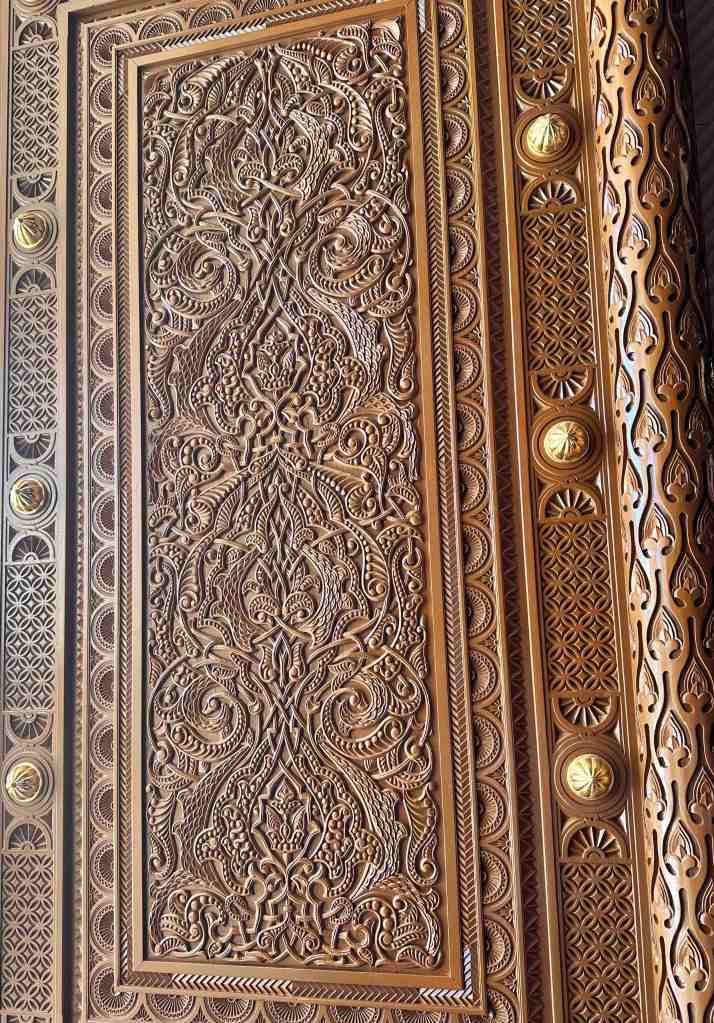
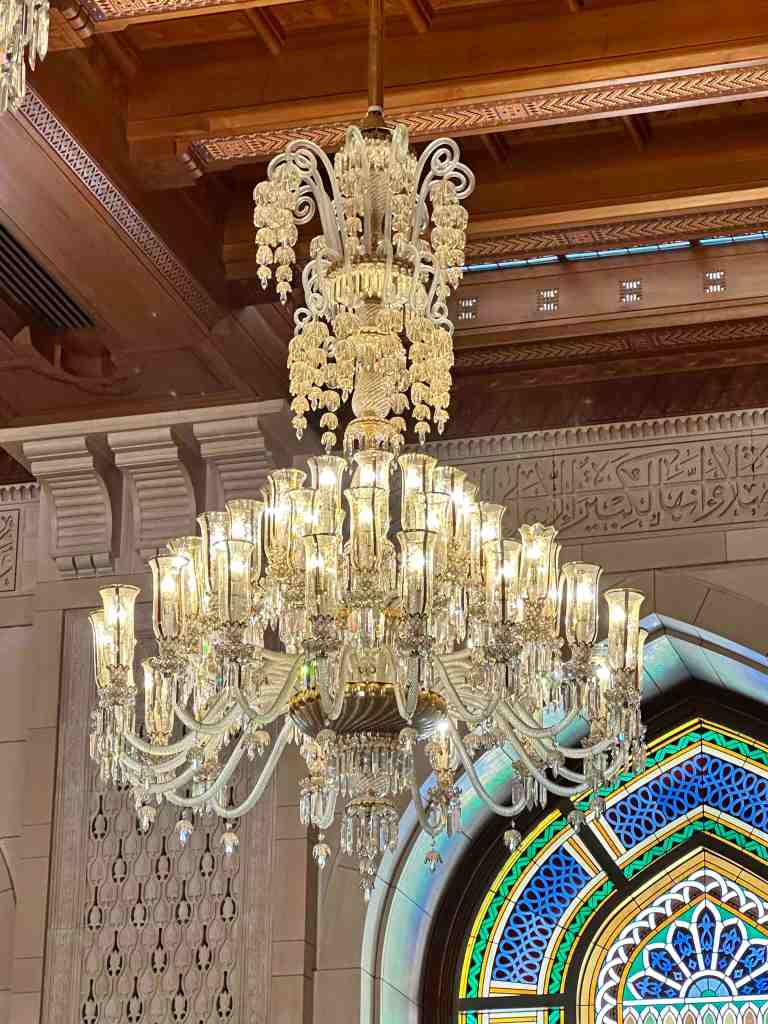
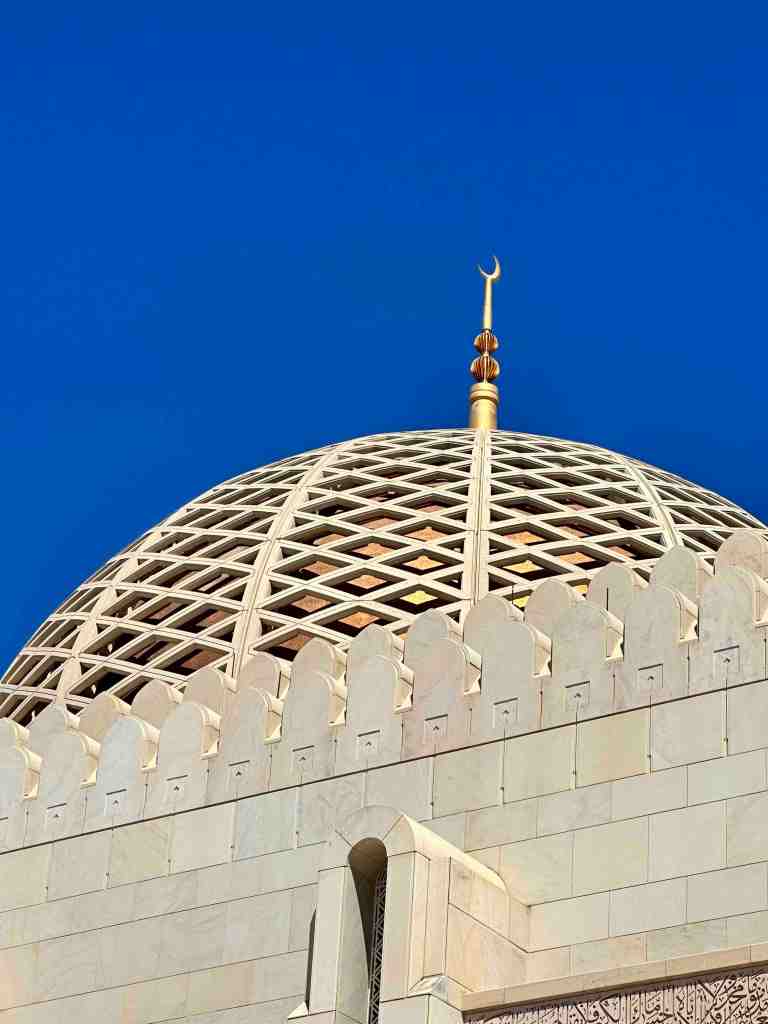
The glorious piece of modern Islamic architecture was a gift to the nation from Sultan Qaboos to mark his 30th year of reign. The main prayer hall is breathtakingly beautiful. The Persian carpet alone measures 230 ft by 200 ft wide, making it the second largest hand-loomed Iranian carpet in the world. It took 600 women four years to weave. The mosque can accommodate 20,000 worshippers. The chandelier located in the middle of the men’s prayer hall measures 46 feet, weighs 8.5 tons, holds 600,000 Swarovski crystals, 24 carat gold plating and took 4 years to complete.

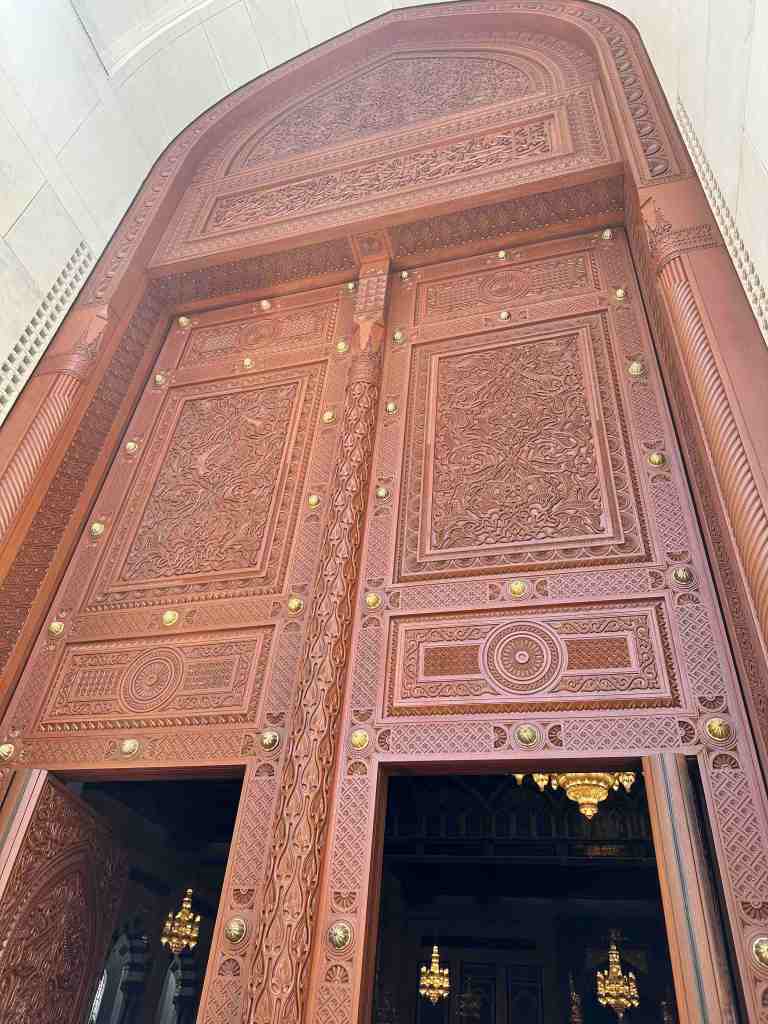
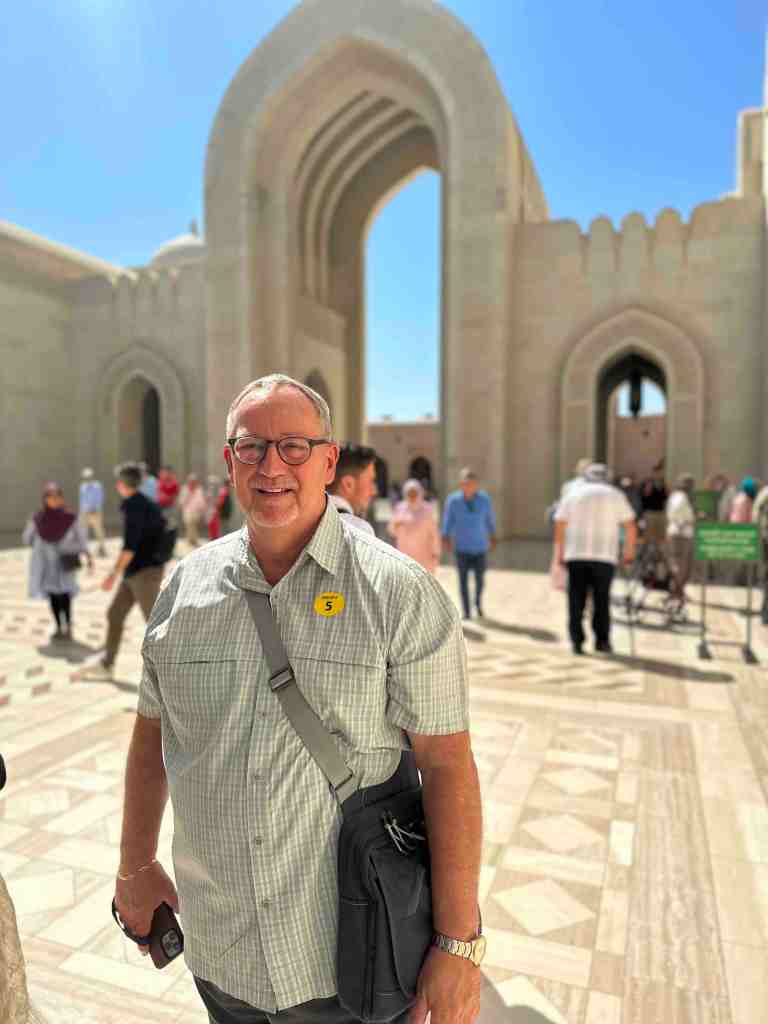

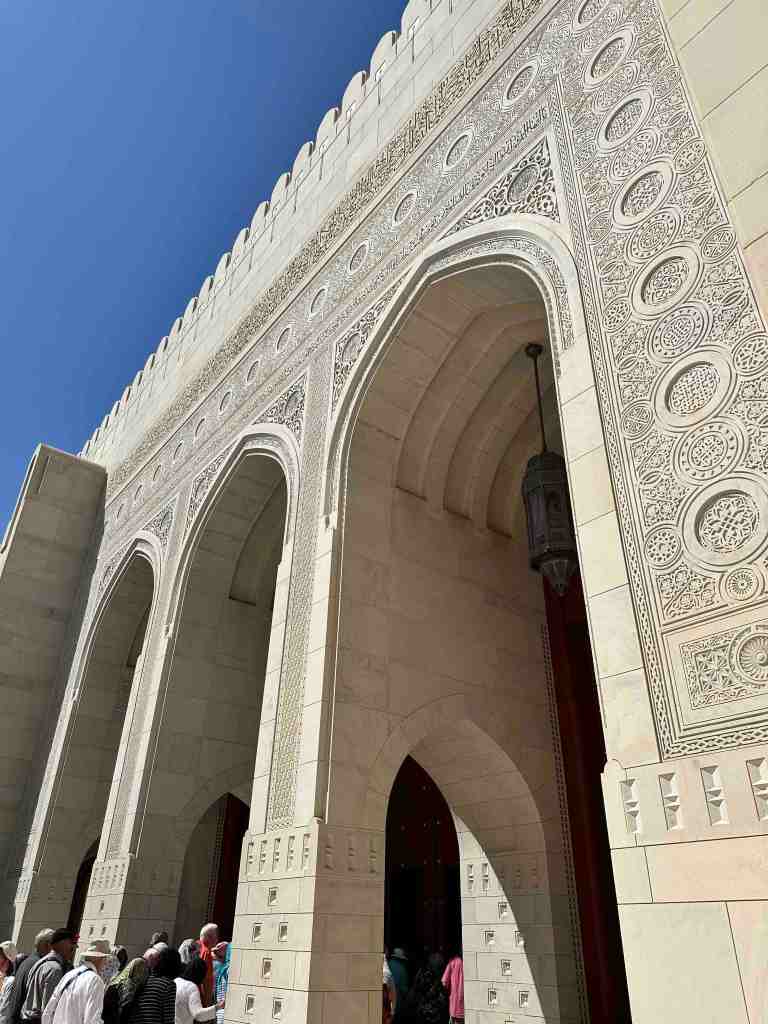
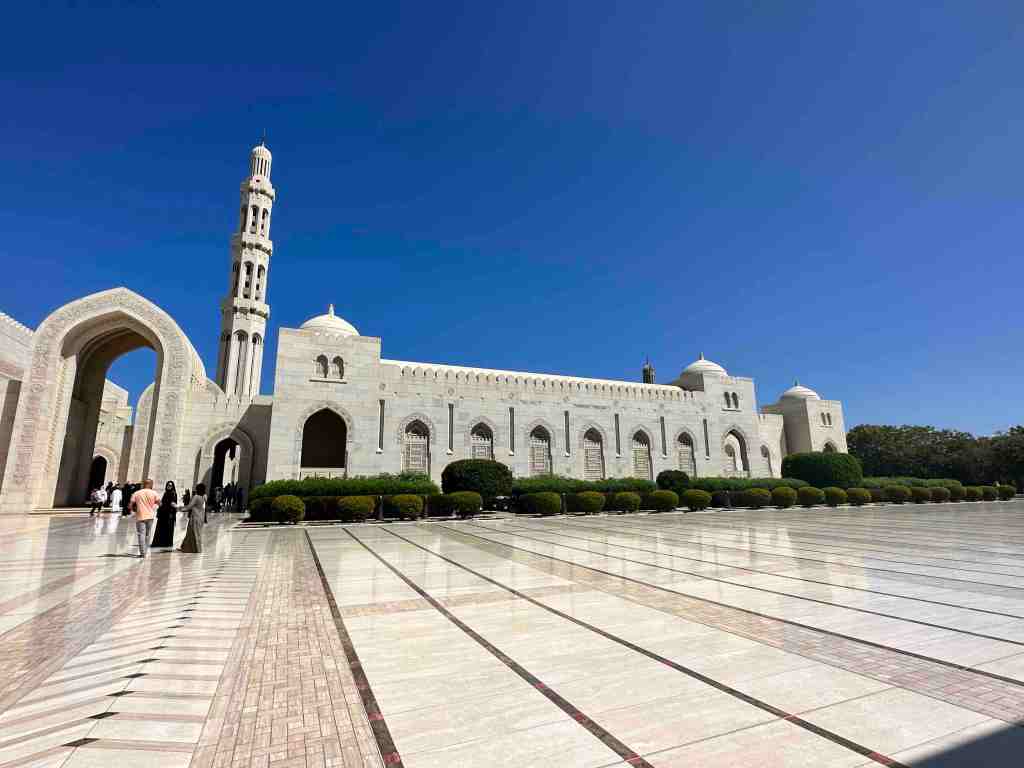
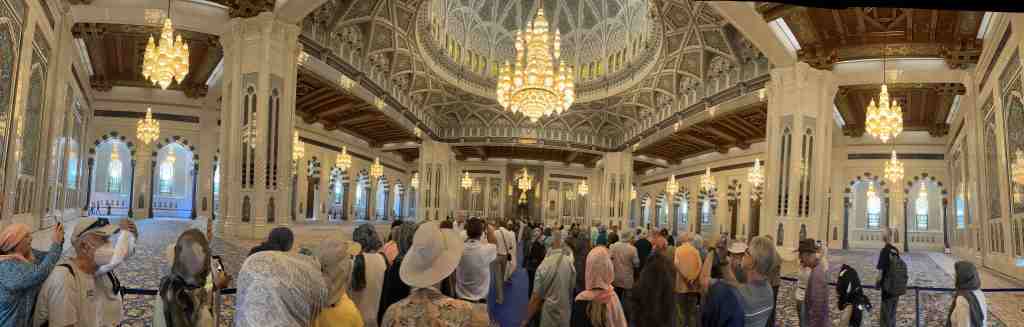

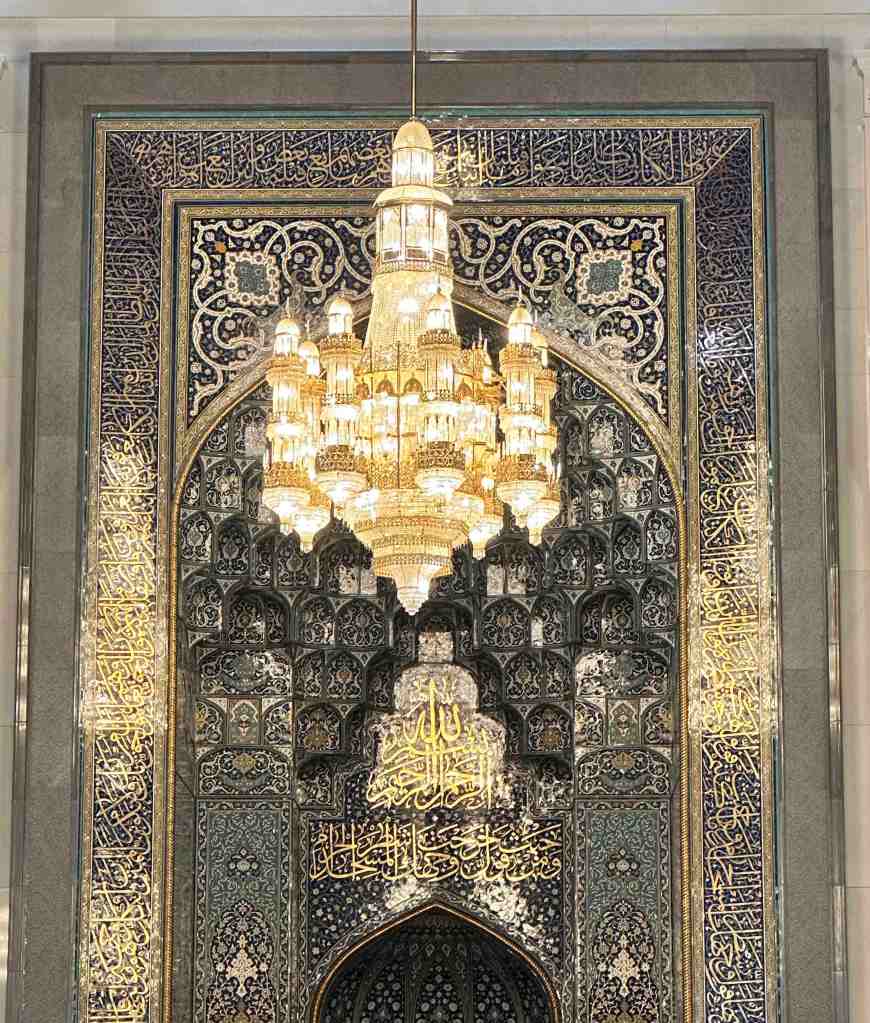
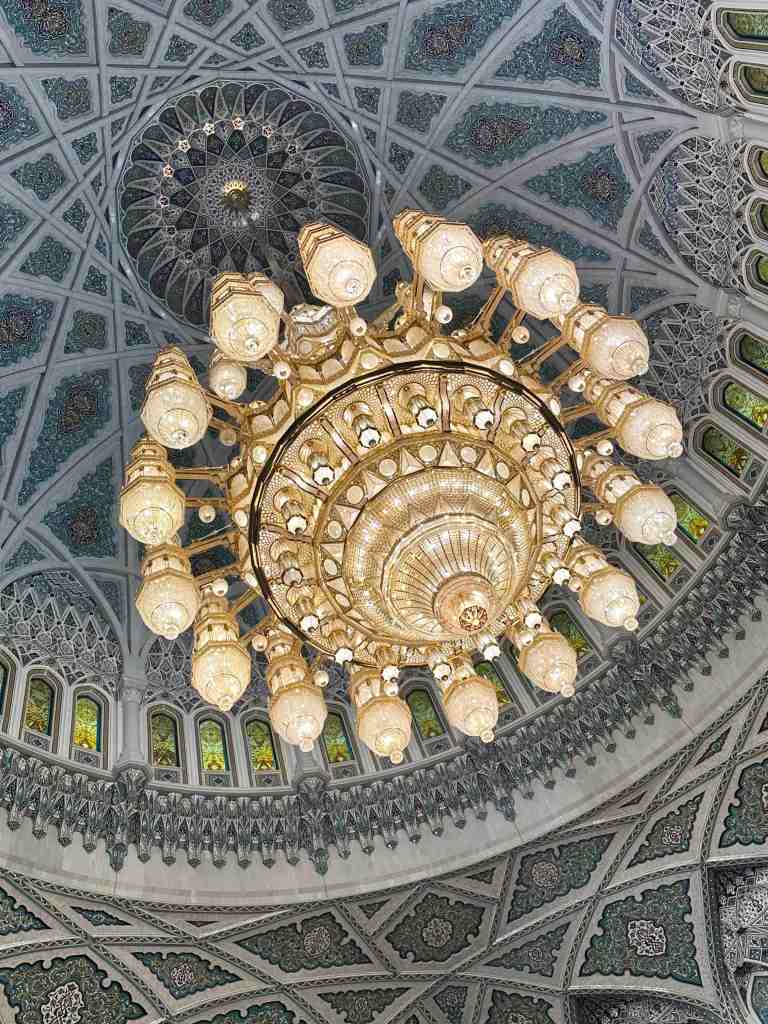
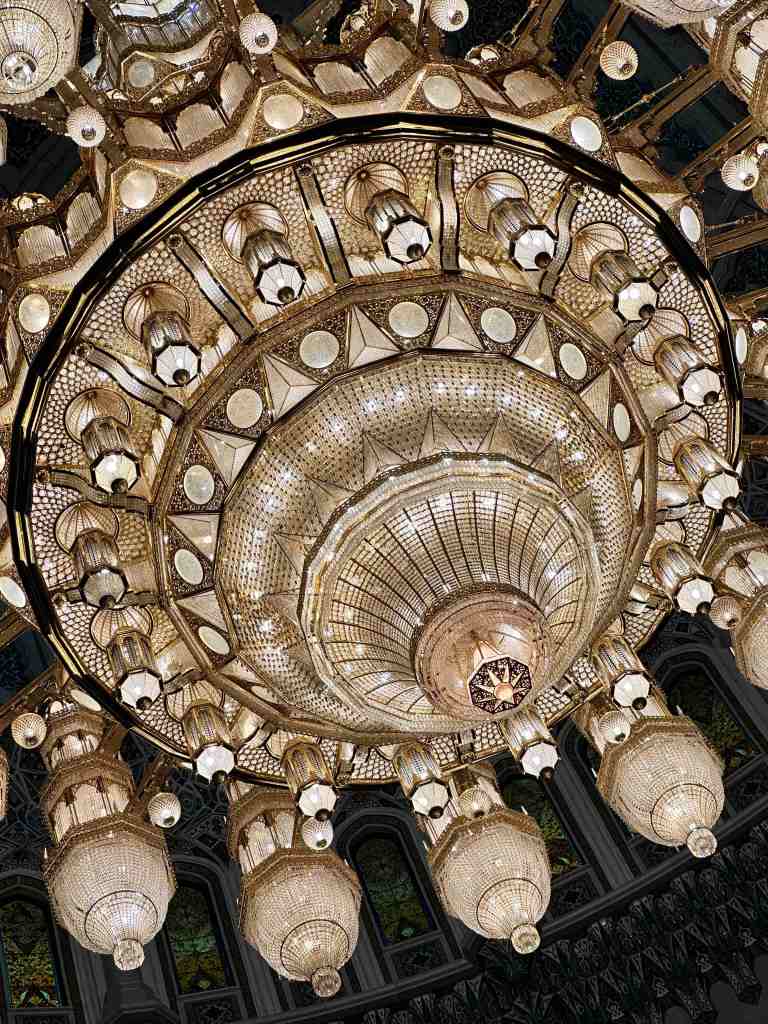
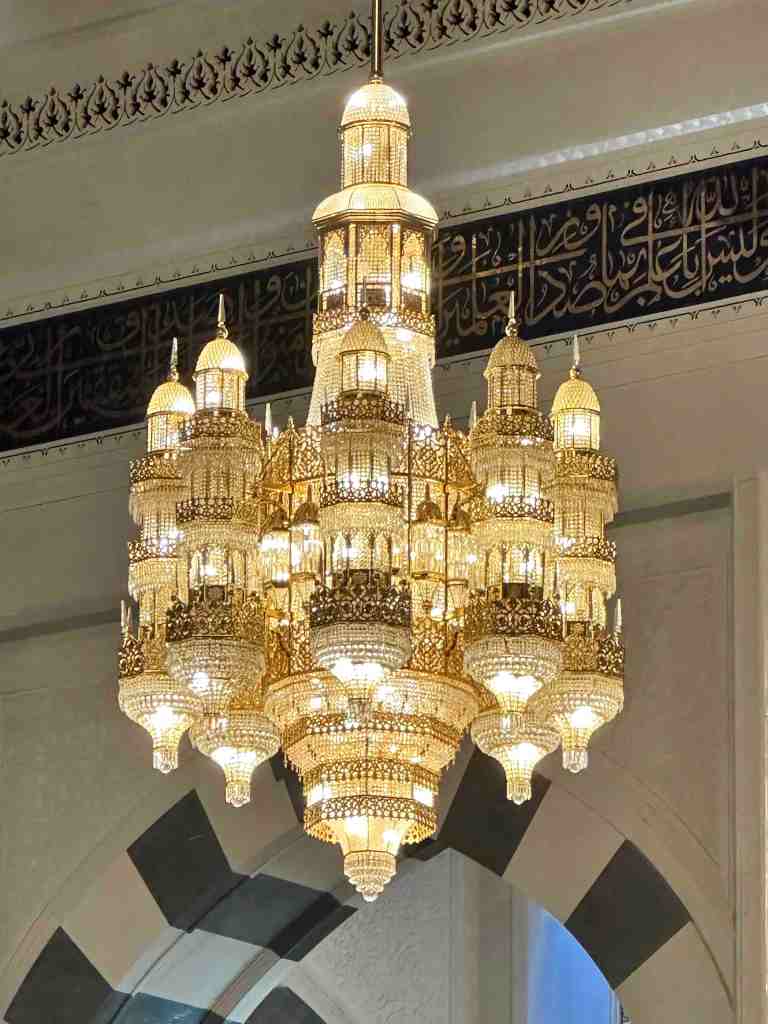

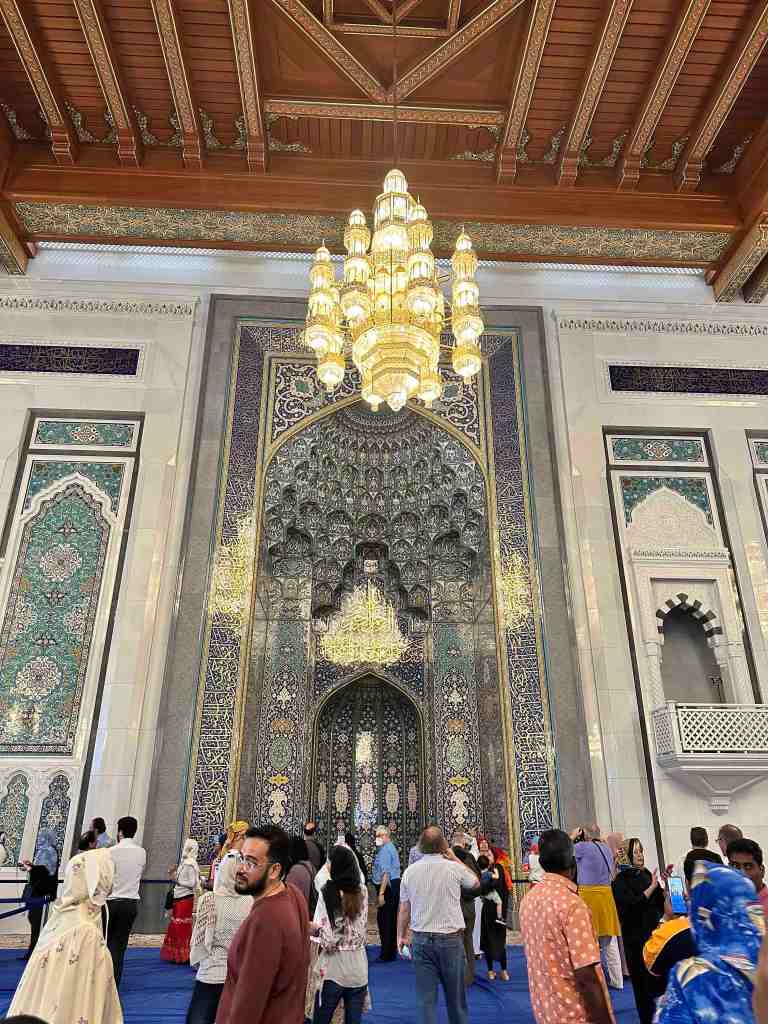
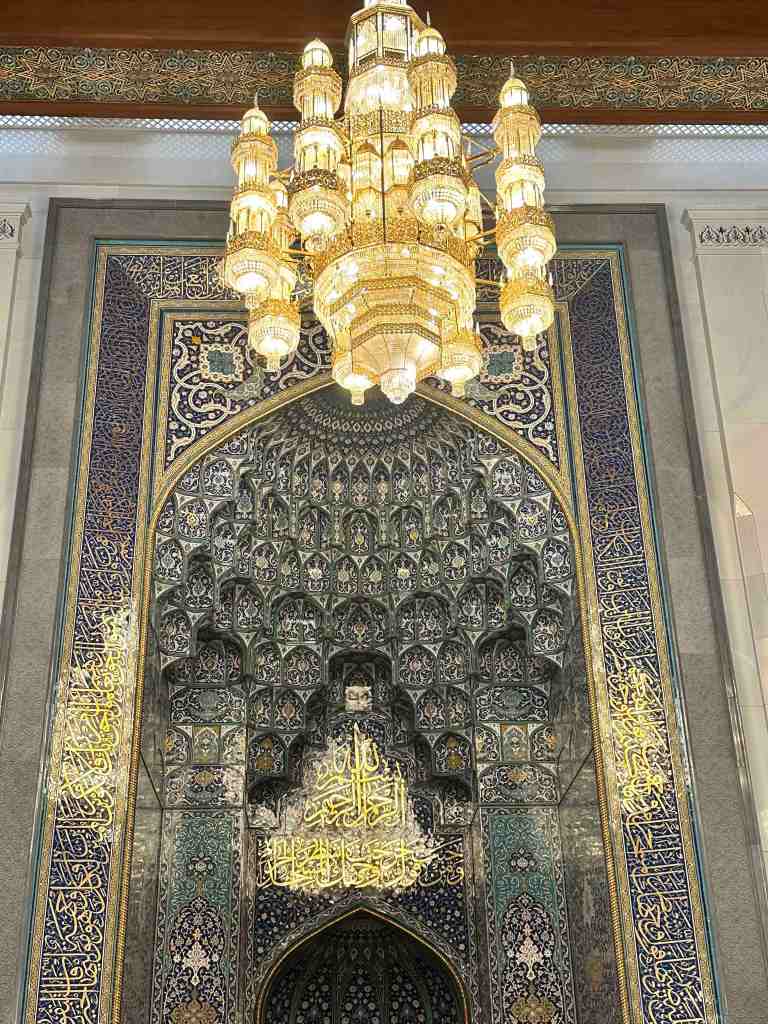
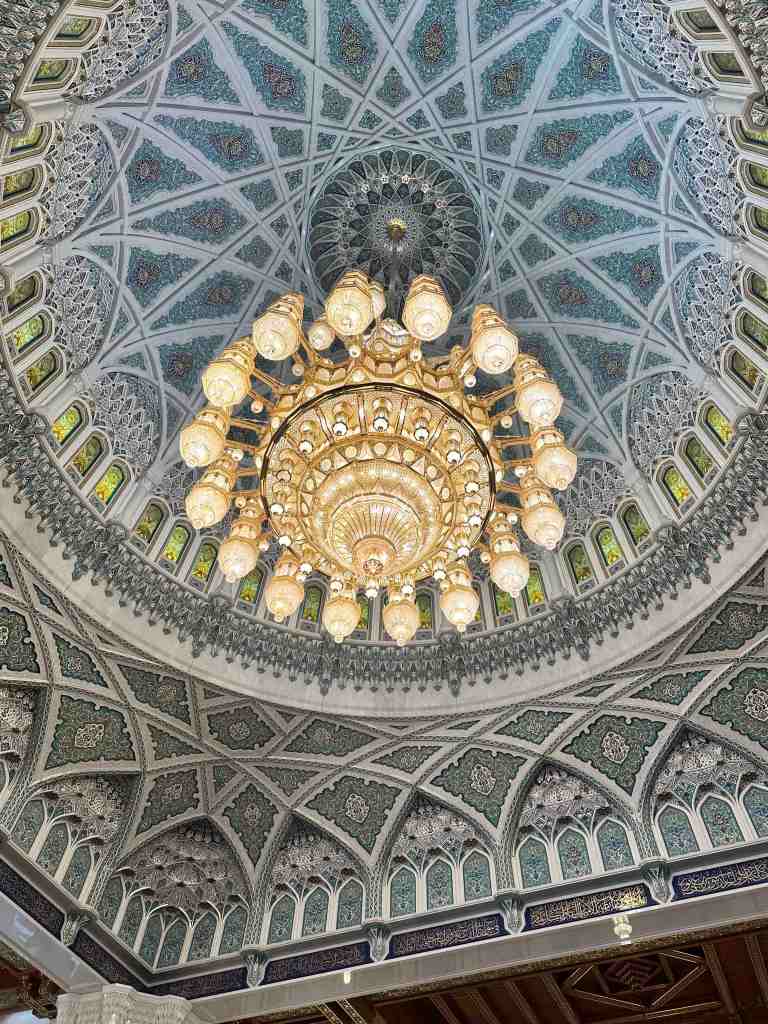

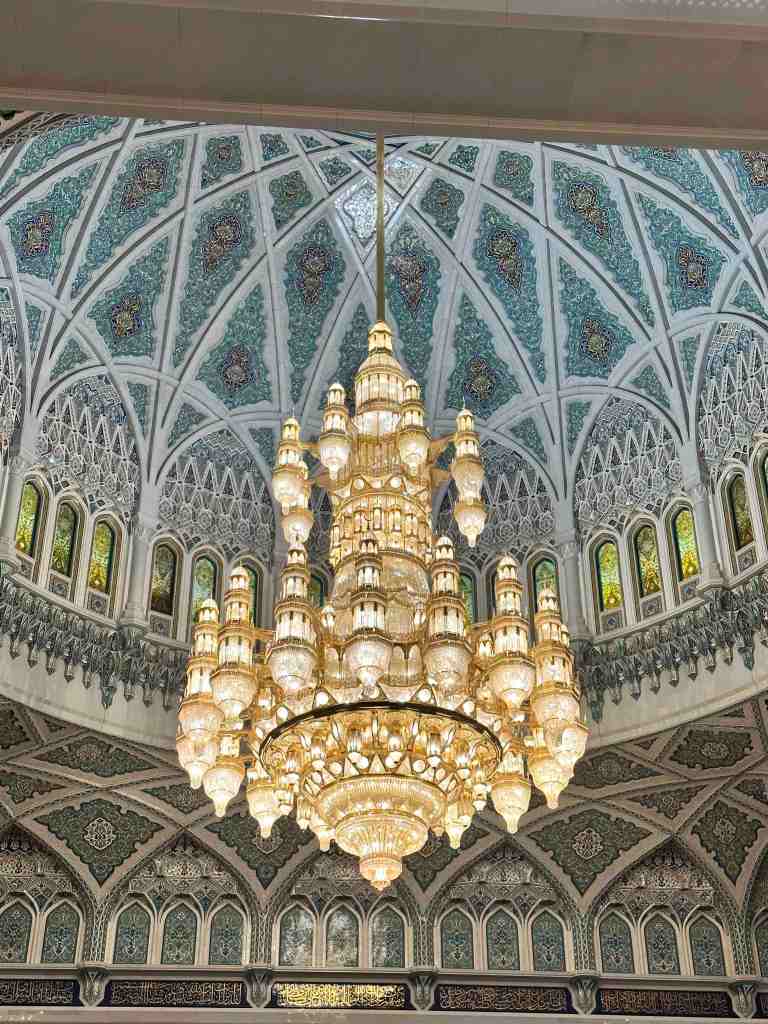
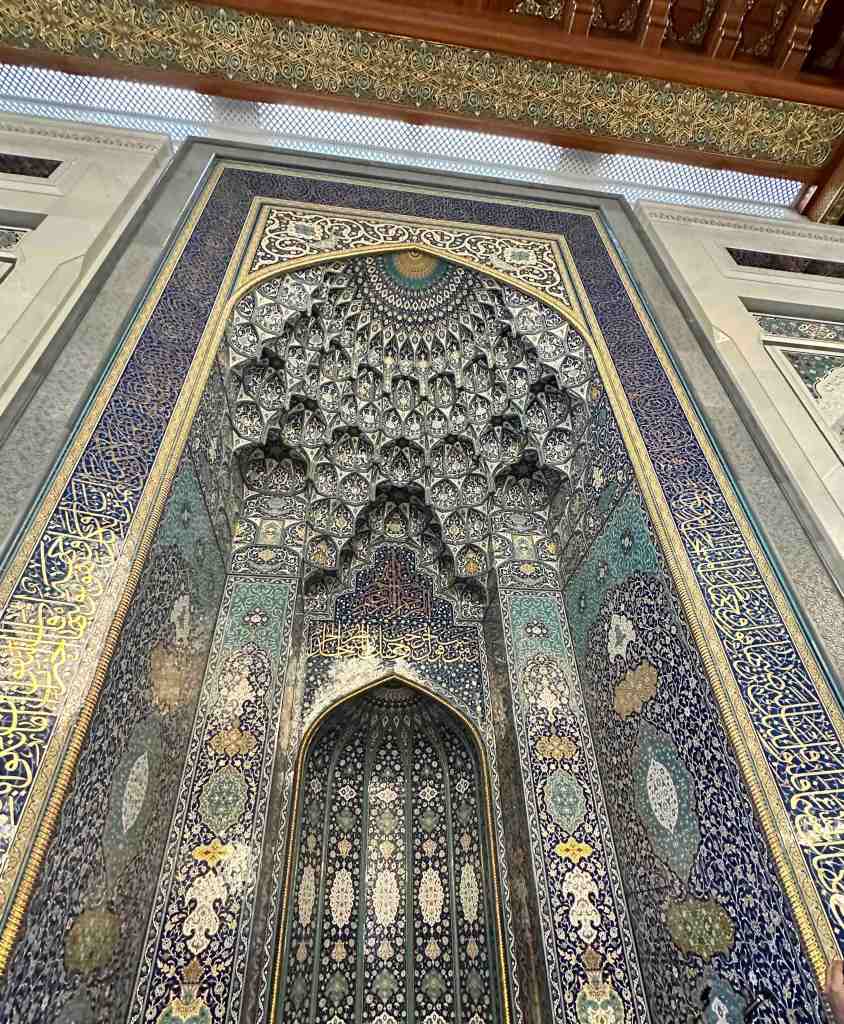
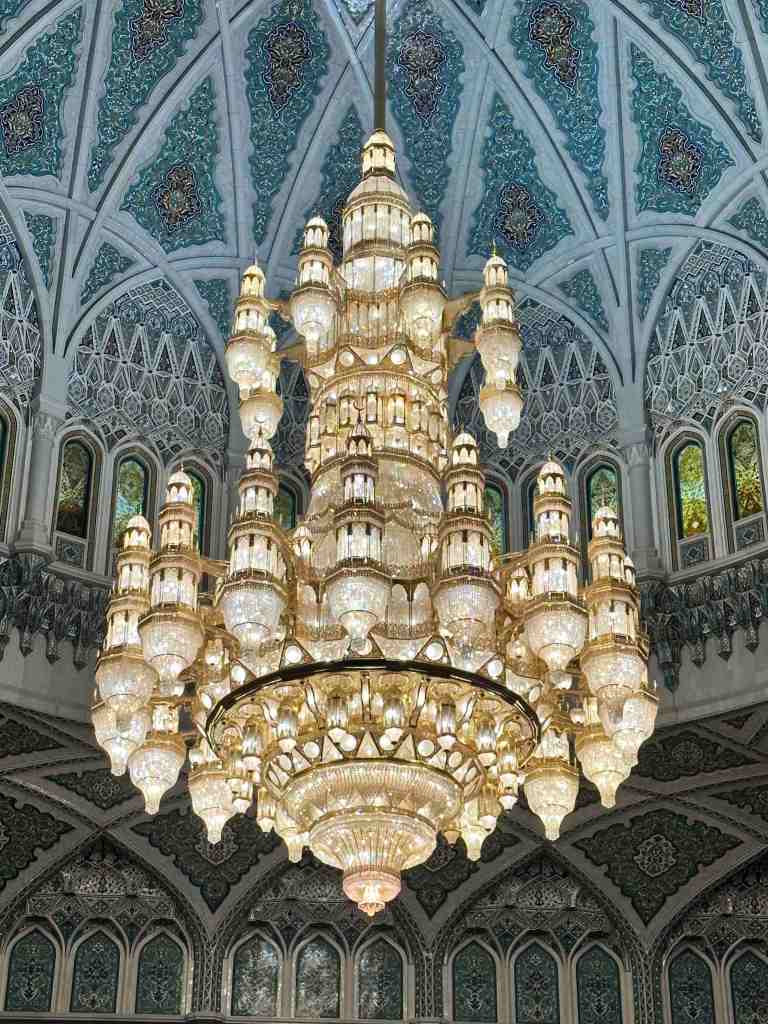
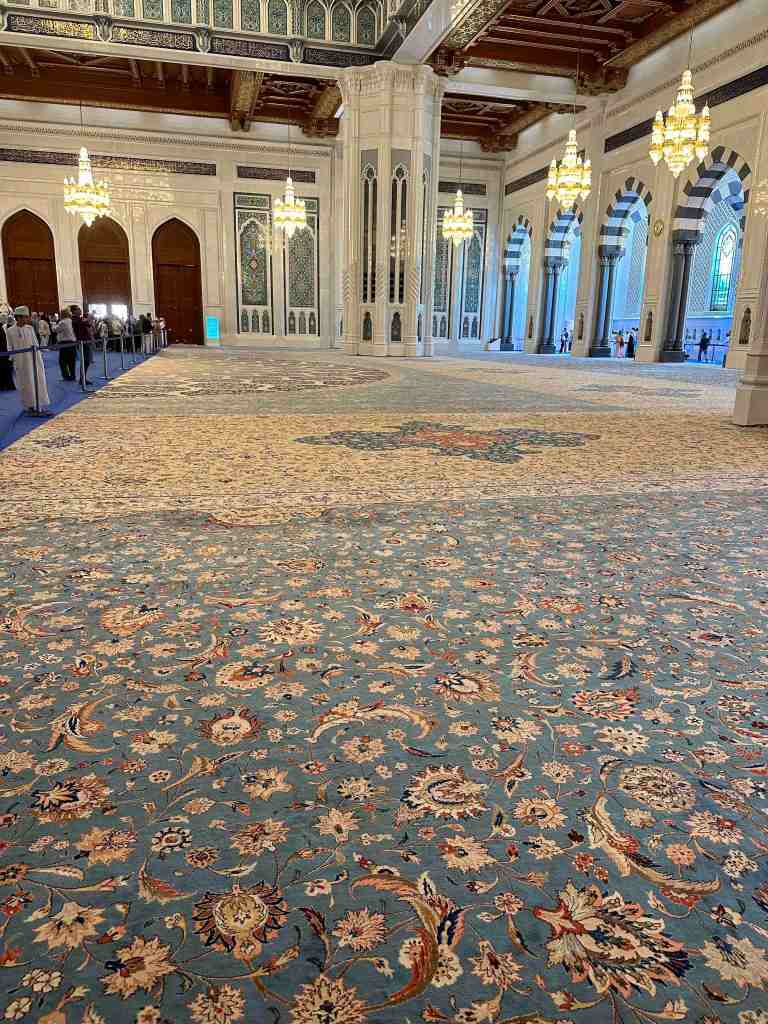
(Note: I realize I included too many pictures of chandeliers…but they were so pretty. Lol).
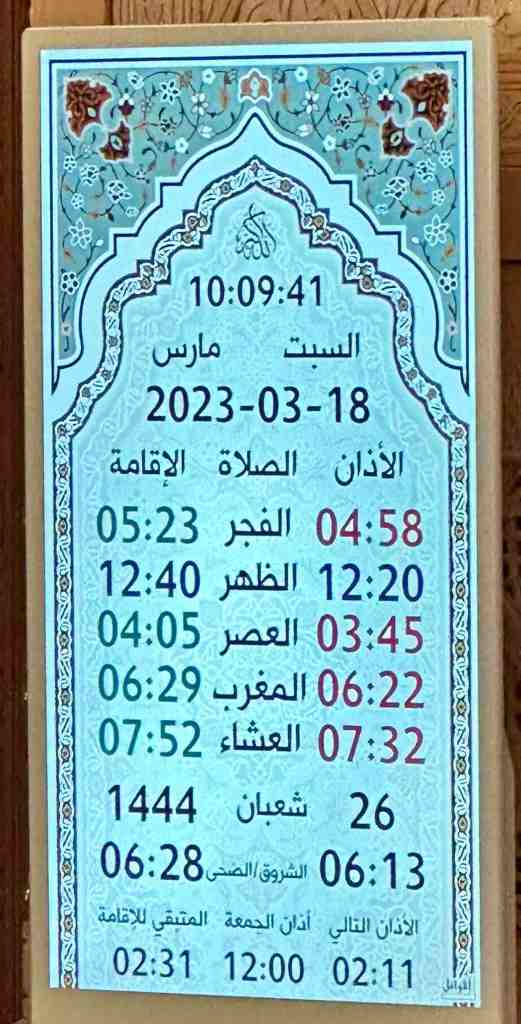
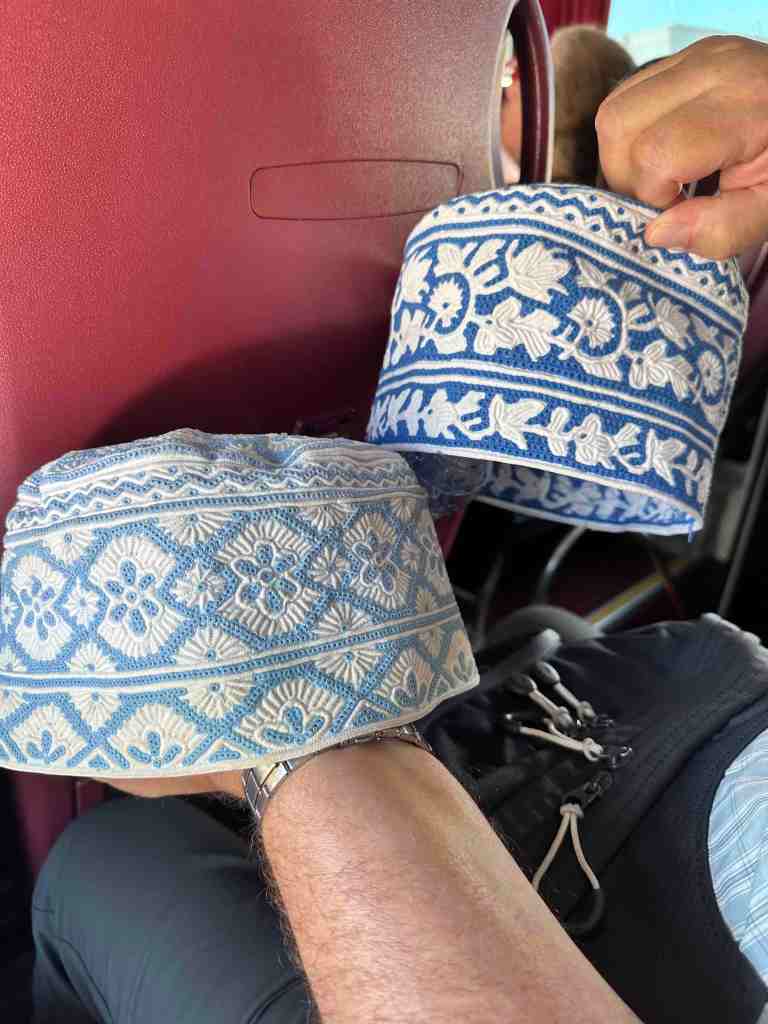
The small room with a fountain-looking construction in the center is the ablution room. This is where worshipers come to perform the cleansing or purification ritual before prayer. Our guide gave a demonstration. He sat down and took off his sandals and his taqiyah from his head. First he turned on the water and washed his hands, 3 times. Then he washed the inside of this mouth, his nose, his hair and face and then his feet (all 3 times). Then they go into the hall for worship. We walked through the men’s prayer hall and Hussein explained the 5 times a day that they pray and the schedule. I couldn’t count how many chandelier’s were in that hall. The tile work was also exquisite.
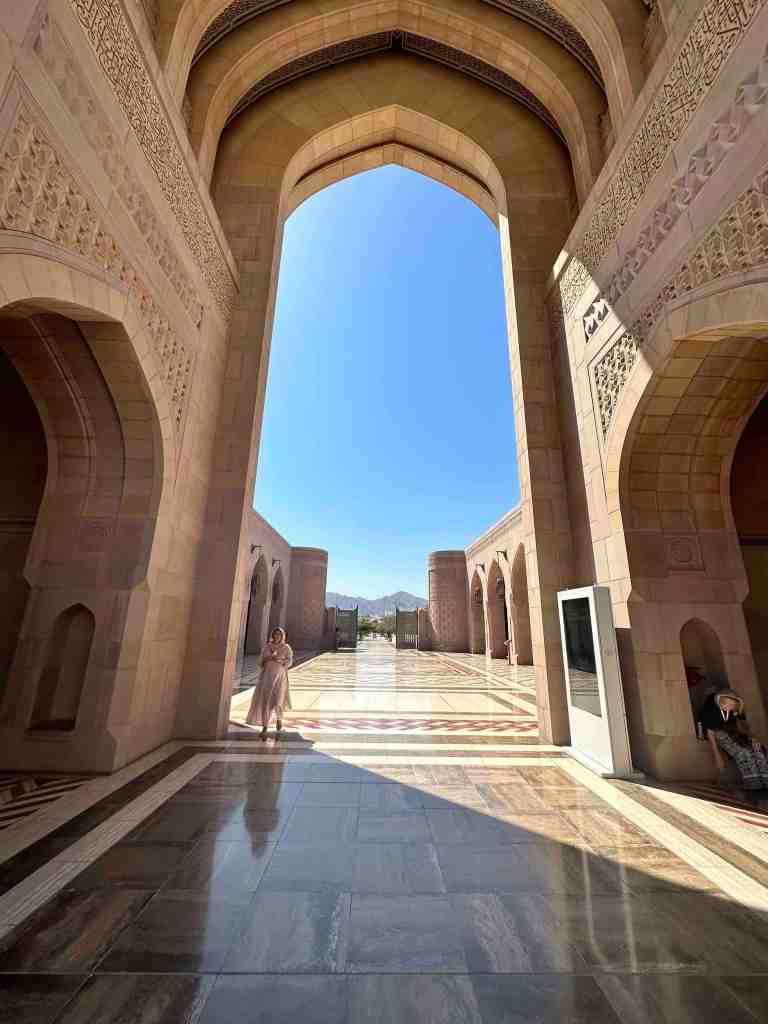
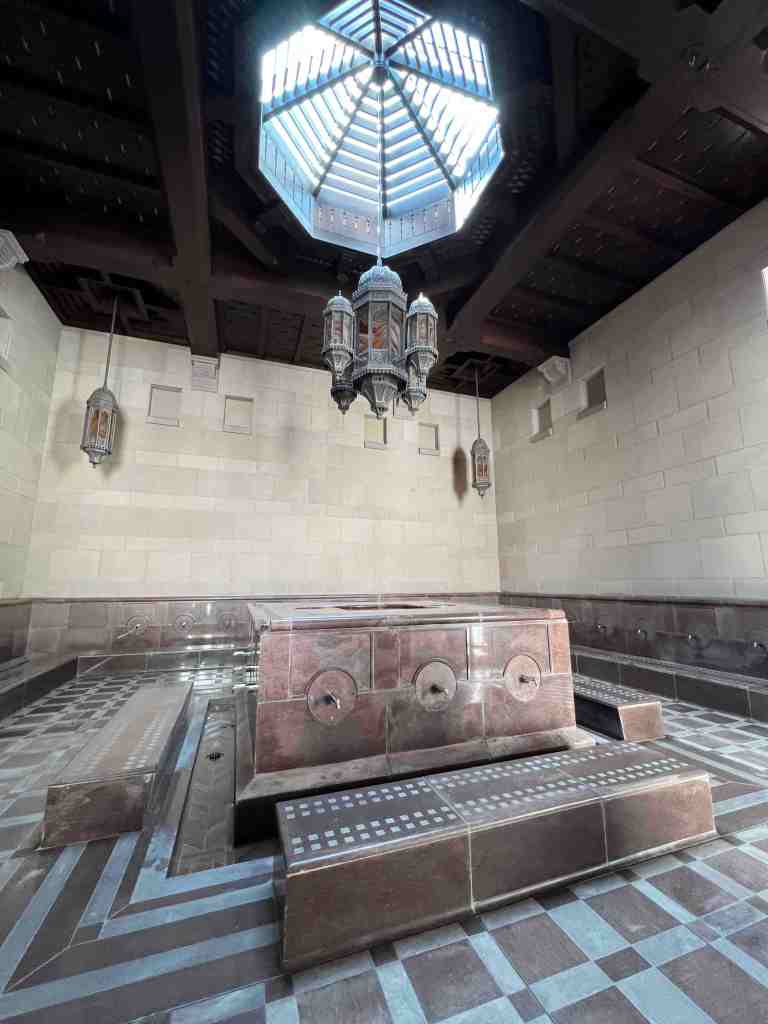
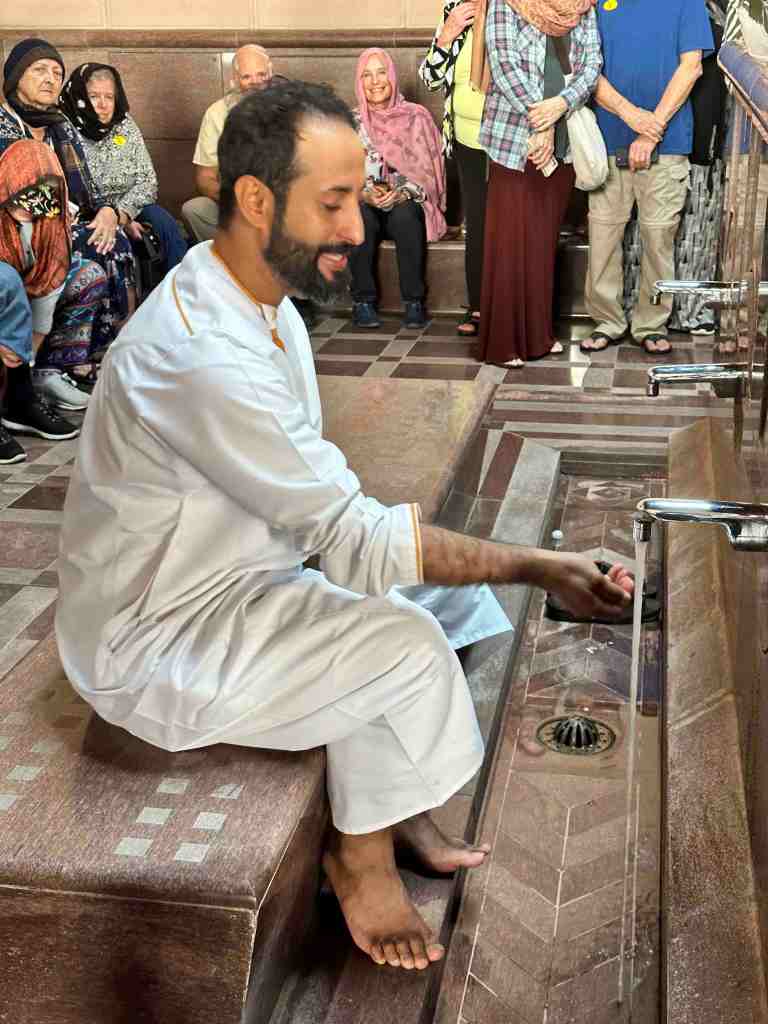

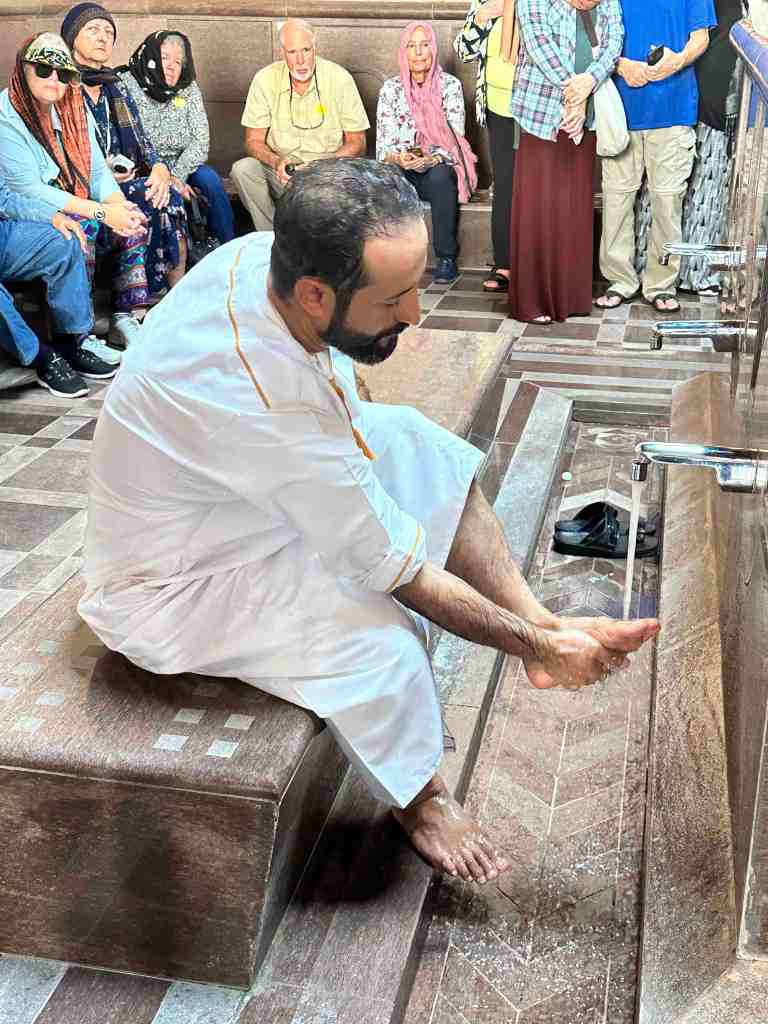

After we left the main hall, we put our shoes back on and went to use the restrooms. Not surprised to see, there are no toilets.
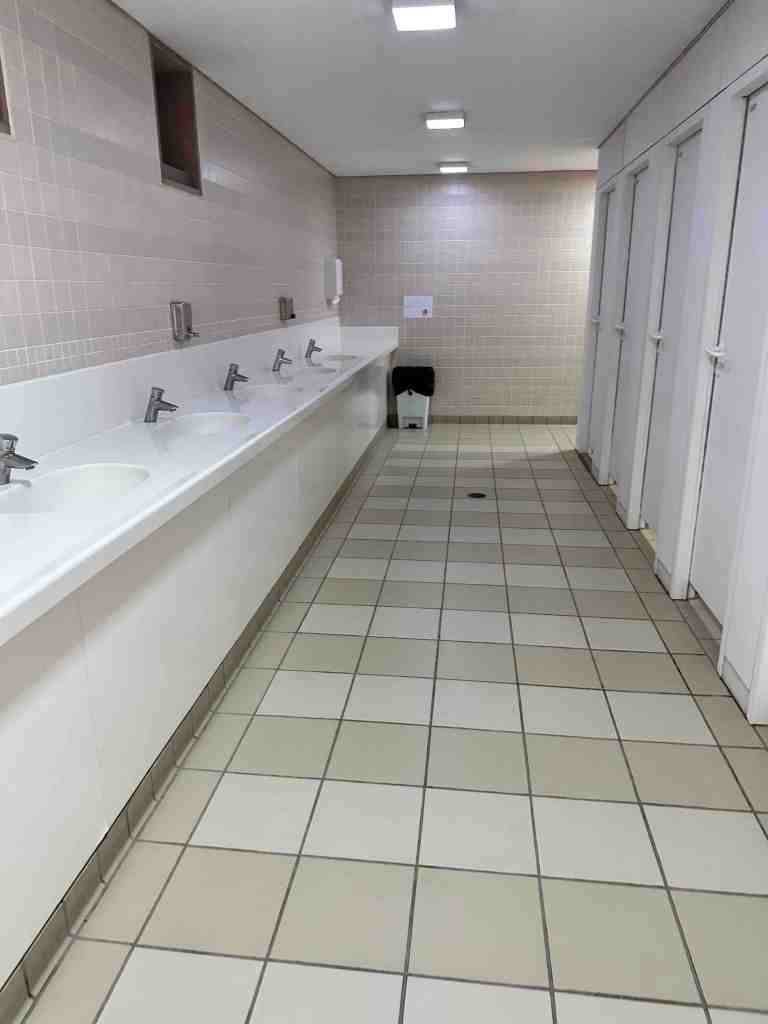
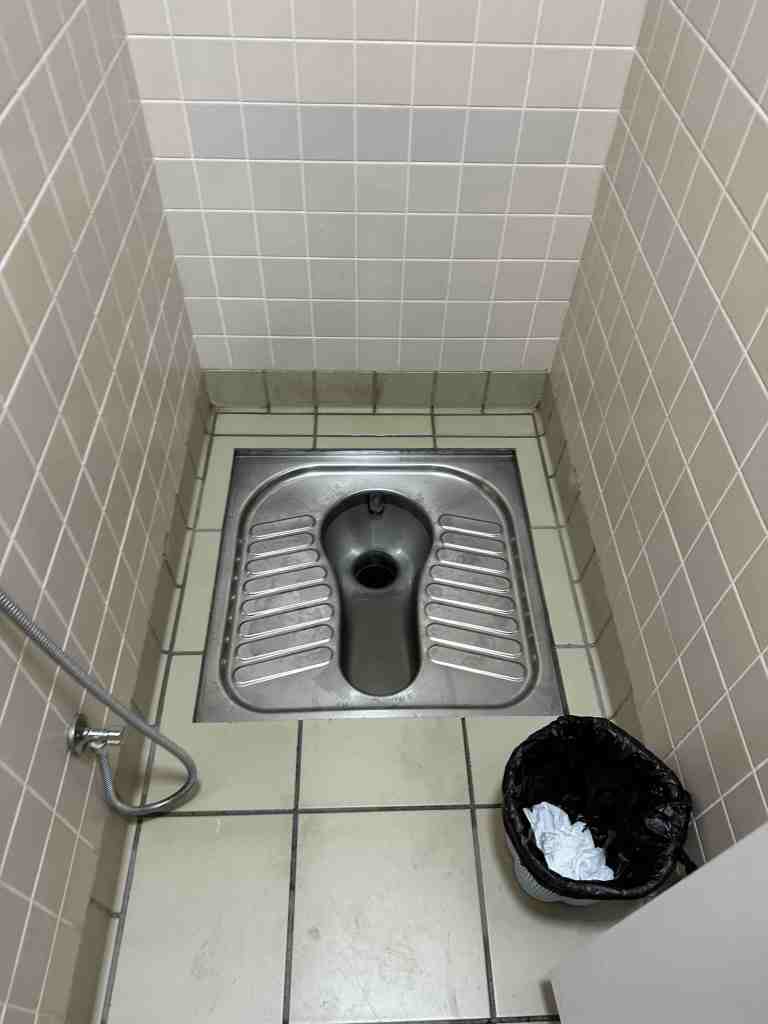
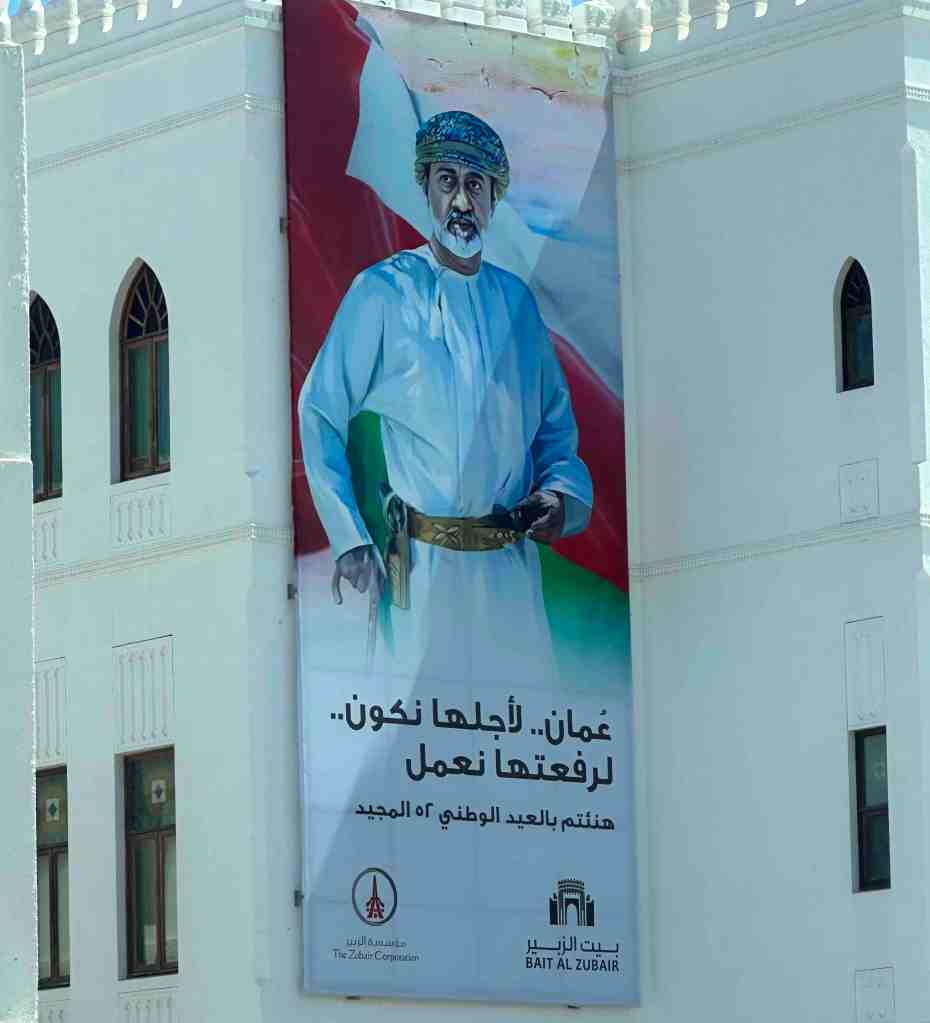
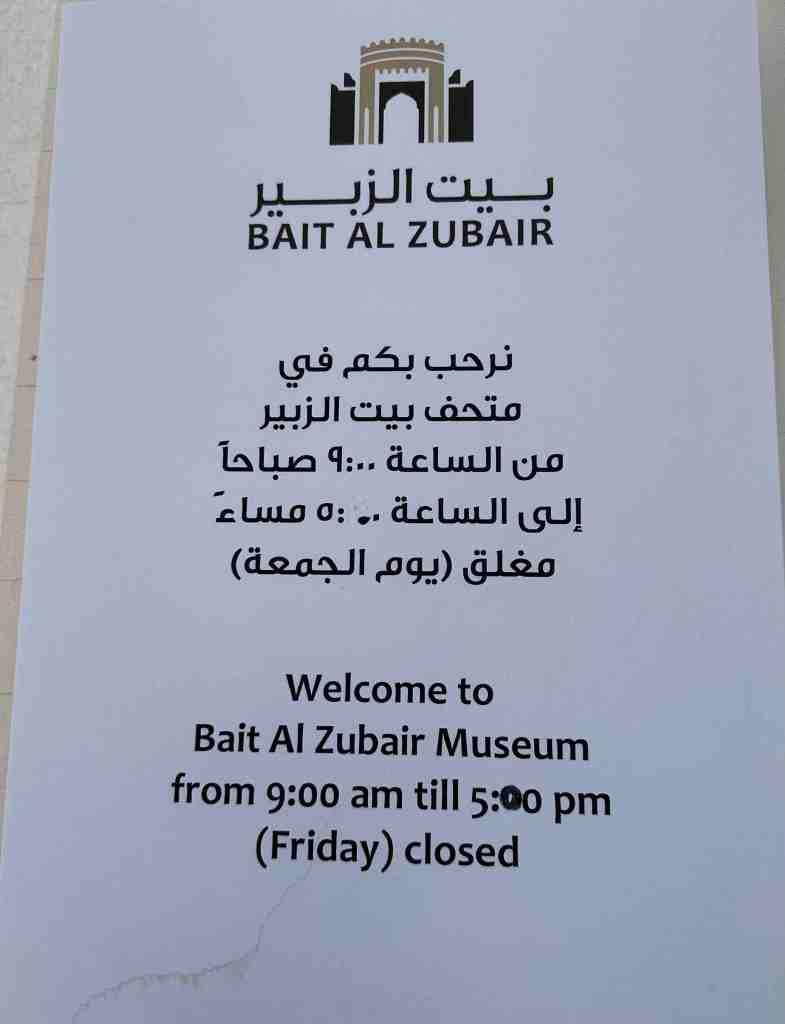
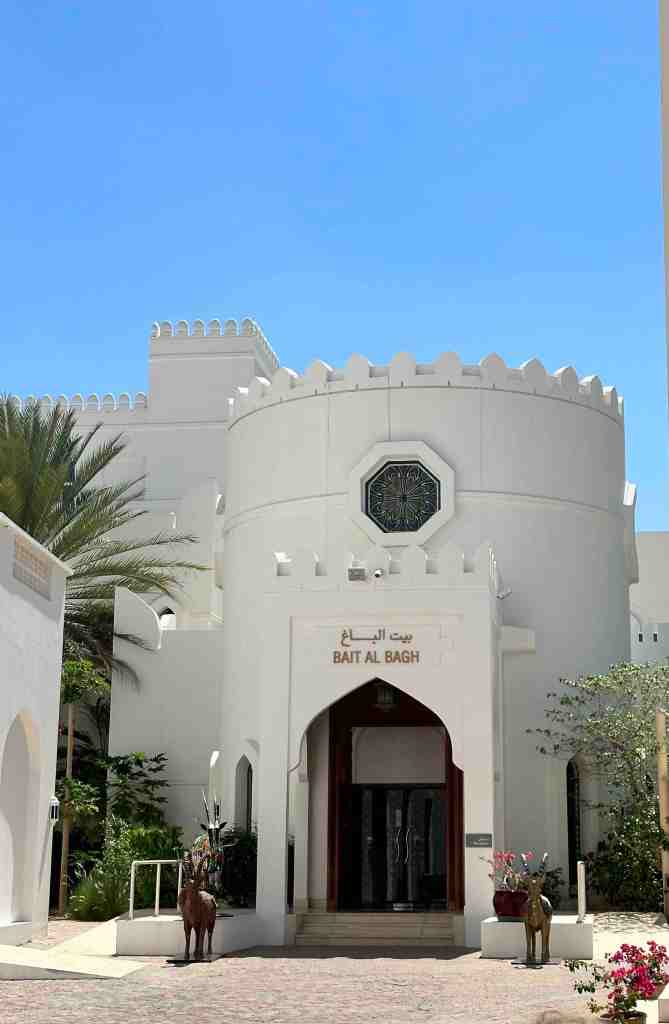
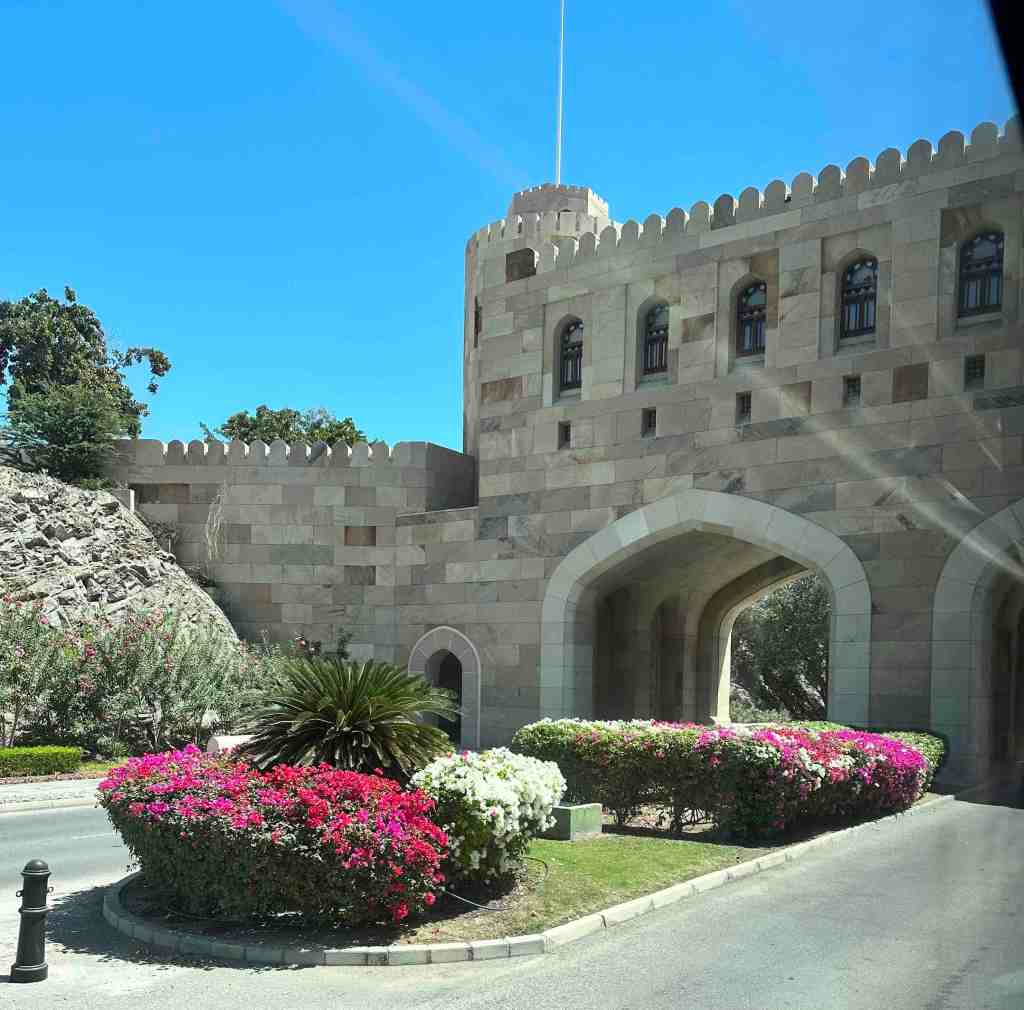
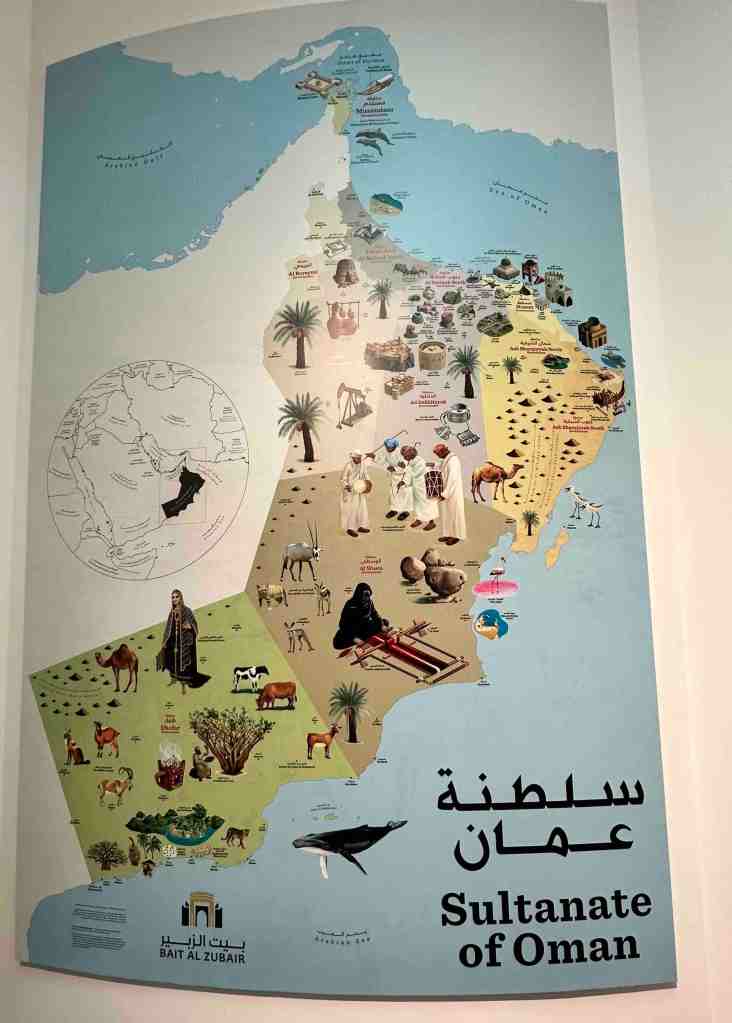
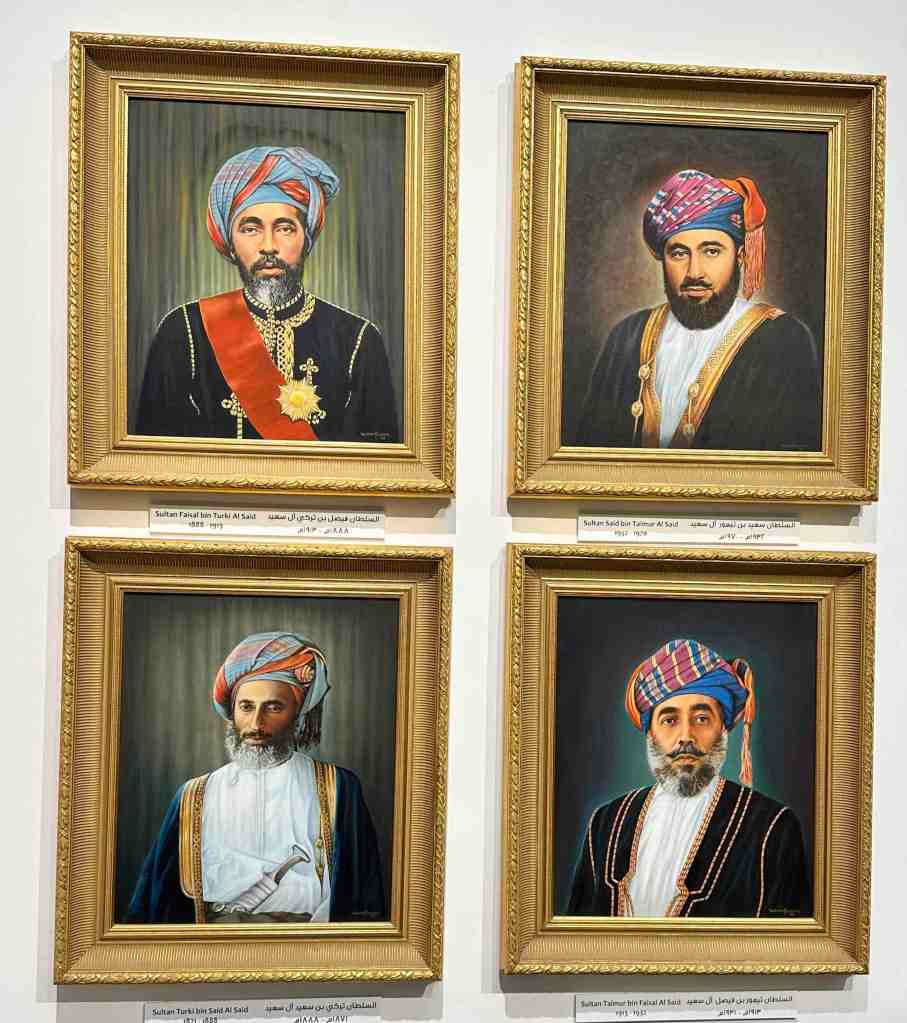
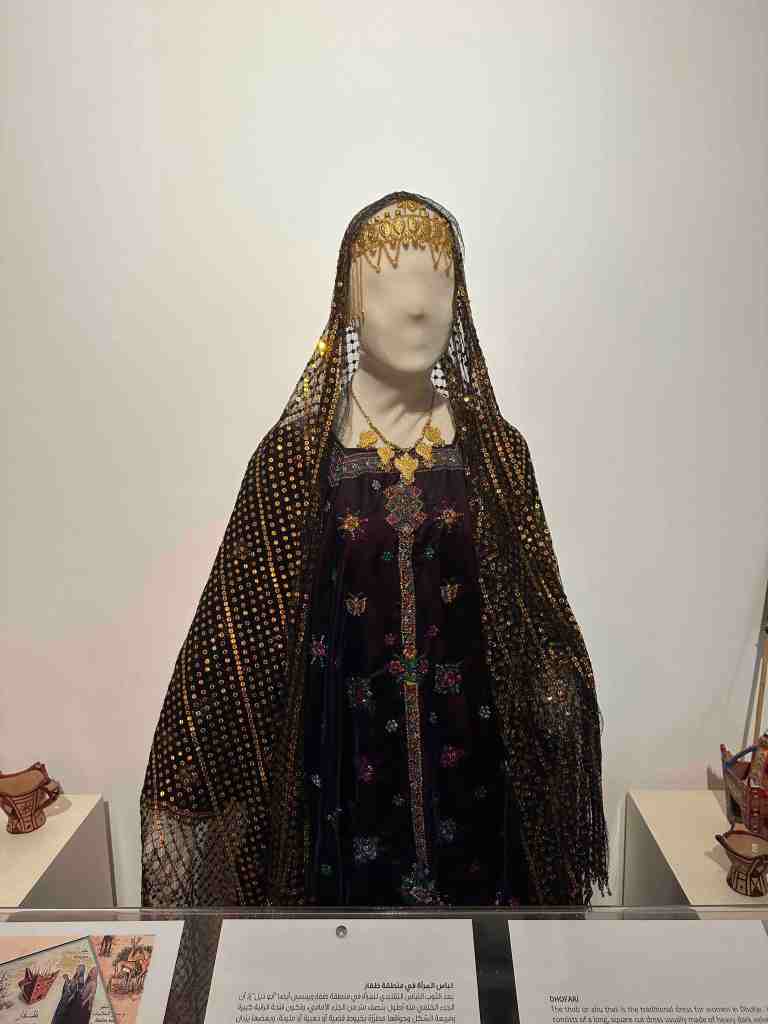
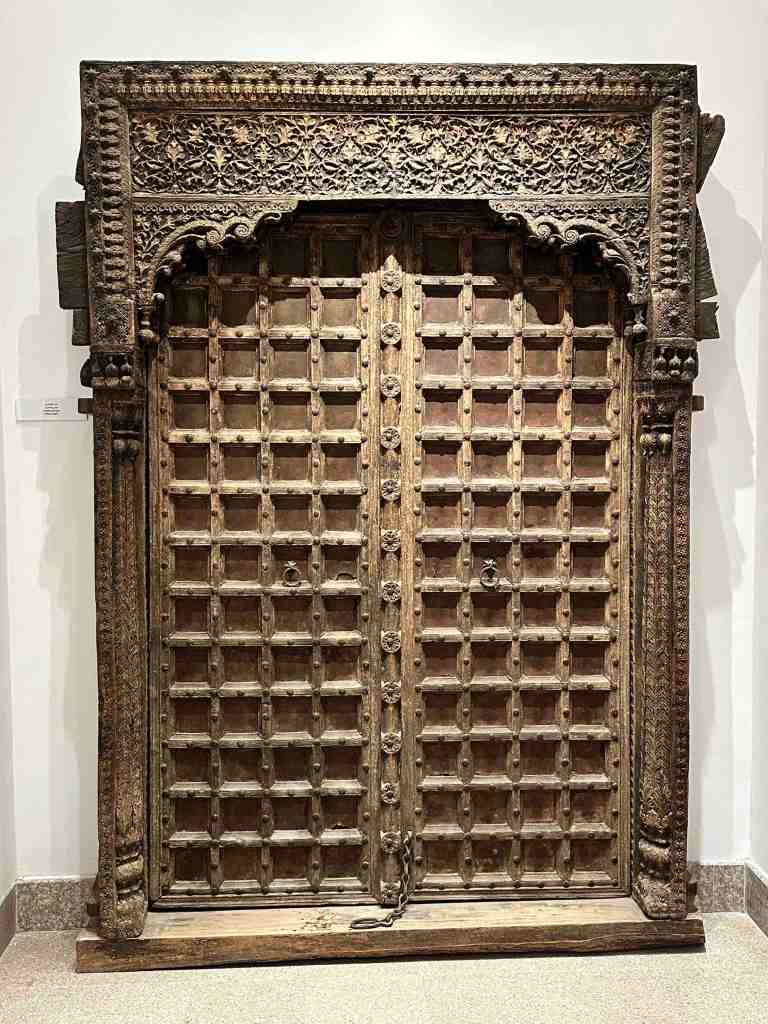
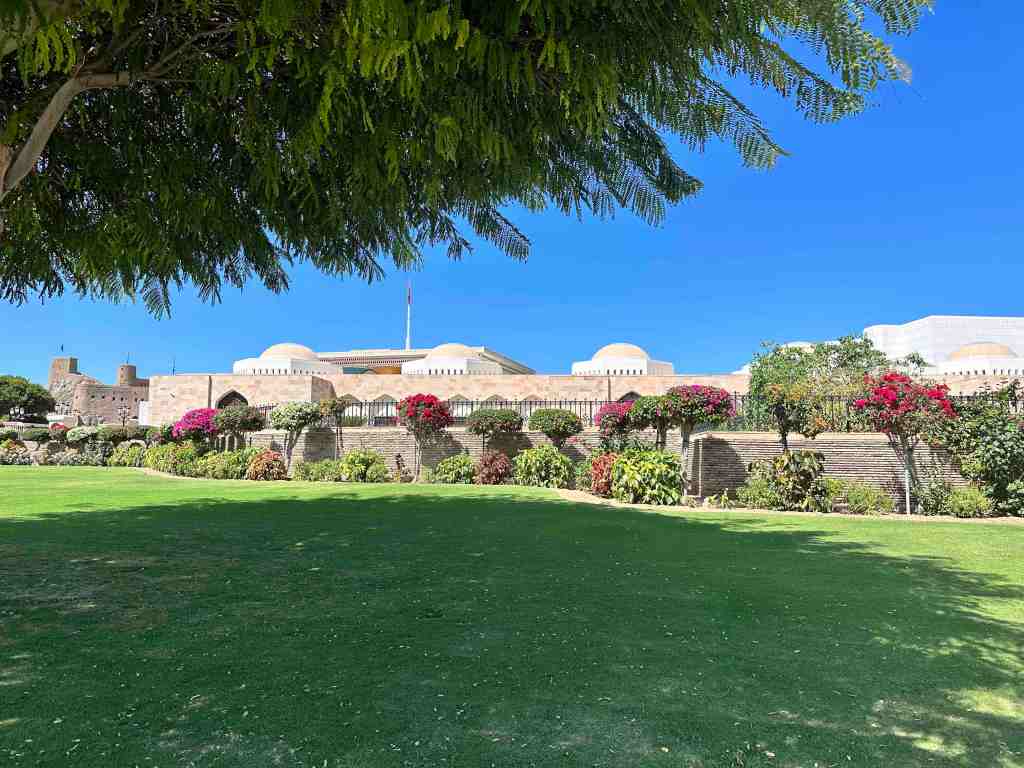
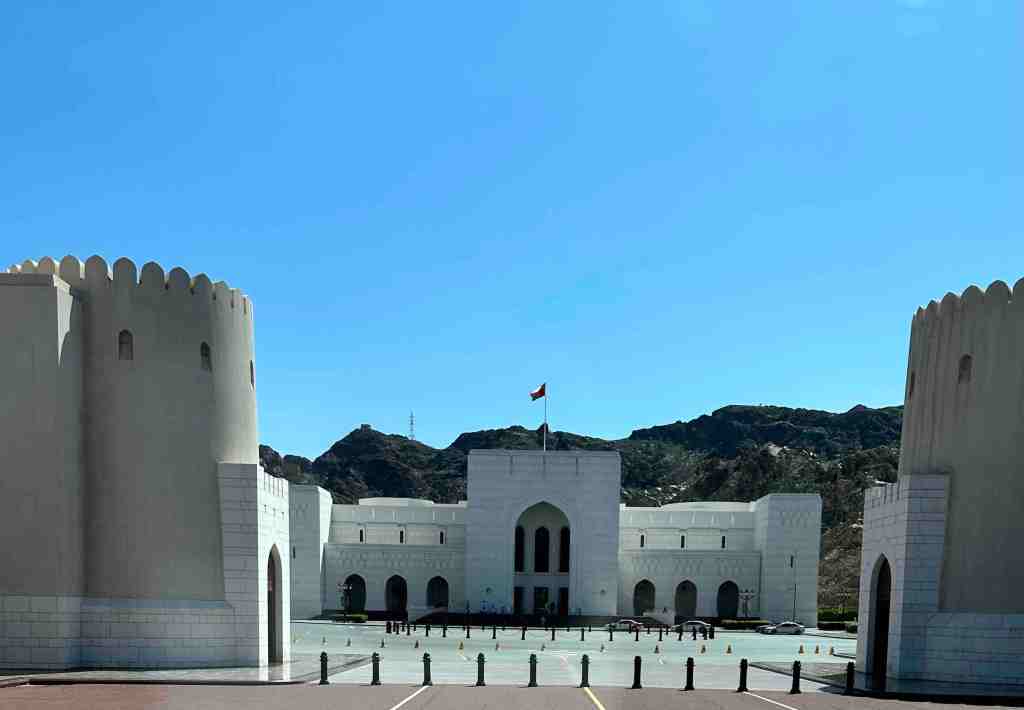
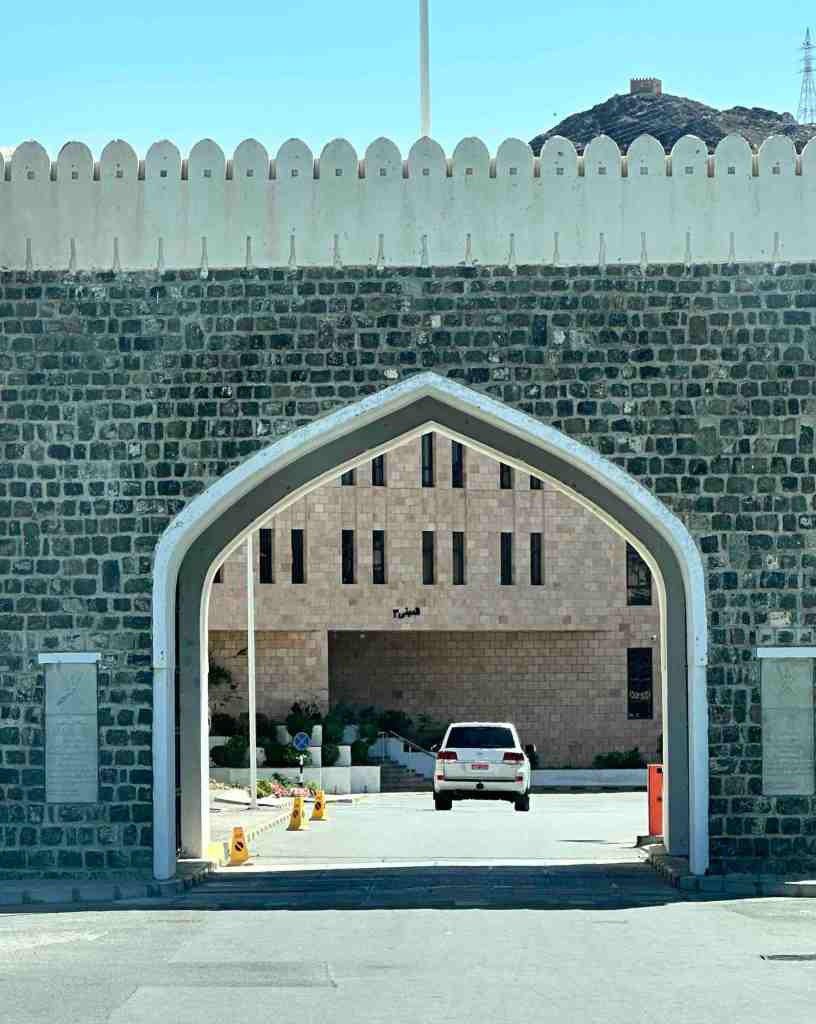
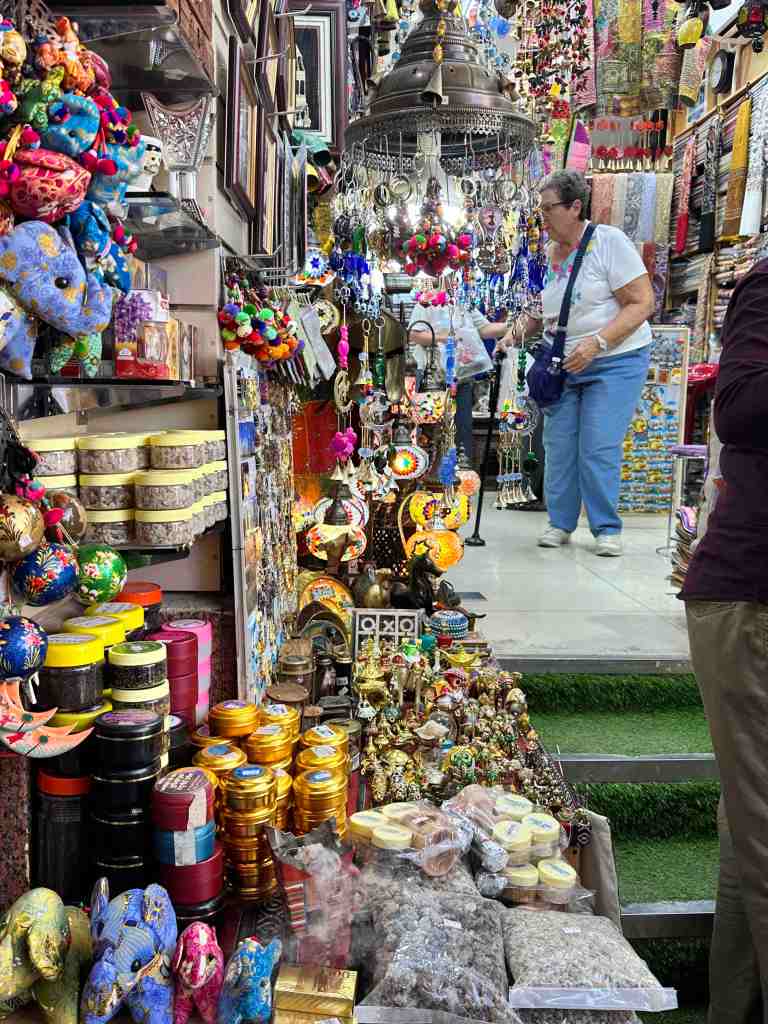
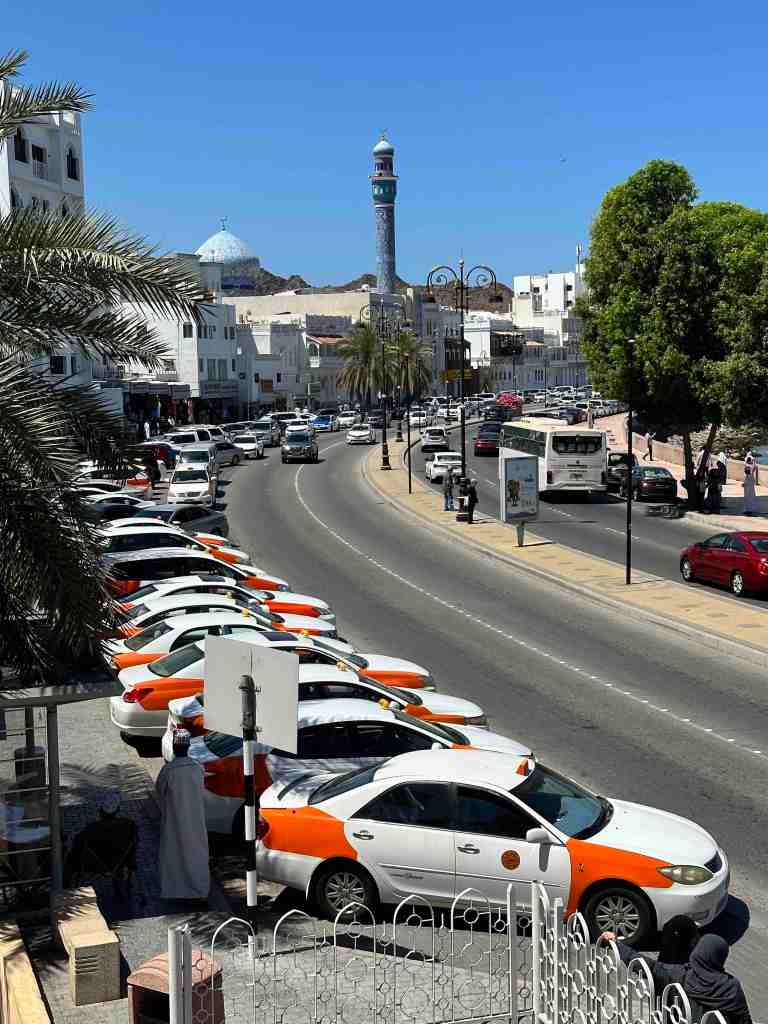
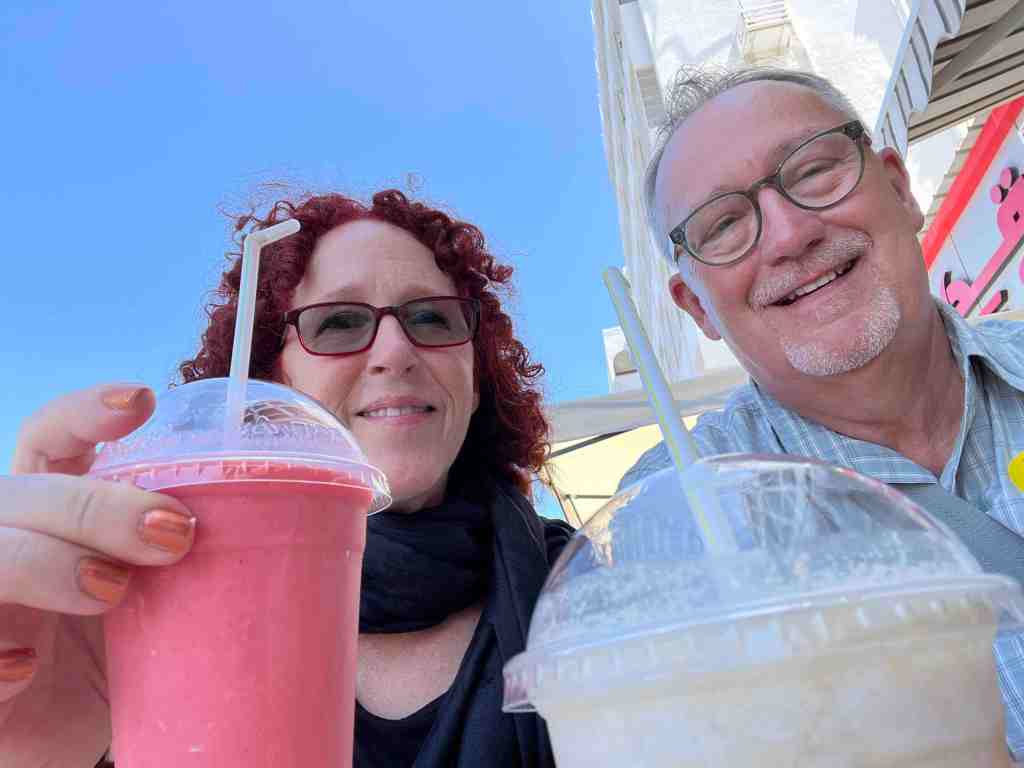
We left the mosque and headed back to the bus. Hussein was still holding the hand of the one passenger. We got on the bus and headed back towards the port. Next stop was Bait Al Zubair Museum. This private museum was established to foster and preserve Oman’s culture and heritage. We walked through the museum and saw many interesting displays, maps, weaponry, Omani costumes of different sects and jewelry. We left the museum and drove a very short distance to Muscat’s Al Alam palace. The official residence of His Majesty Sultan Qaboos bin Said. We pulled through a gate and got off the bus to take pictures. One huge section all done in white marble is fairly new and is the guest quarters. The blue and gold palace overlooks the water of Muscat Bay. On the other side of road is the 16th century Jalali and Mirani forts that perch atop rocky outcrops, guarding Muscat Bay and the Sultan’s Palace. We left the palace and headed back to the Main Street for some free time. Bob and I strolled down the street, looking at the shops, smelling the frankincense and myrrh and stopping for a cool drink and people watch. Bob had a cashew and honey milkshake and I had strawberry. I’ve missed strawberries the last few months. The milkshakes were delicious and refreshing.
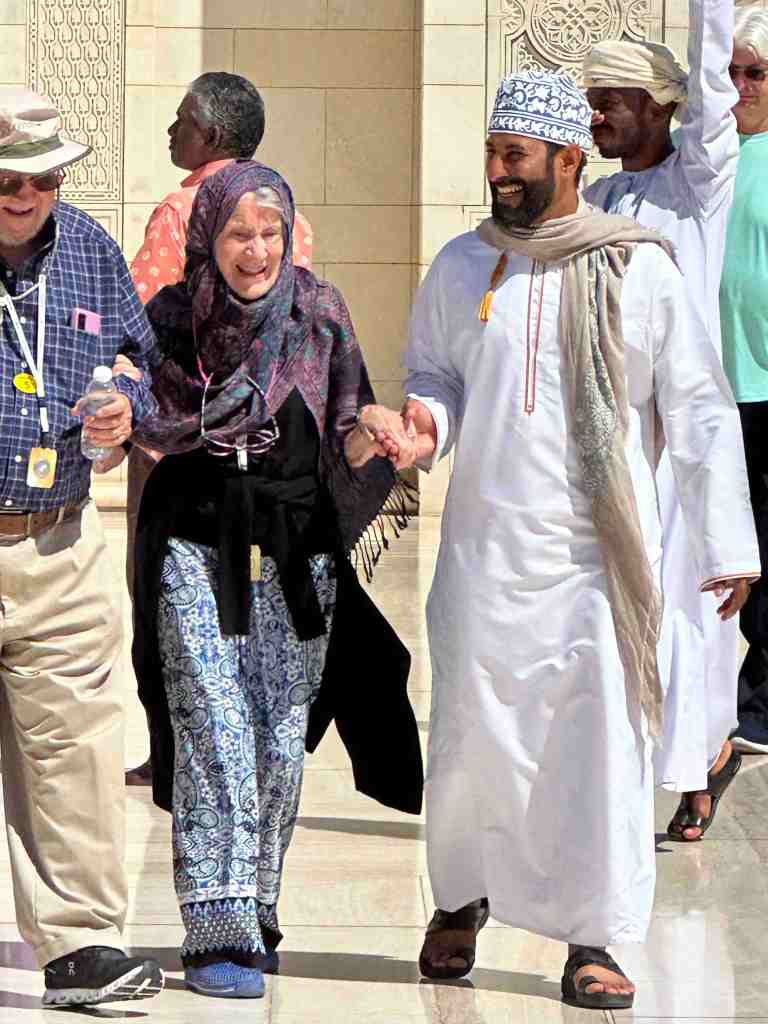

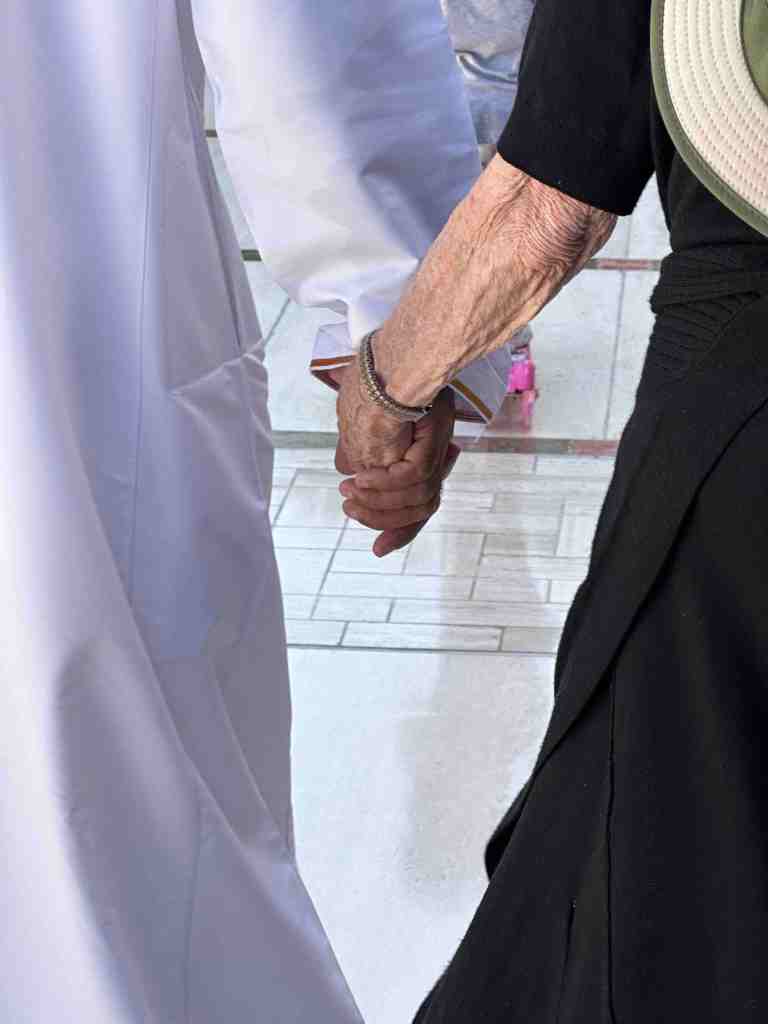
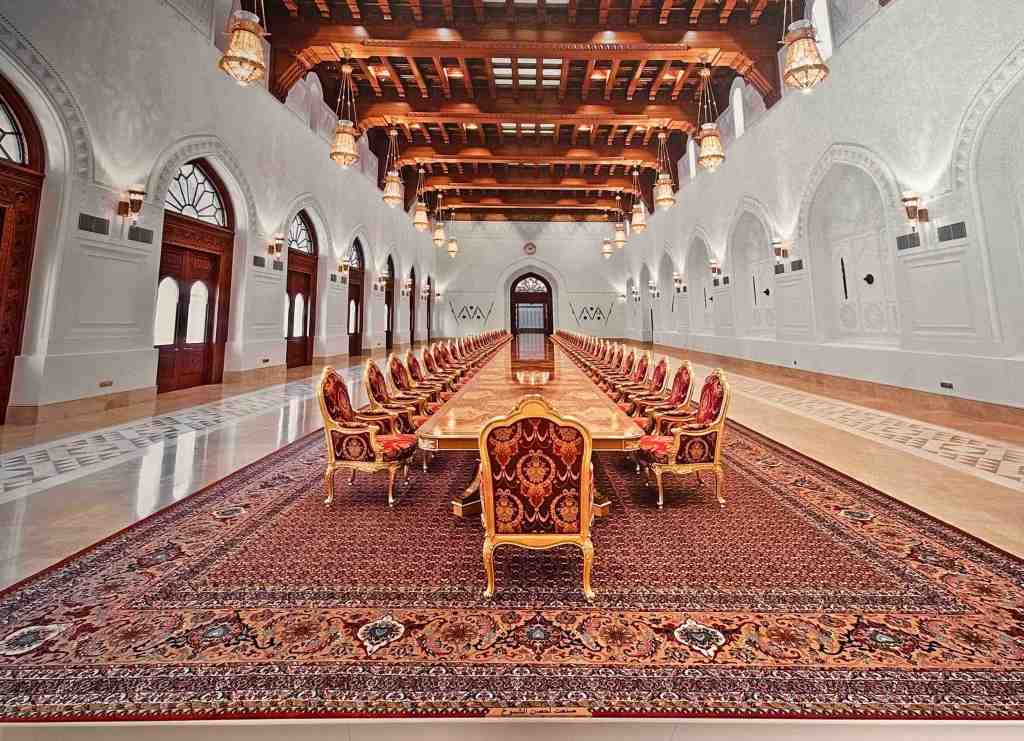
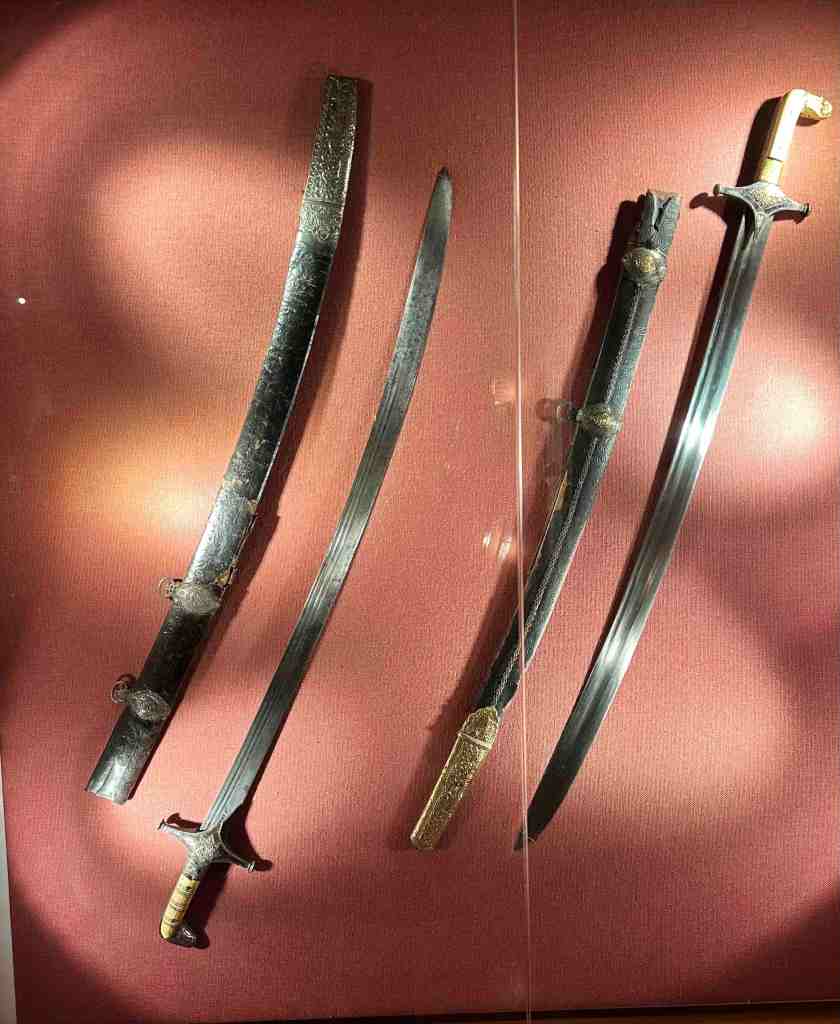
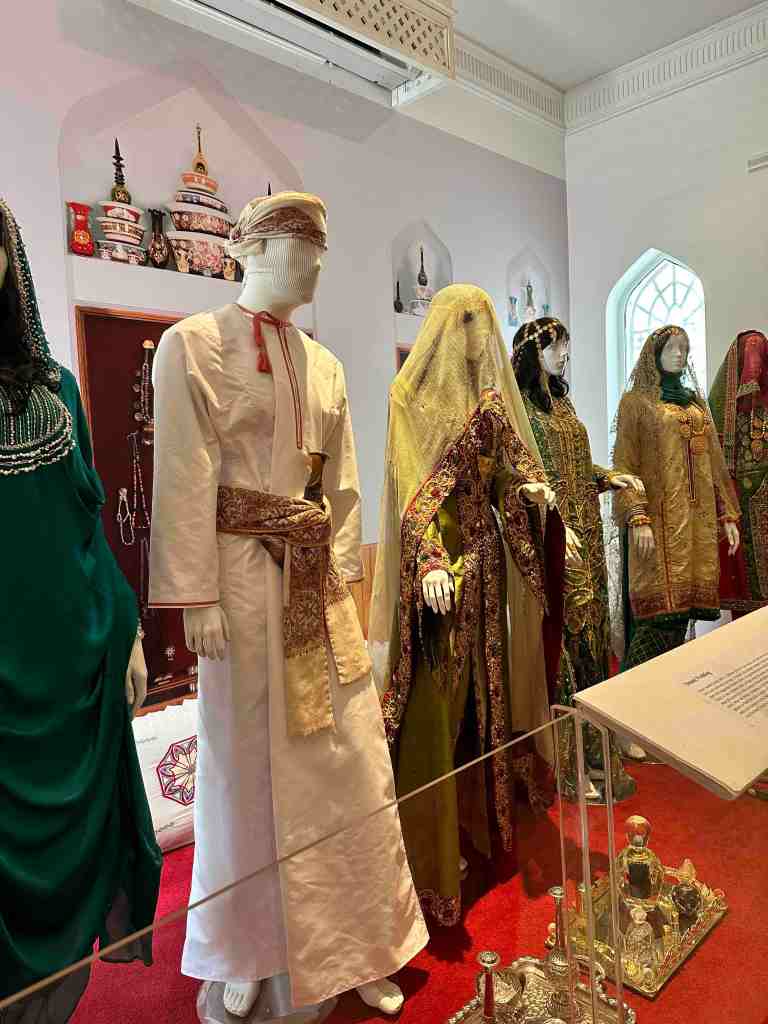
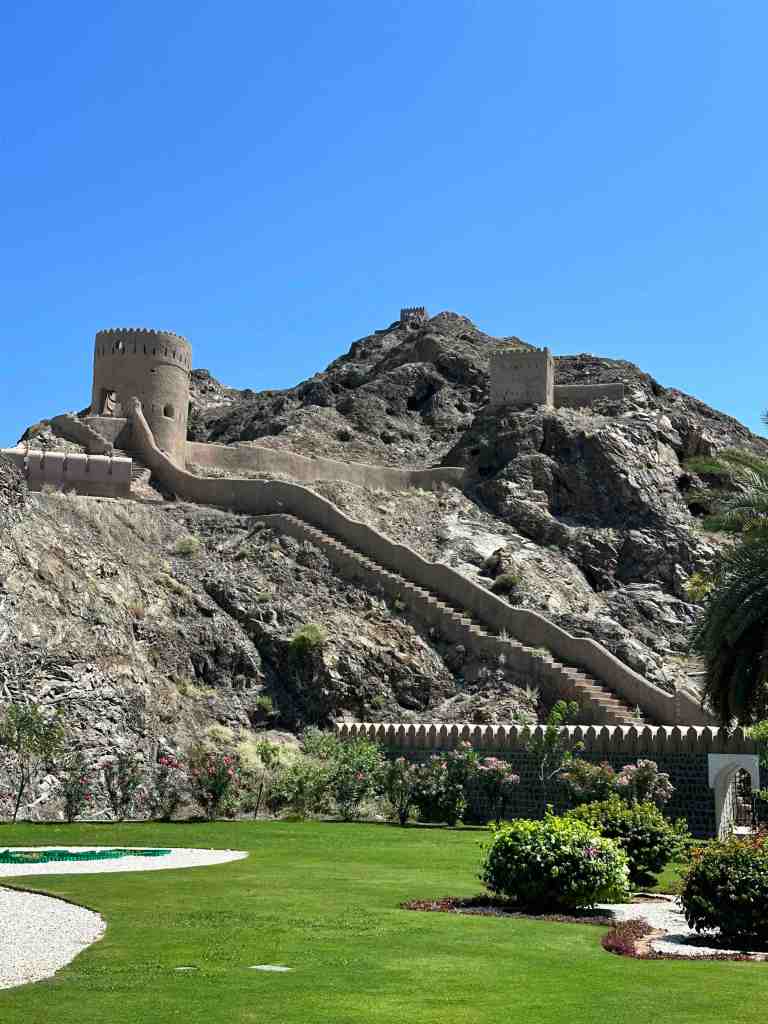
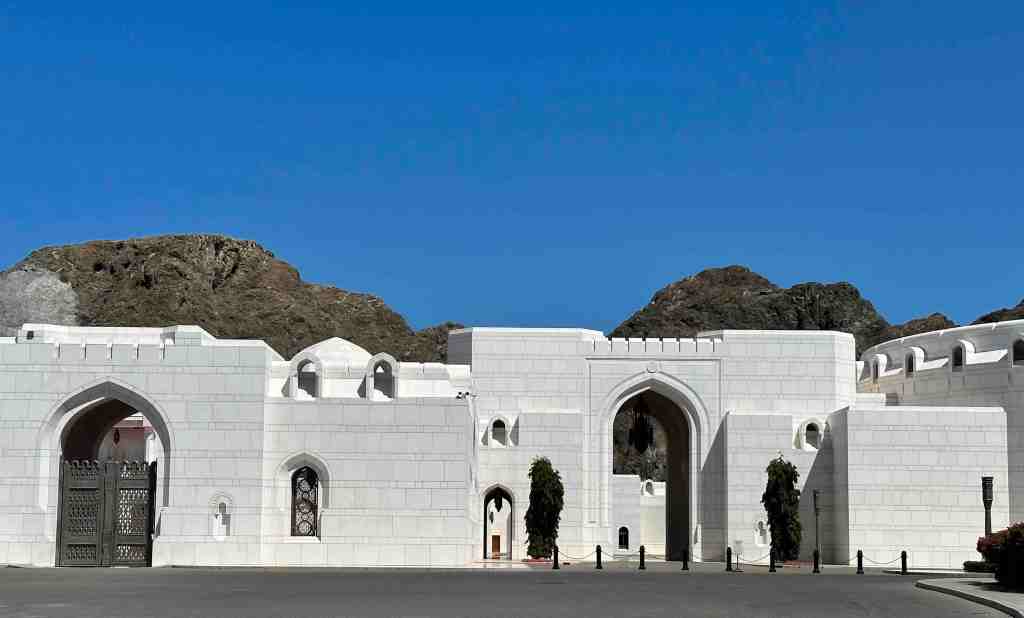
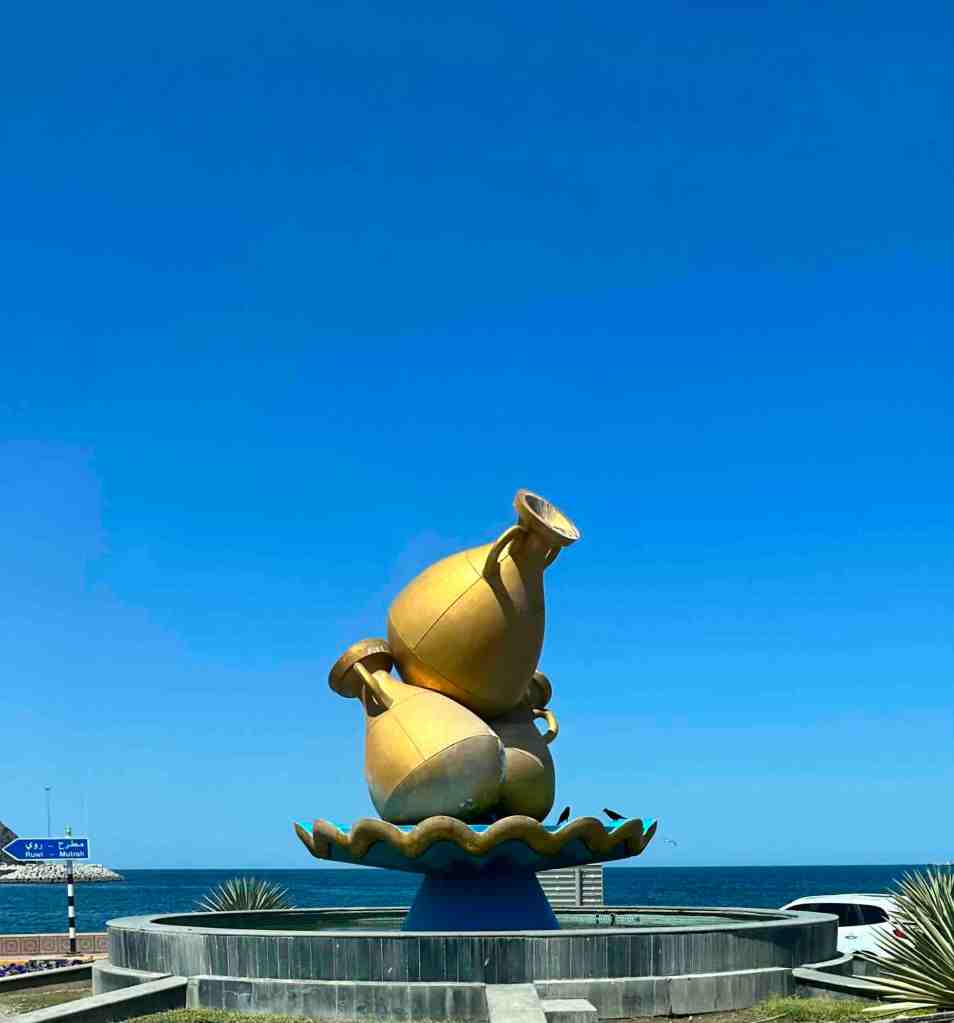
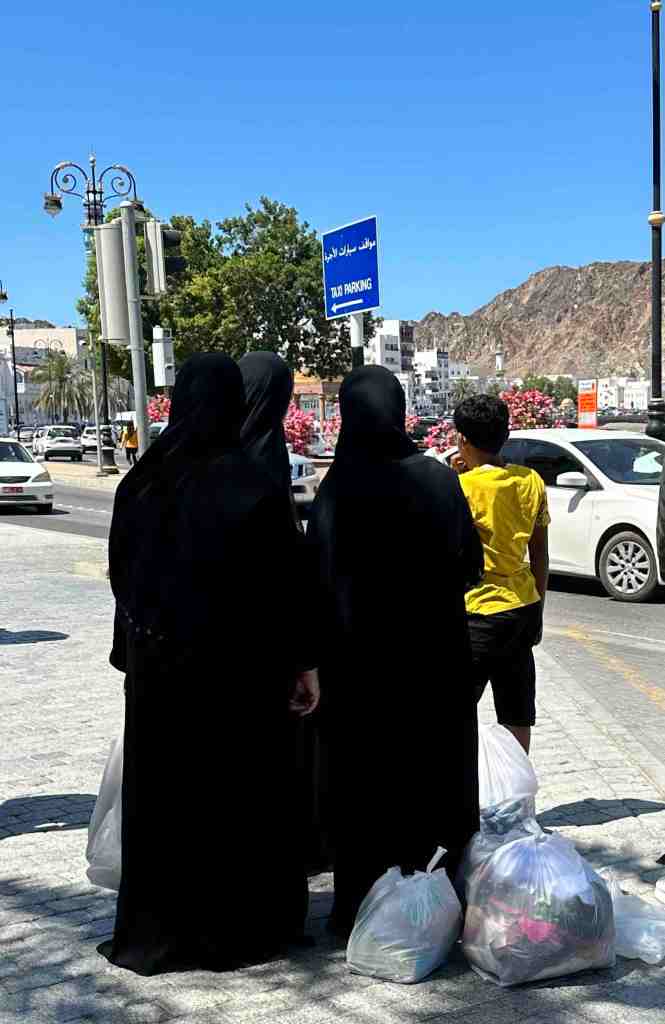
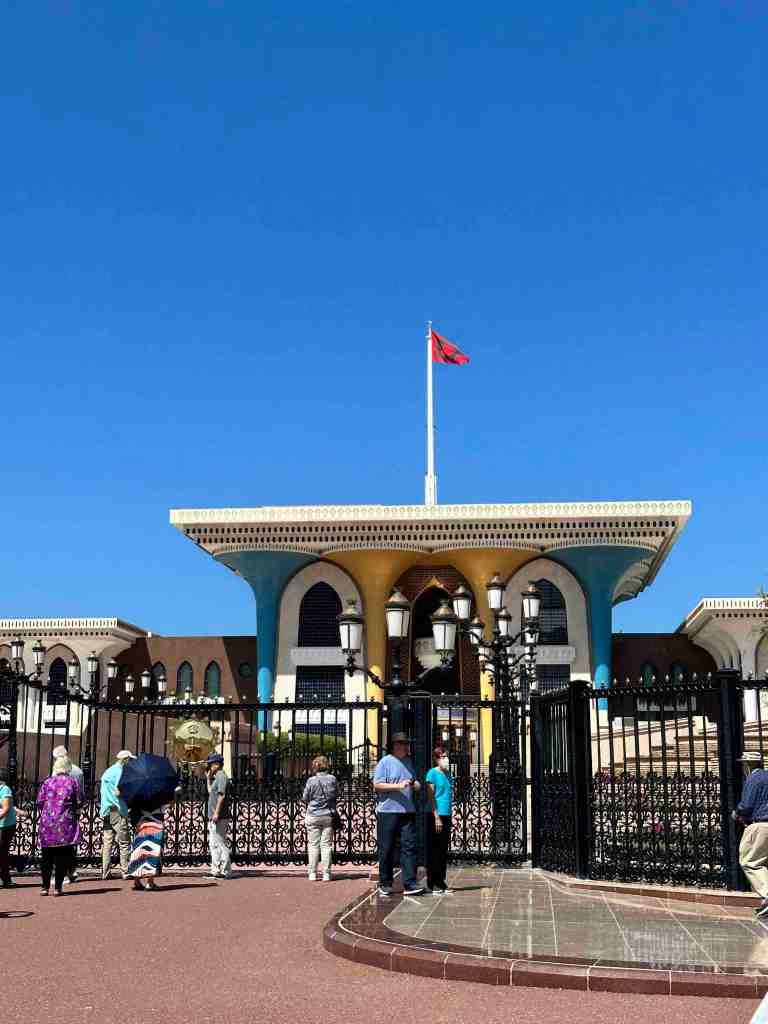

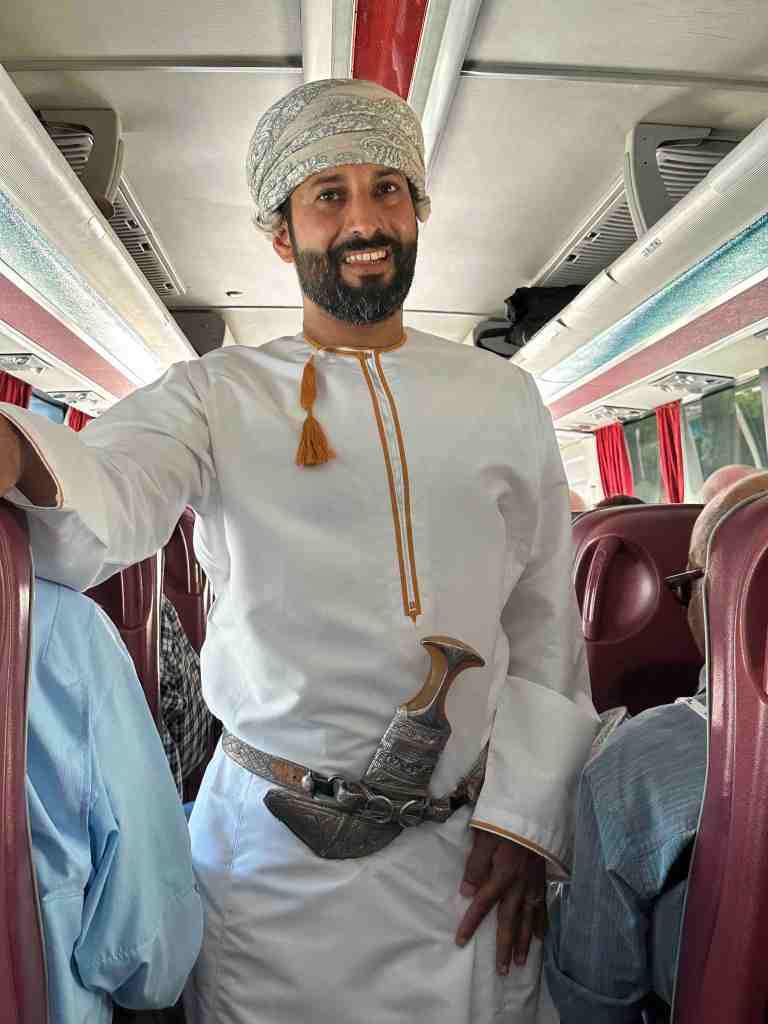
We went back to the ship. We said our good-bye to Hussein. He was a wonderful guide and very sweet with the woman that needed help. We told him he was an excellent ambassador for his country. He got a big smile on his face and thanked us.
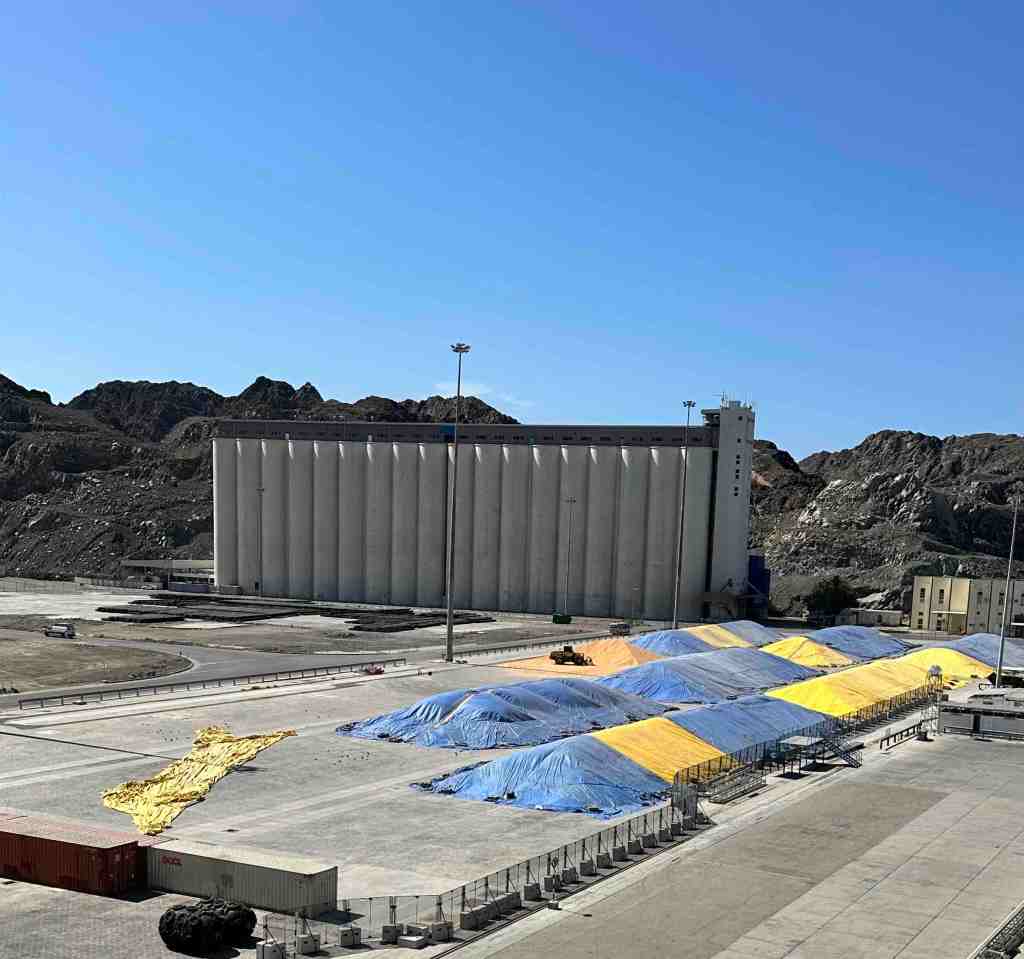
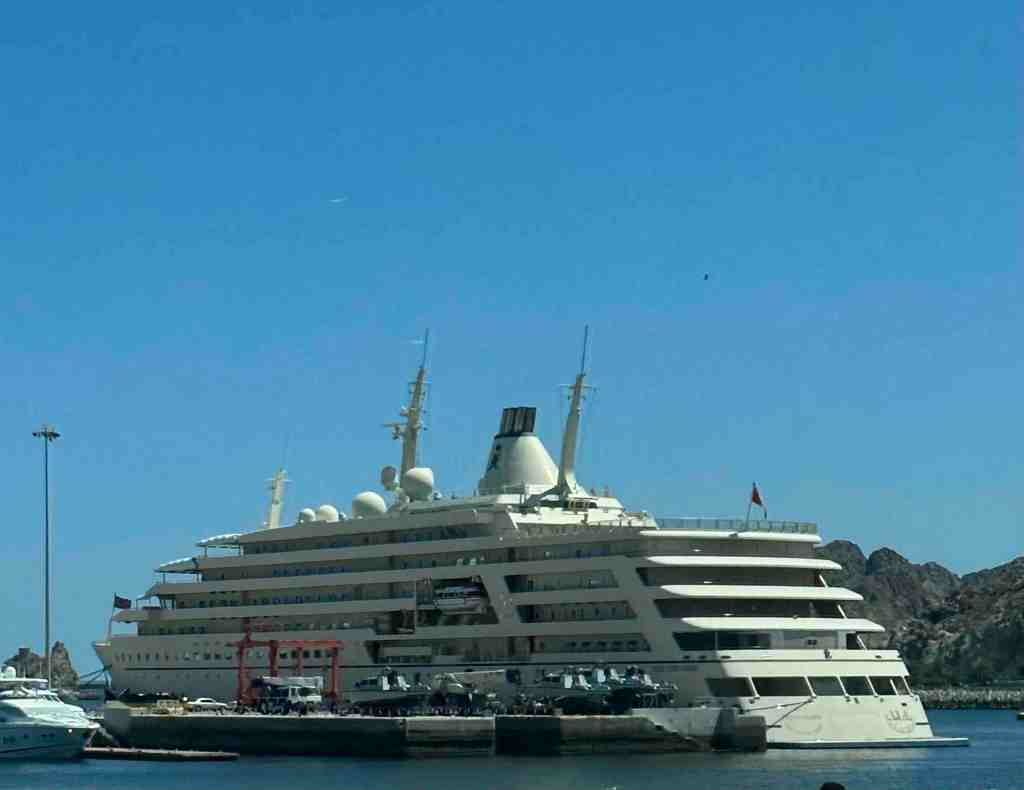
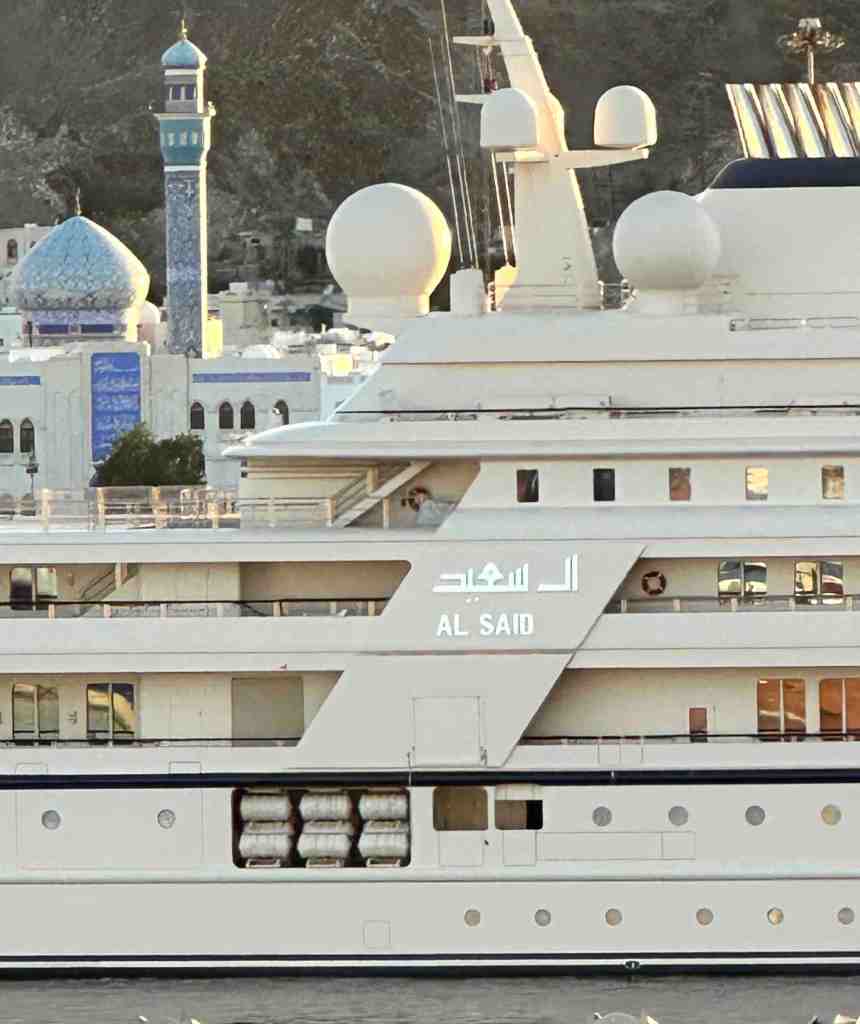
Oman did not disappoint. Muscat was a beautiful city. Clean, very little crime, kind people, beautiful landscape. It really looked like something out of a movie set. If we had more time, we would have explored further into the mountains, oases and deserts. We boarded the ship and stood on our balcony to observe the port. We could see 12 big grain elevators that are fairly new. Grain everywhere is huge piles with front end loaders shoveling it into big truck. We saw a navy ship with a helicopter on the back and also 2 big ships. O, found out they are both the royal yachts. Another passenger investigated and informed us that the yacht on the right is Al Said, owned by the Sultan of Oman, $600m to build and $80m a year to operate. The yacht on the left is the new replacement. The Sultan of Oman died in 2020 and was replaced by his cousin.
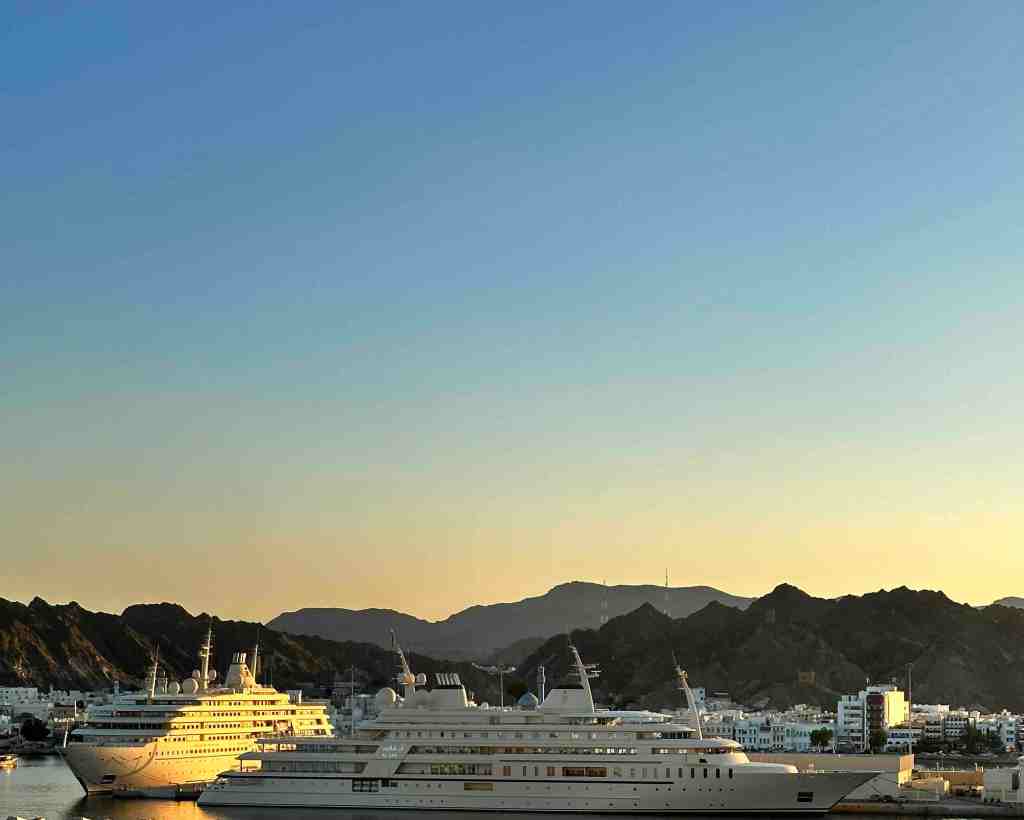
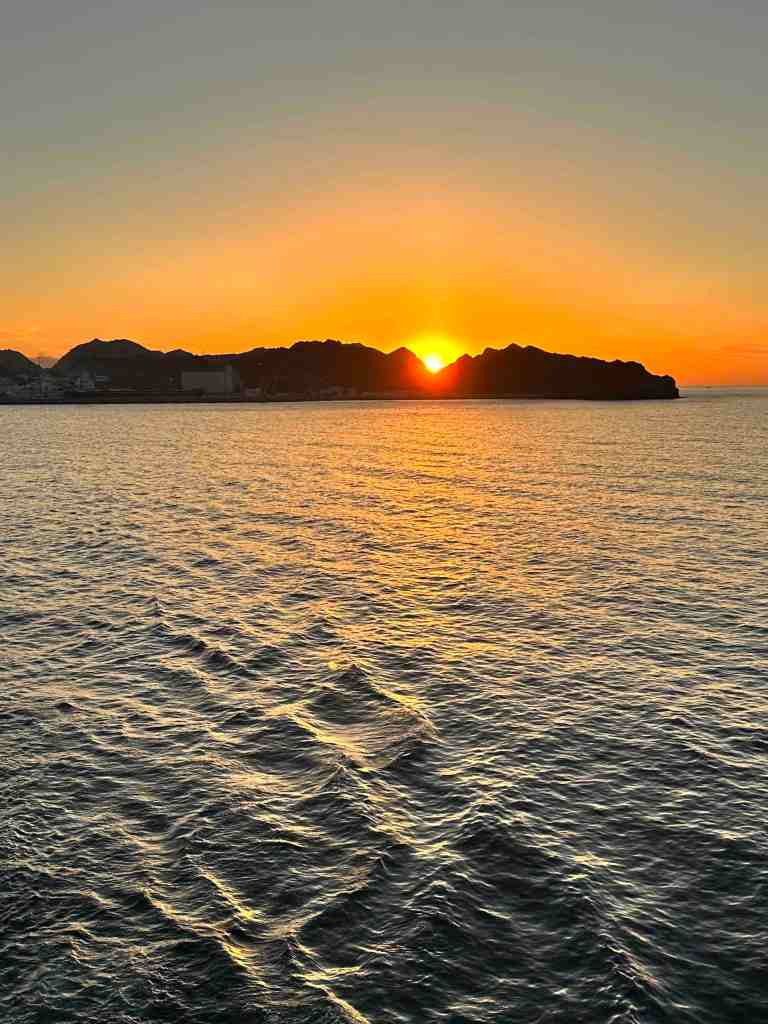
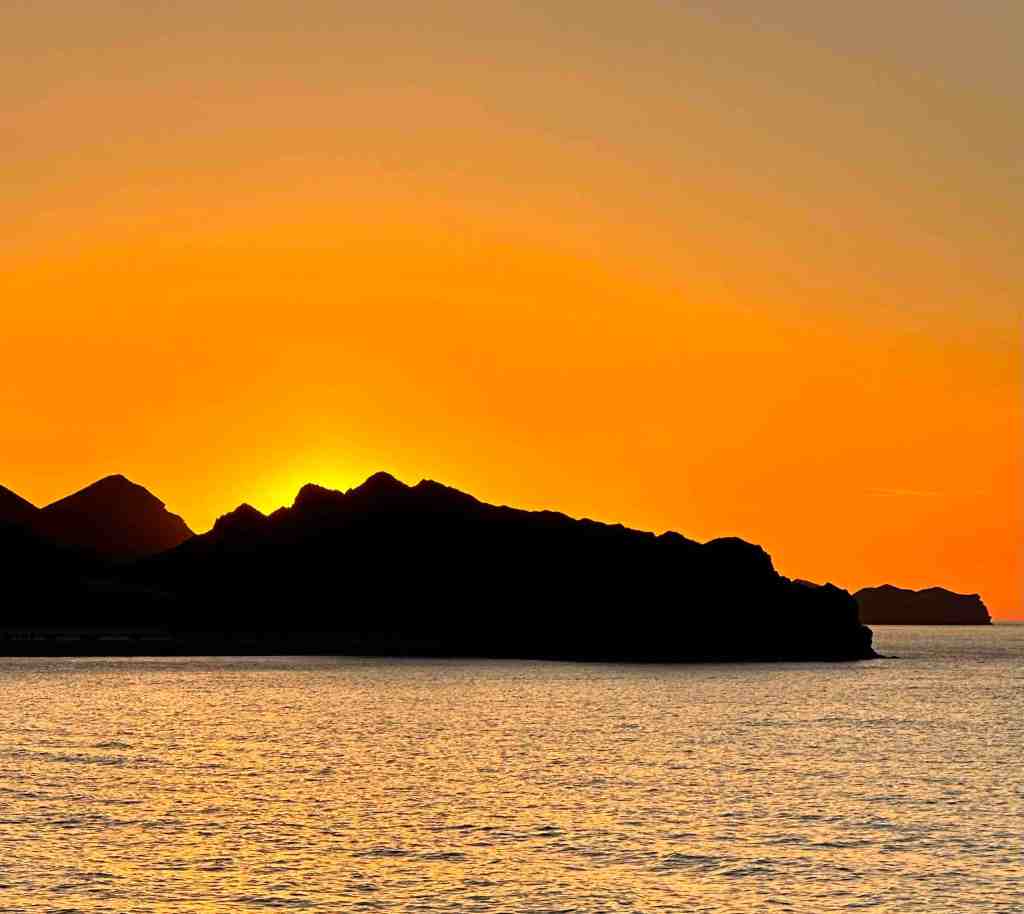
Farewell Oman. It was a pleasure to visit your country.



Having visited Muscat, with my two young children (3 and under) i can only replicate what you said about kind people and beautiful landscape. It really holds a special place in my heart. I really enjoyed reading your article and admiring the wonderful photos whist i reminisced about our trip.
LikeLiked by 1 person