
April 18, 2023 – Lanzarote, Canary Islands
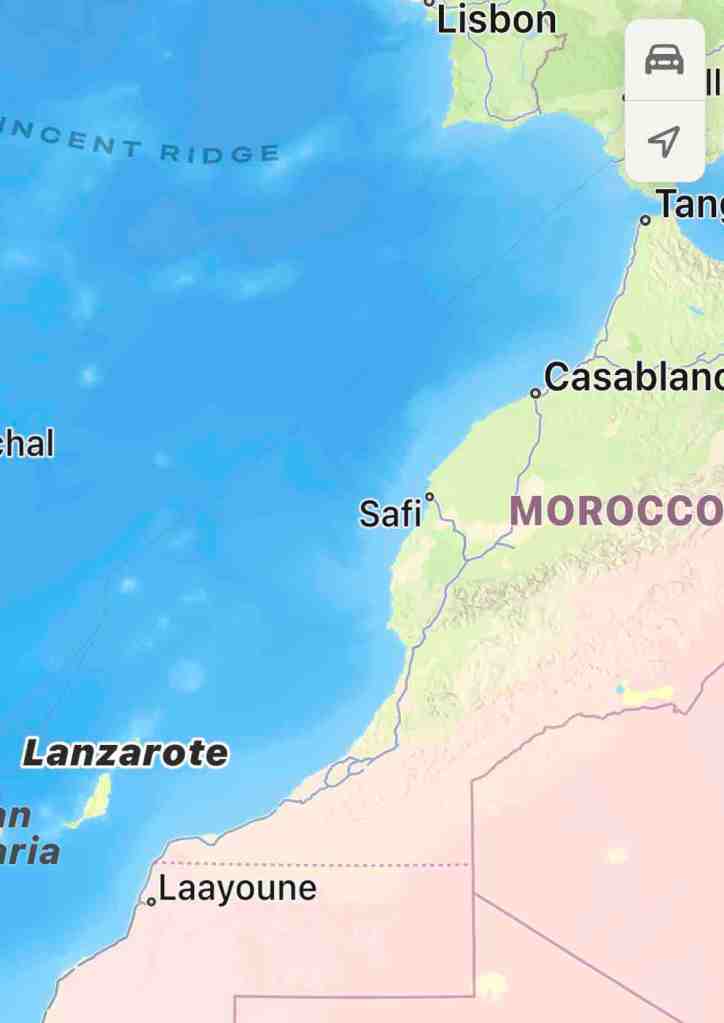
There are eight main Canary Islands, the largest island of the archipelago is Tenerife. Lanzarote is the fourth largest.
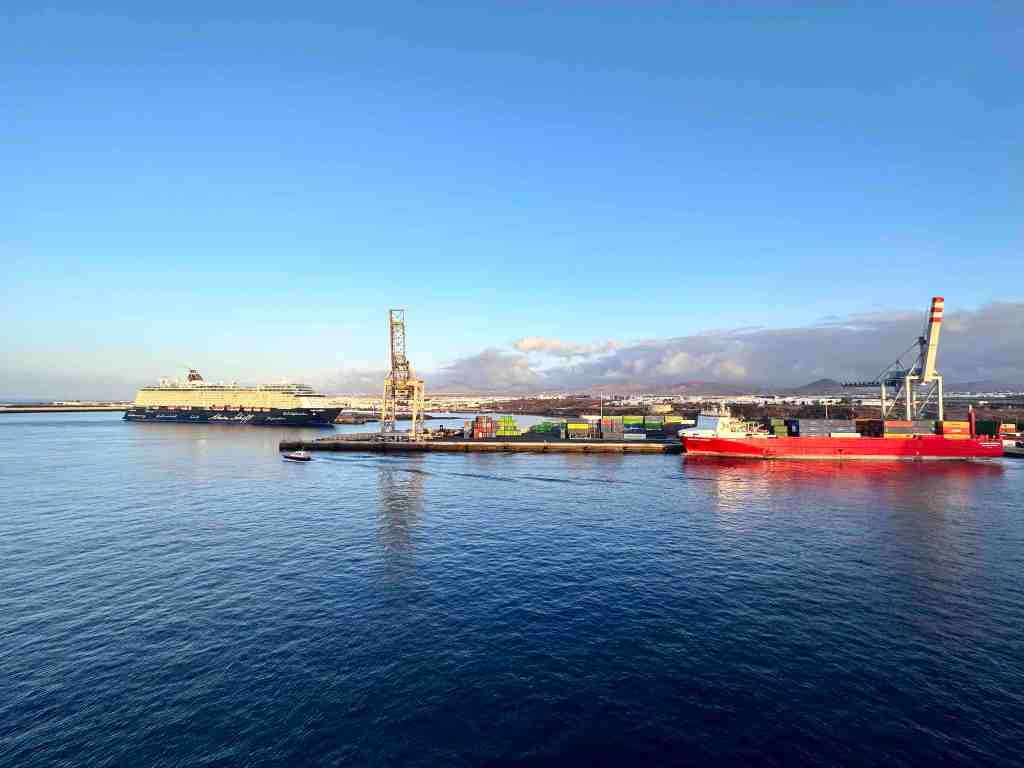
We’ve arrived in the Canary Island of Lanzarote this morning. The sky is blue but we can see skies that look overcast in the distance. We’re ready to go on our tour. Lanzarote is in the Atlantic Ocean’s glistening crystal waters about 70 miles away from the coast of the African mainland. The island itself is 37 miles long and 12 miles wide.
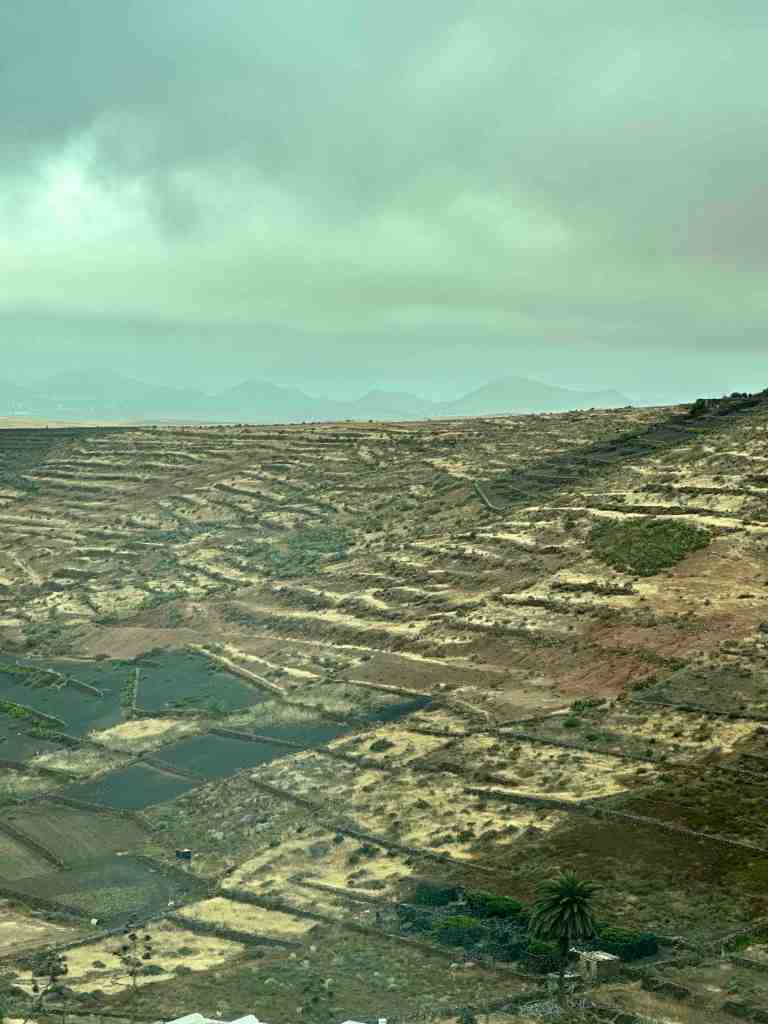
We boarded the bus and immediately recognized a different landscape than we’ve seen before. The island has over 300 now dormant volcanic ‘mountains of fire’. As we left the port, the land almost had a lunar appearance. We did not realize until we read later, this island was chosen as the movie set for the 1970’s movie Planet Of The Apes. The arid climate coupled with lack of erosion has ensured the Martian-like volcanic landscapes remain intact in present day as it did centuries ago after the eruptions. Lanzarote’s unusual appeal has attracted approximately 2 million visitors annually thanks for its gorgeous weather, unspoiled beaches, vibrant vistas and magnificent cuisine.
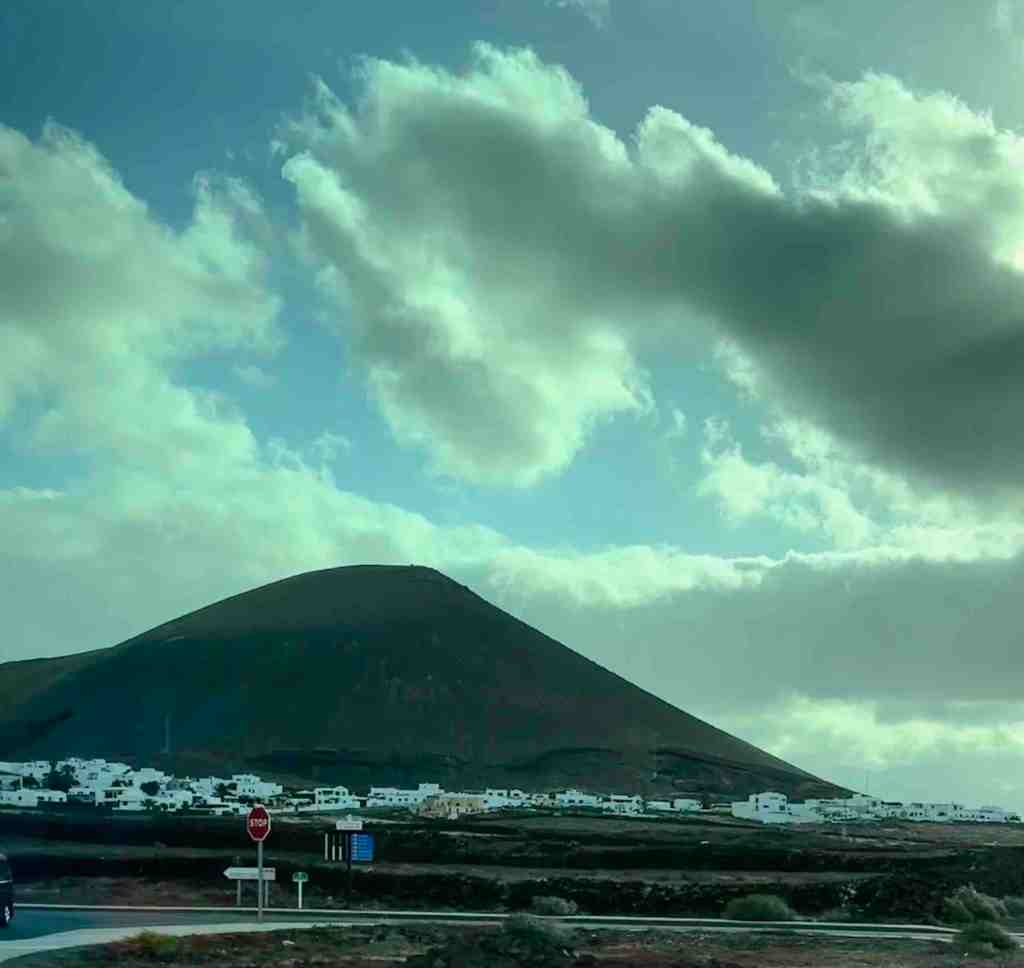
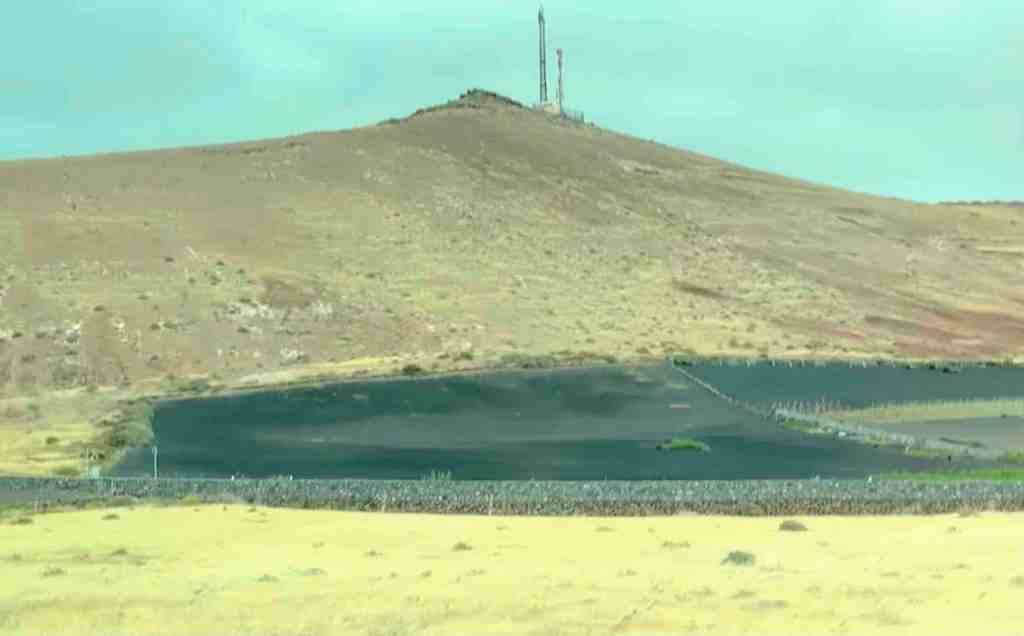
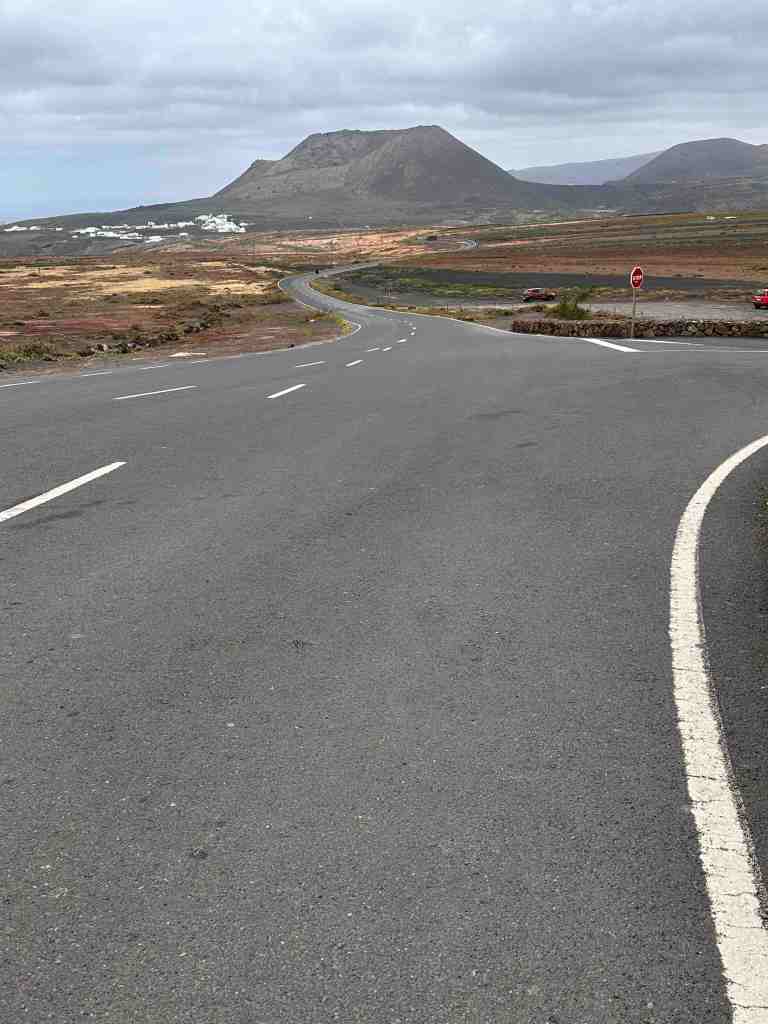
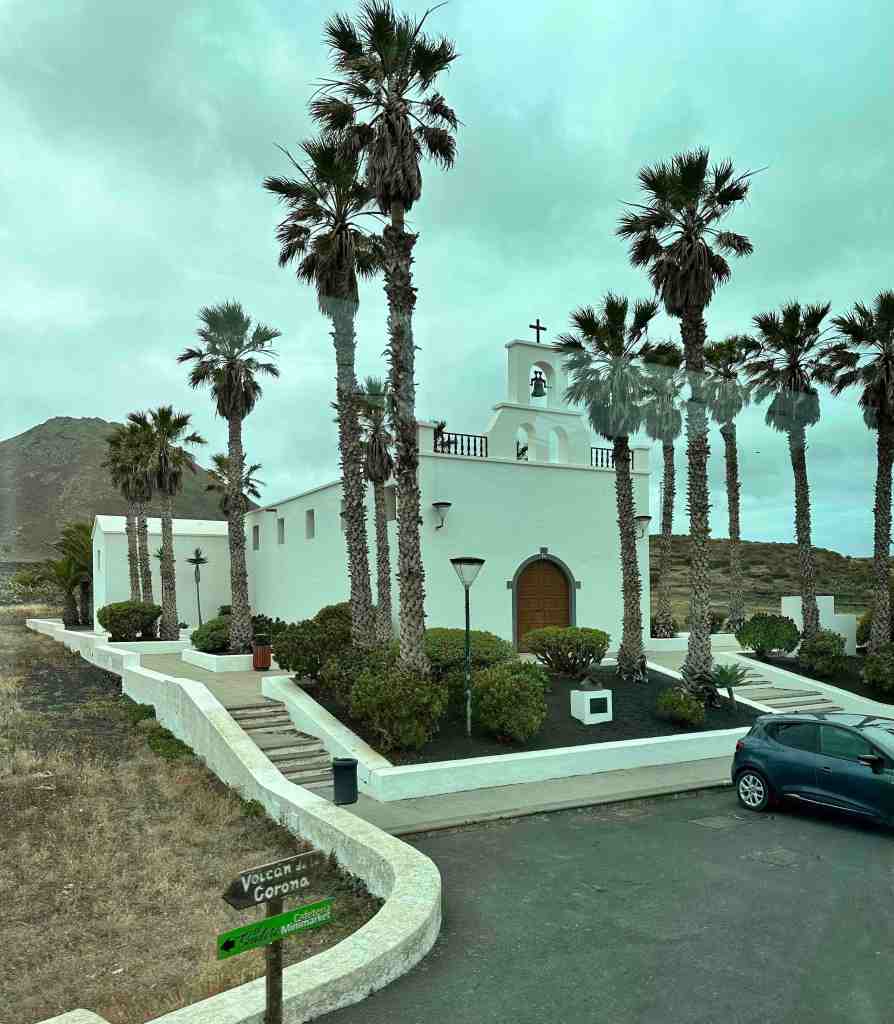
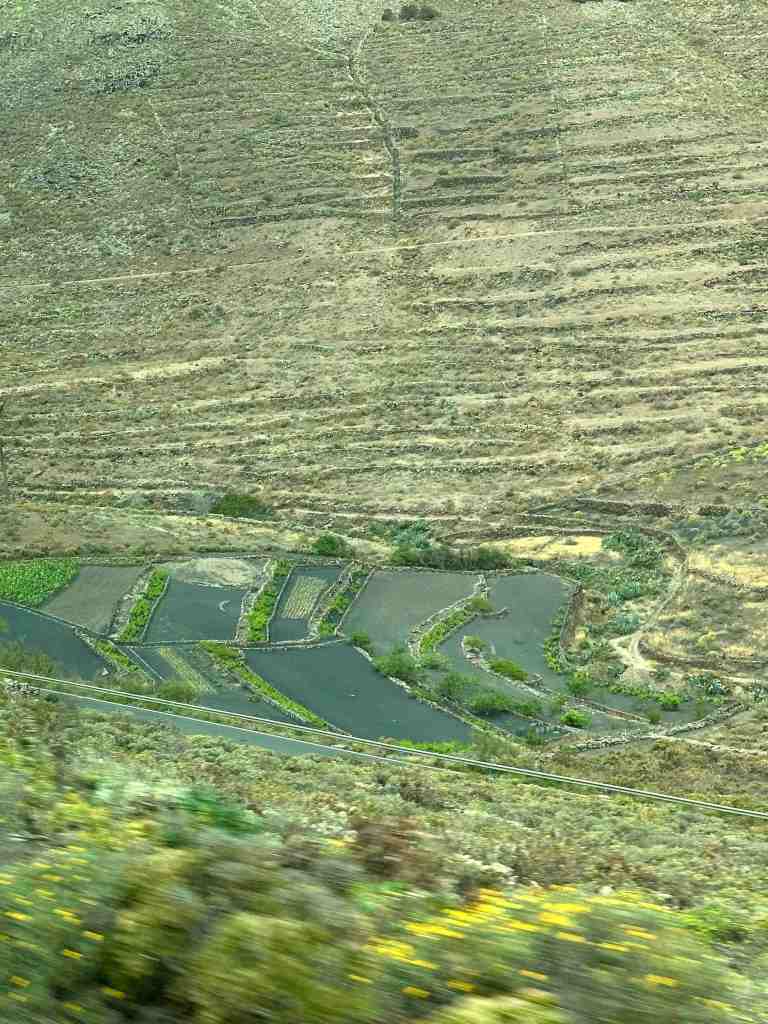
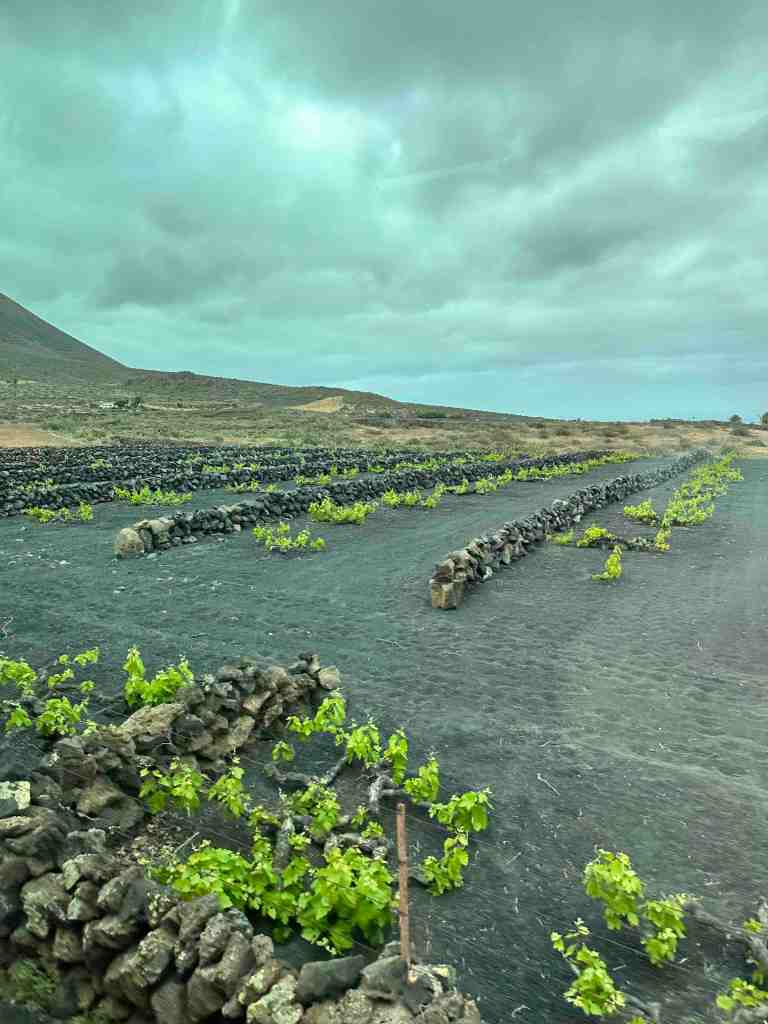
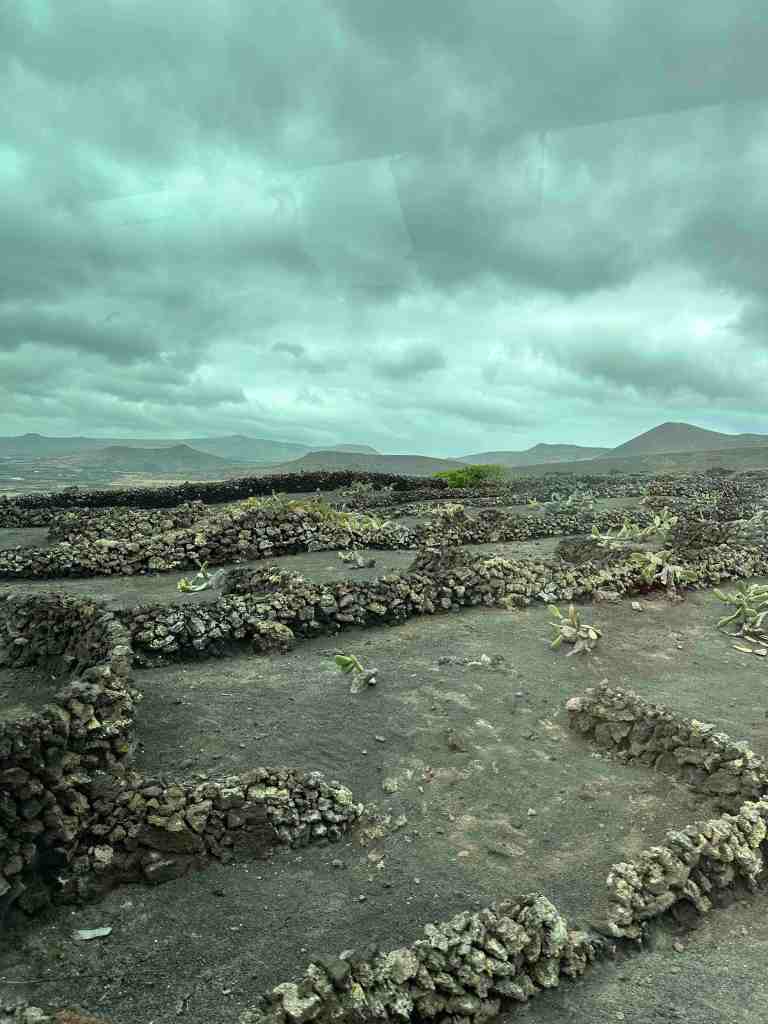
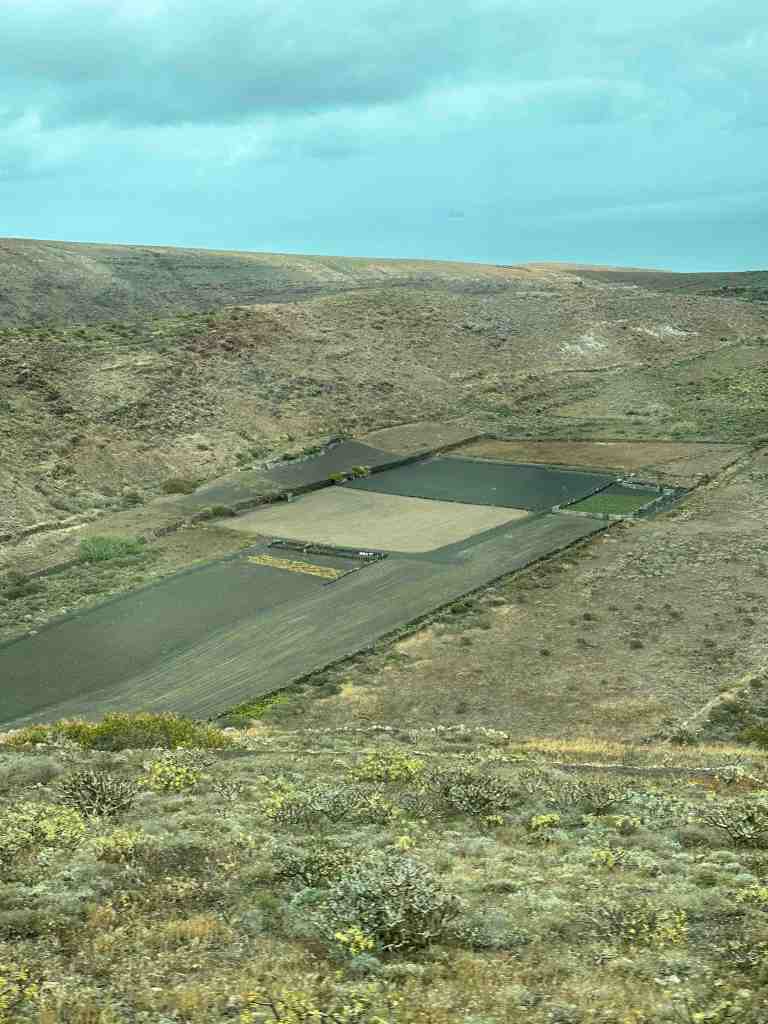
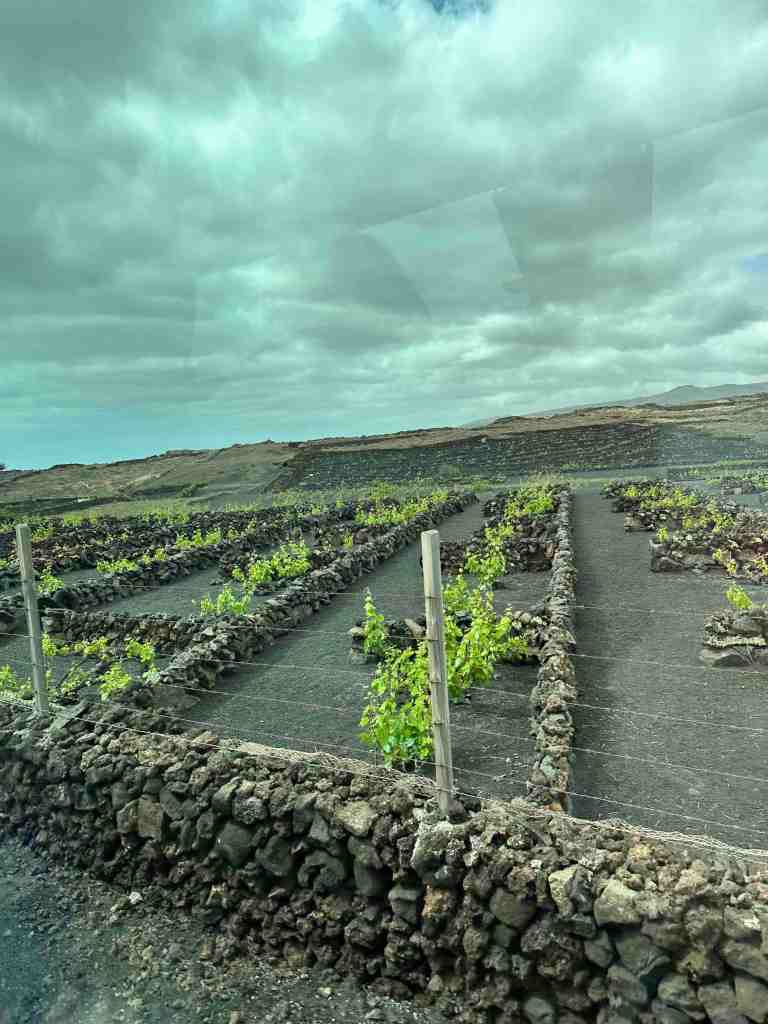
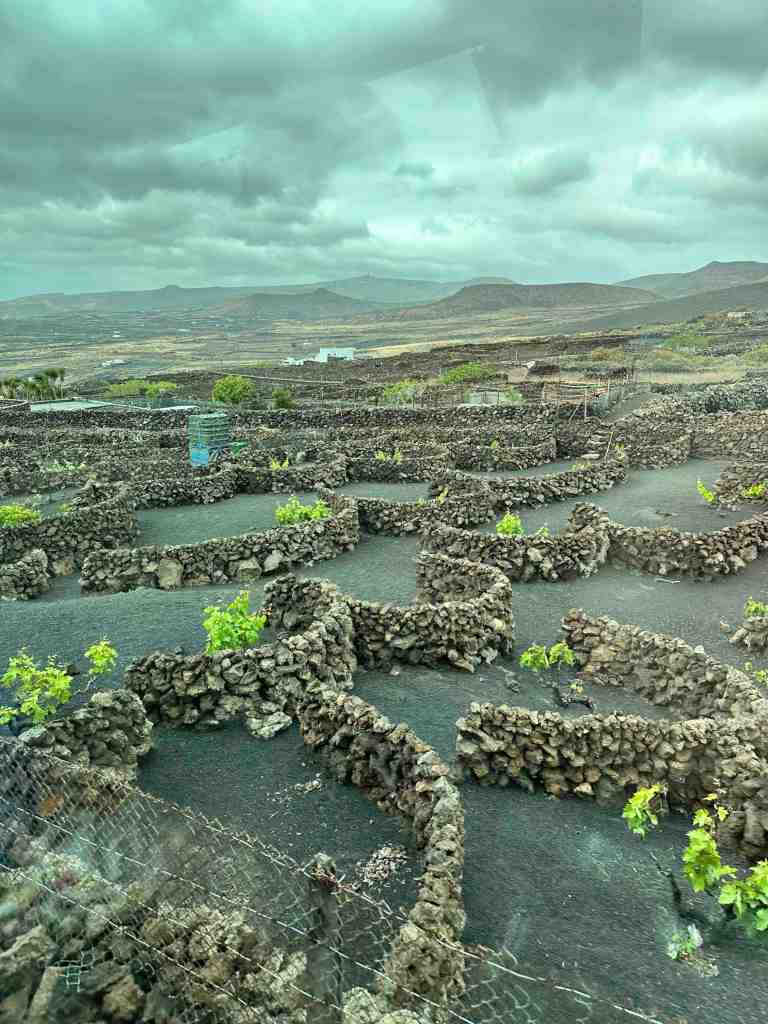
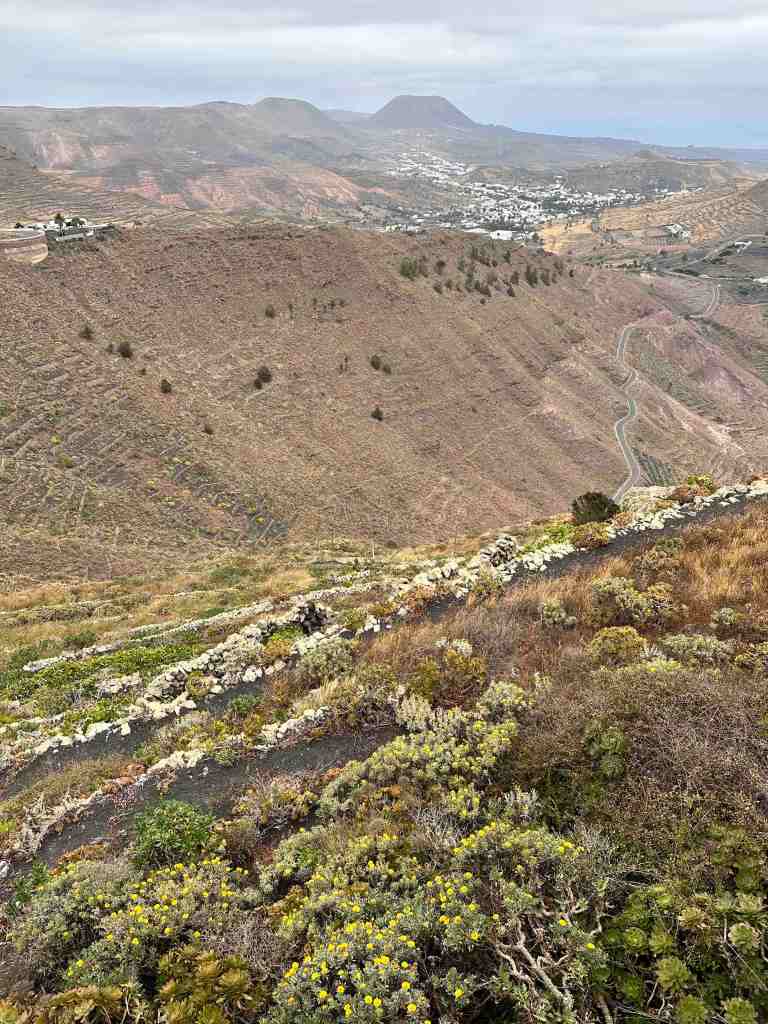
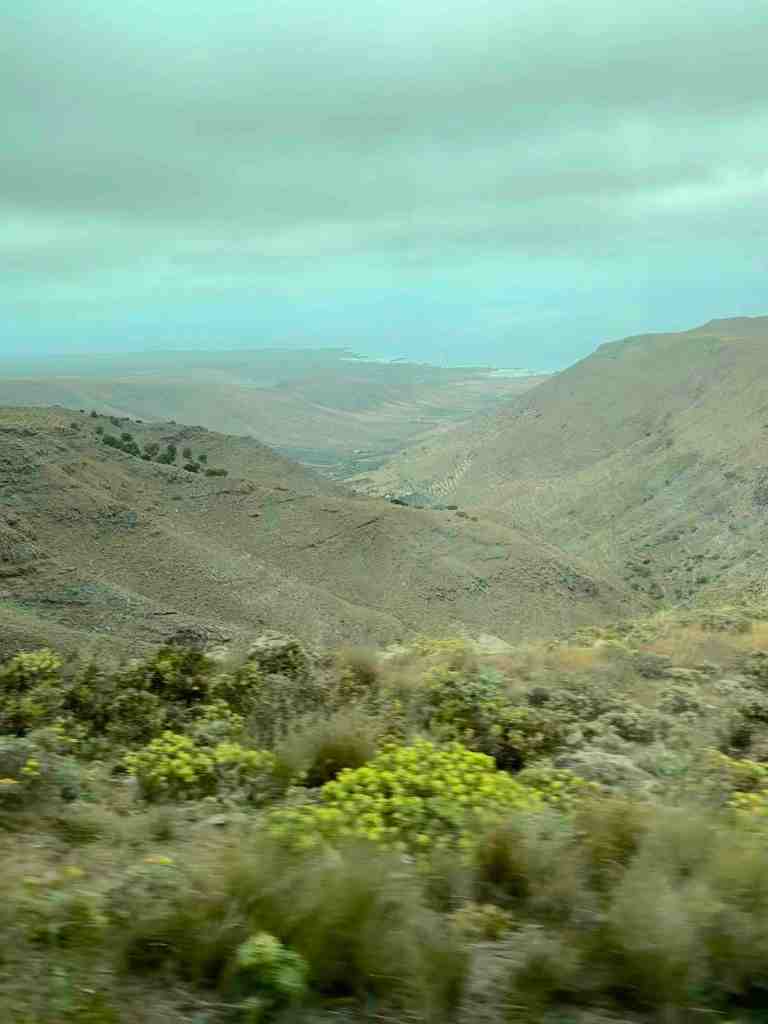
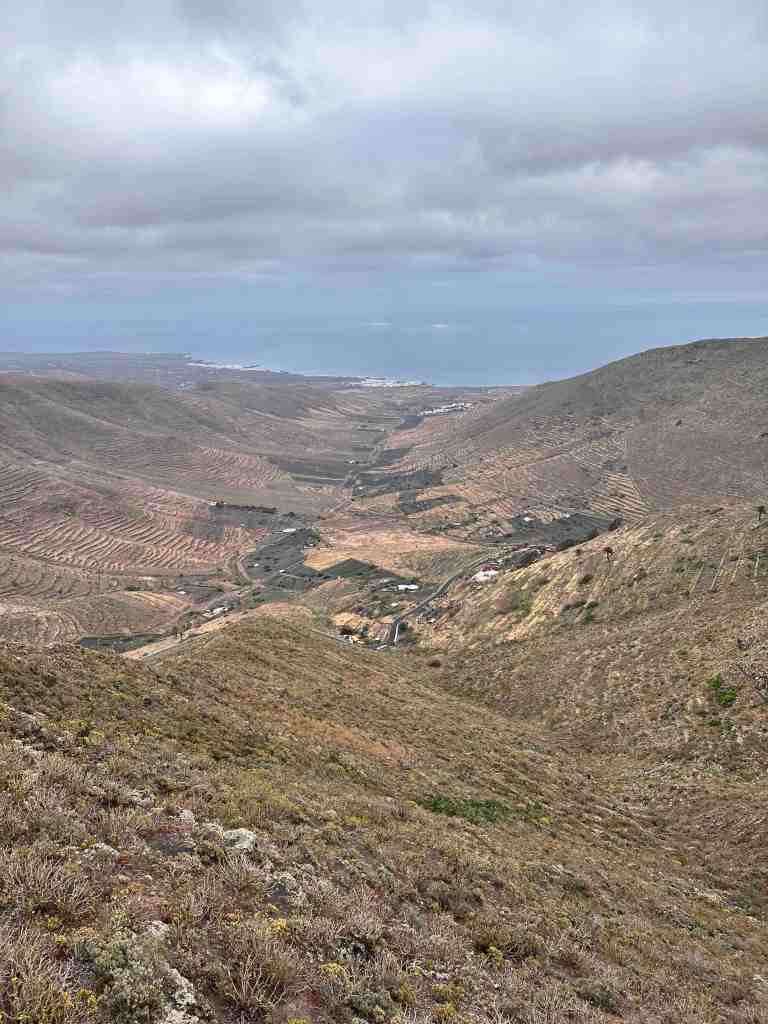
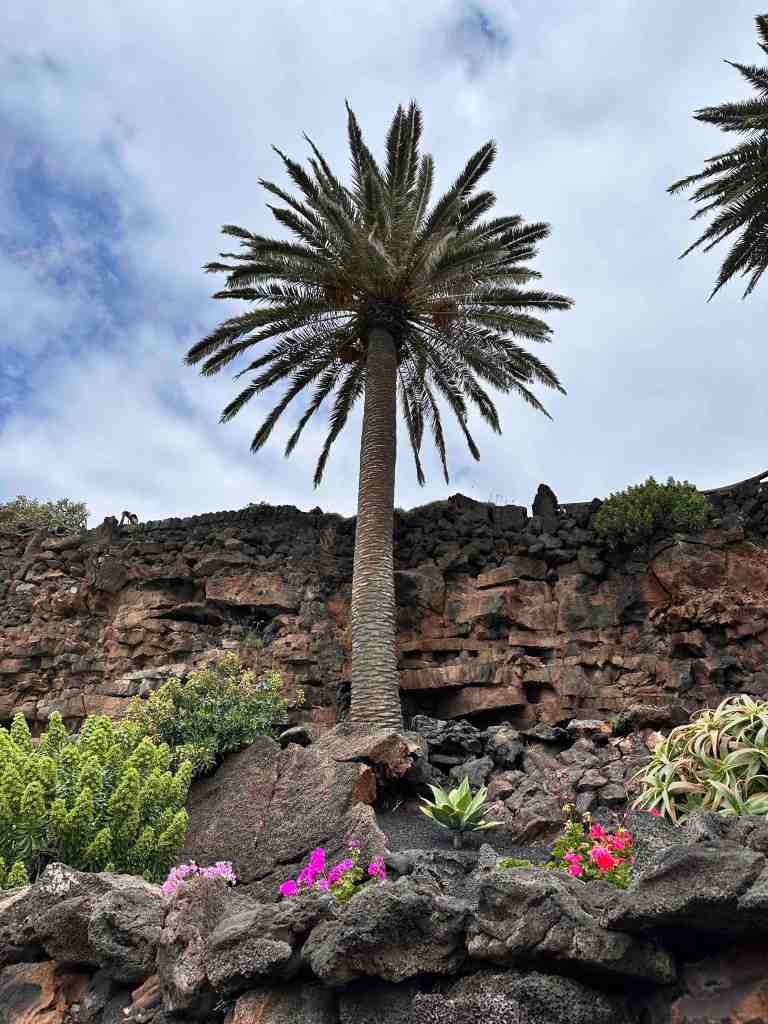
We drove north, gaining elevation along the way. The farms were fascinating and unlike any fields we’ve ever seen. The land was dark, volcanic ash and fields were lined with volcanic rocks that formed, not only borders, but also ways to block wind and to capture the morning dew. The island has become famous for its grapes, figs, almonds, onions, potatoes, bananas and row crops, all grown without artificial irrigation. Amazing! Can’t believe anything will grow here with such harsh conditions.
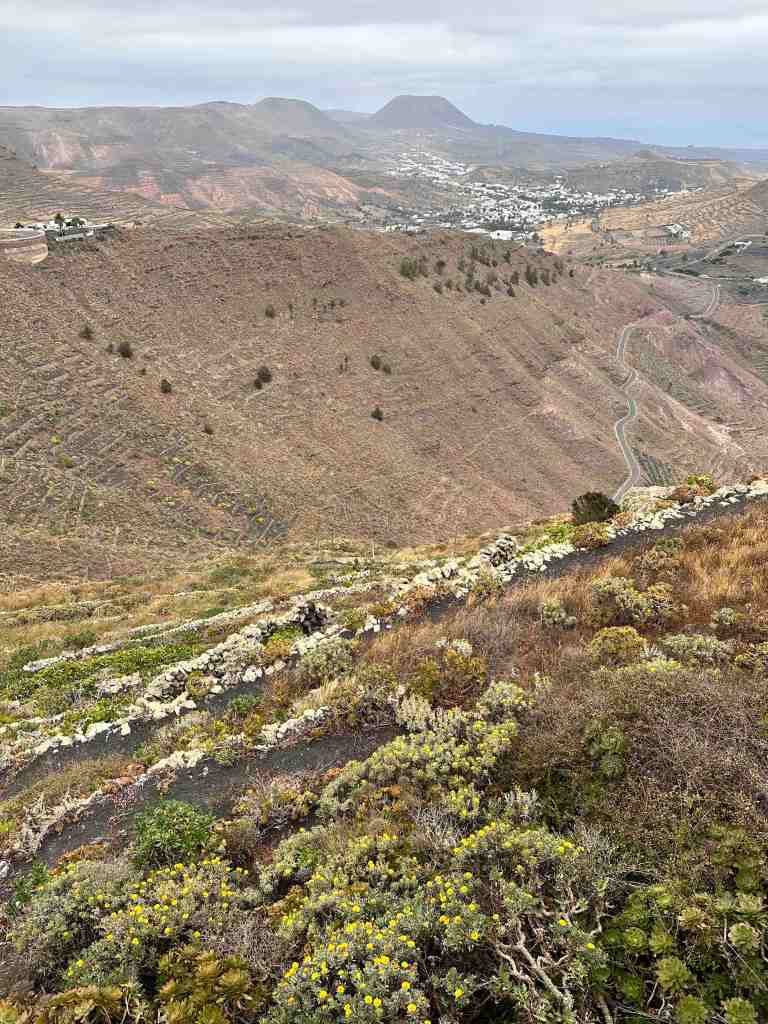
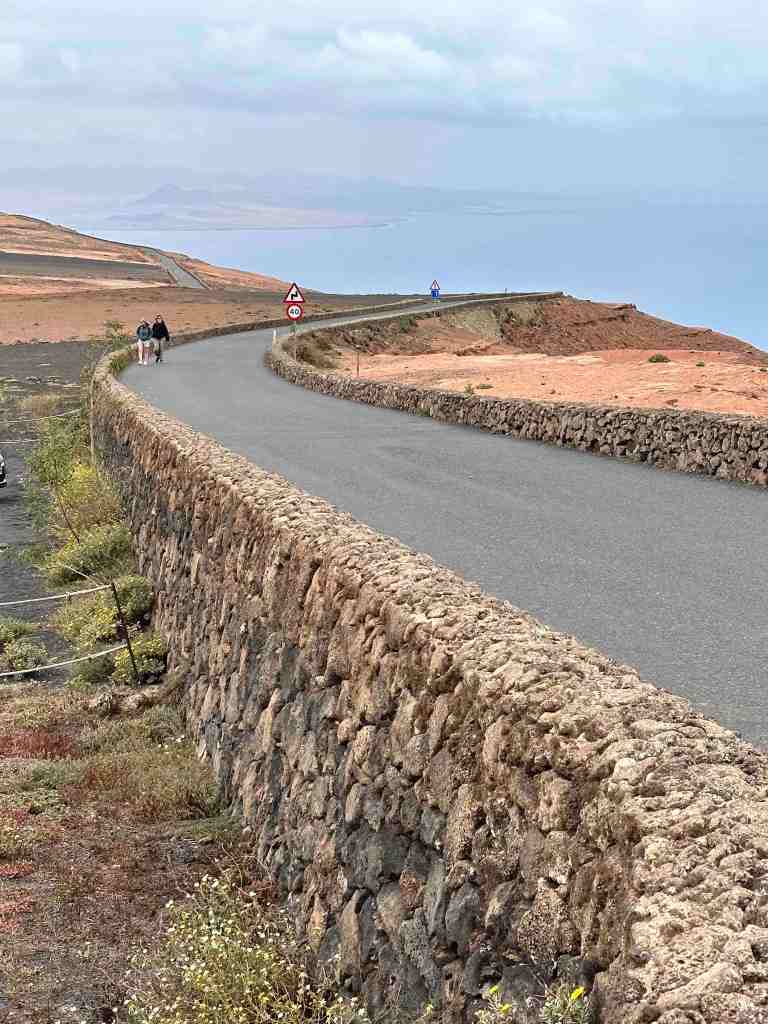
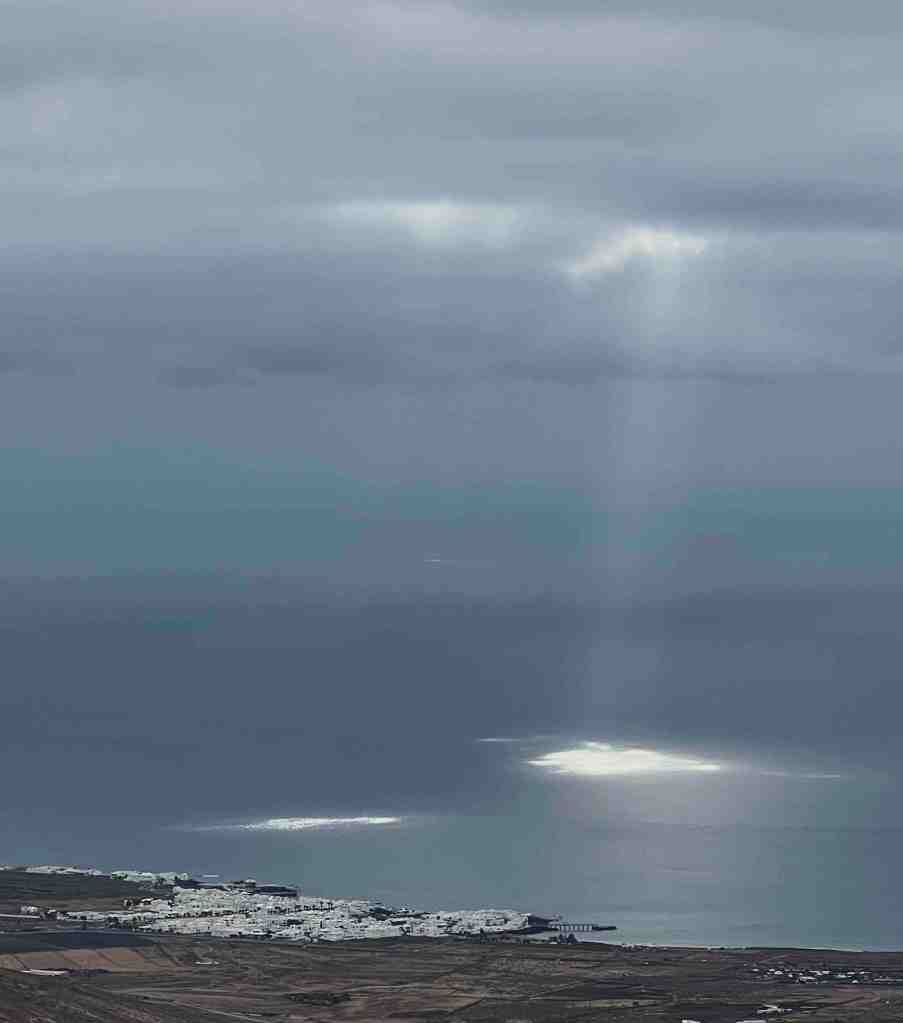
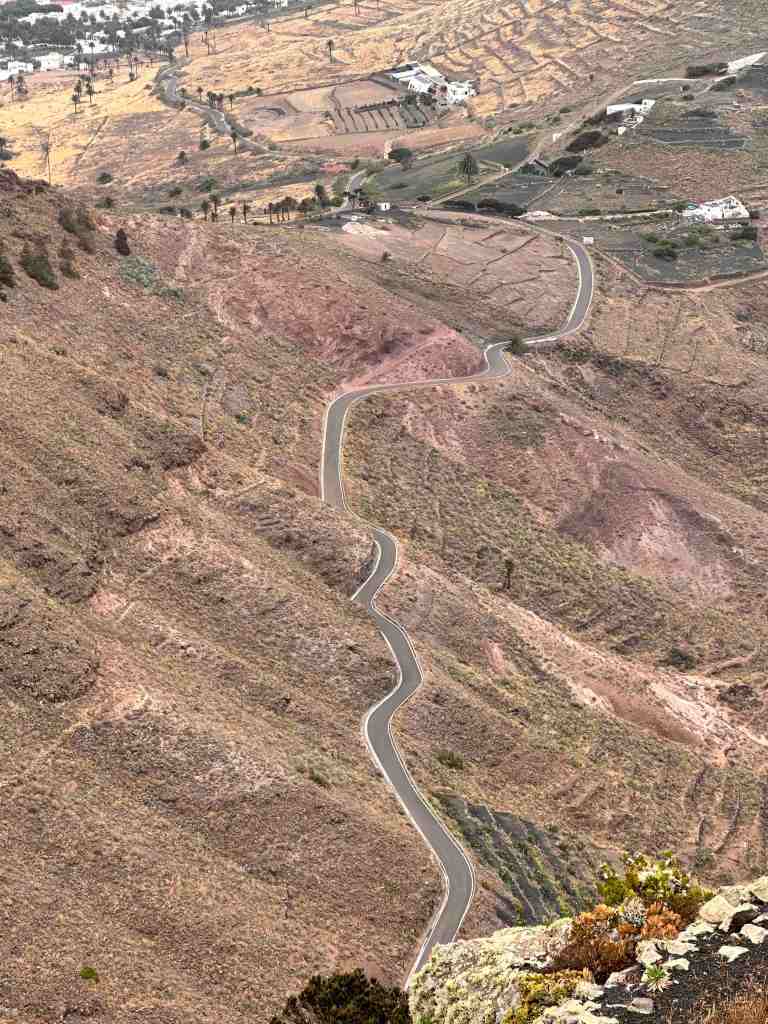
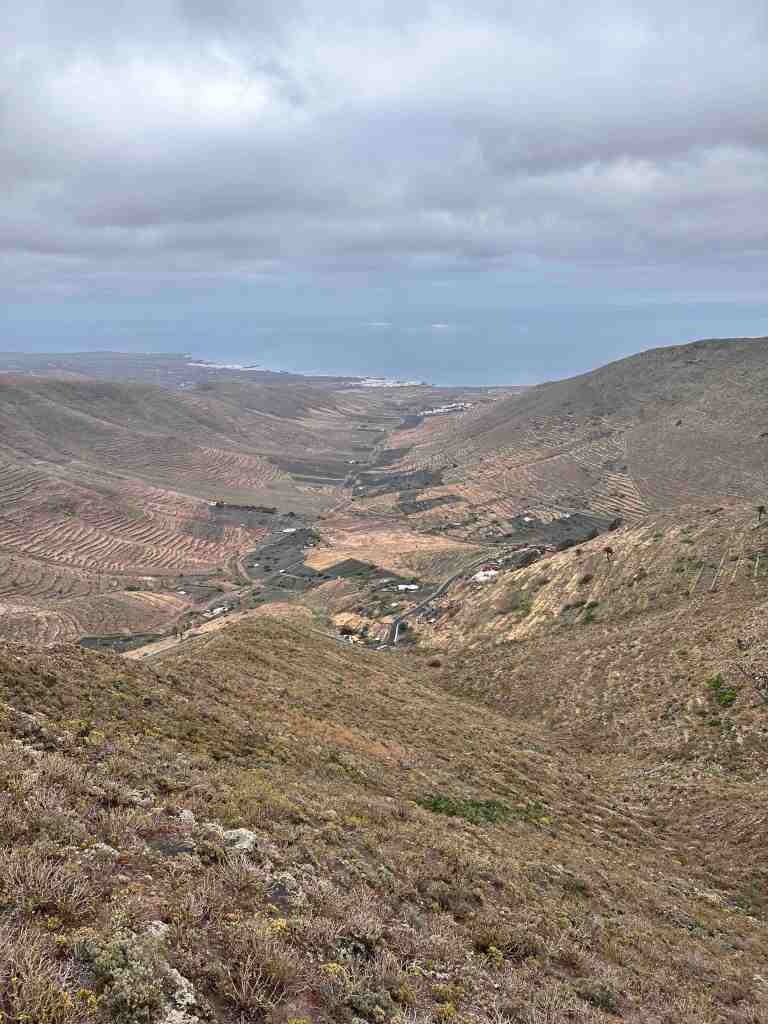
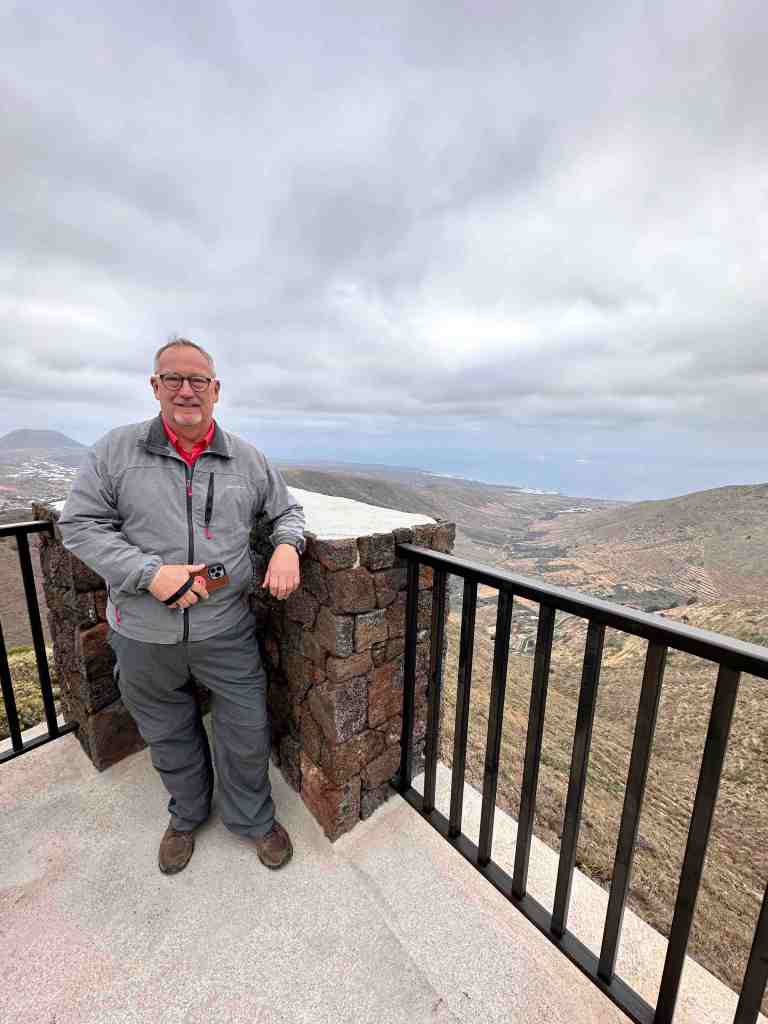
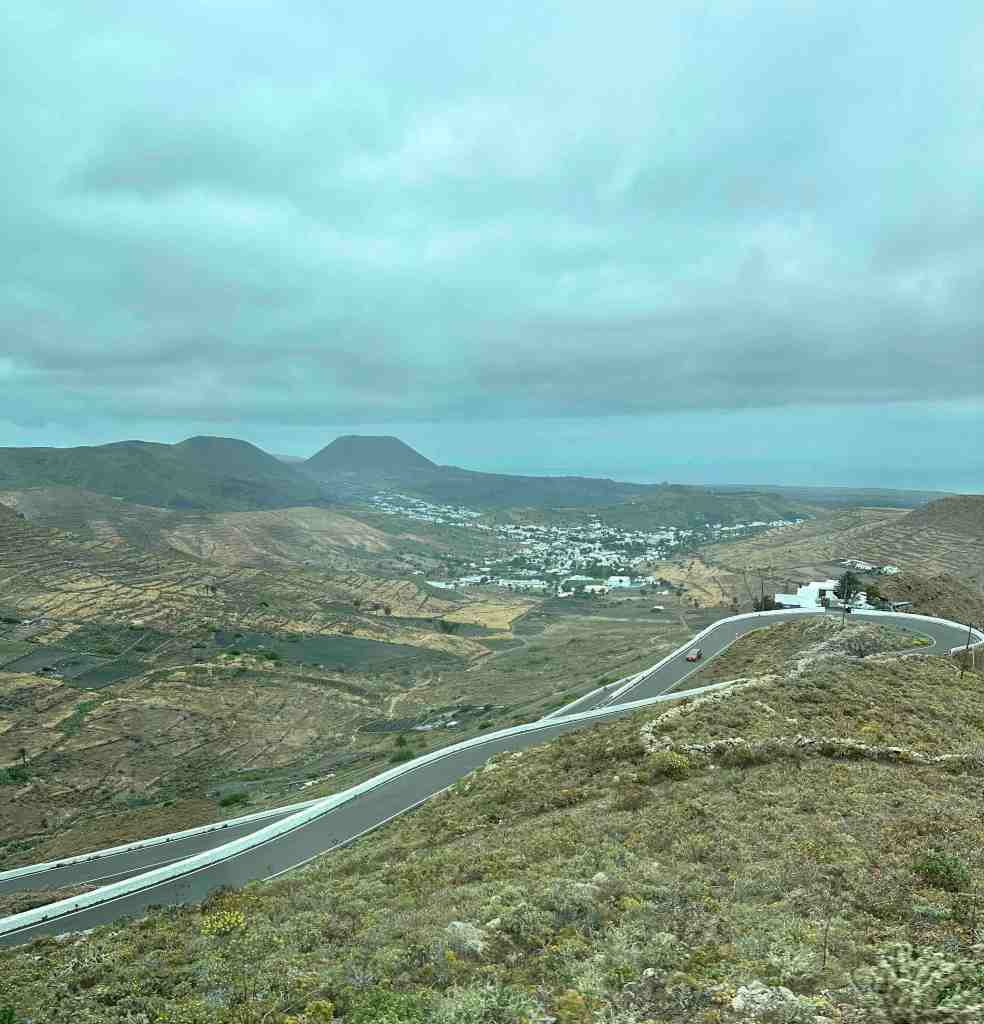
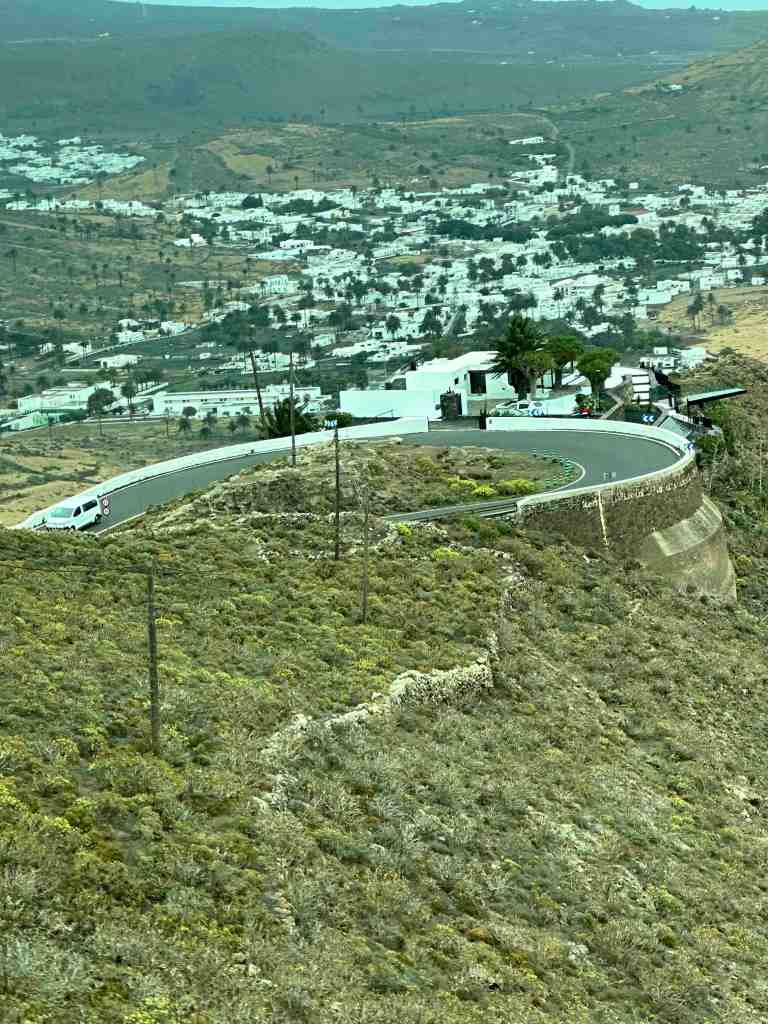
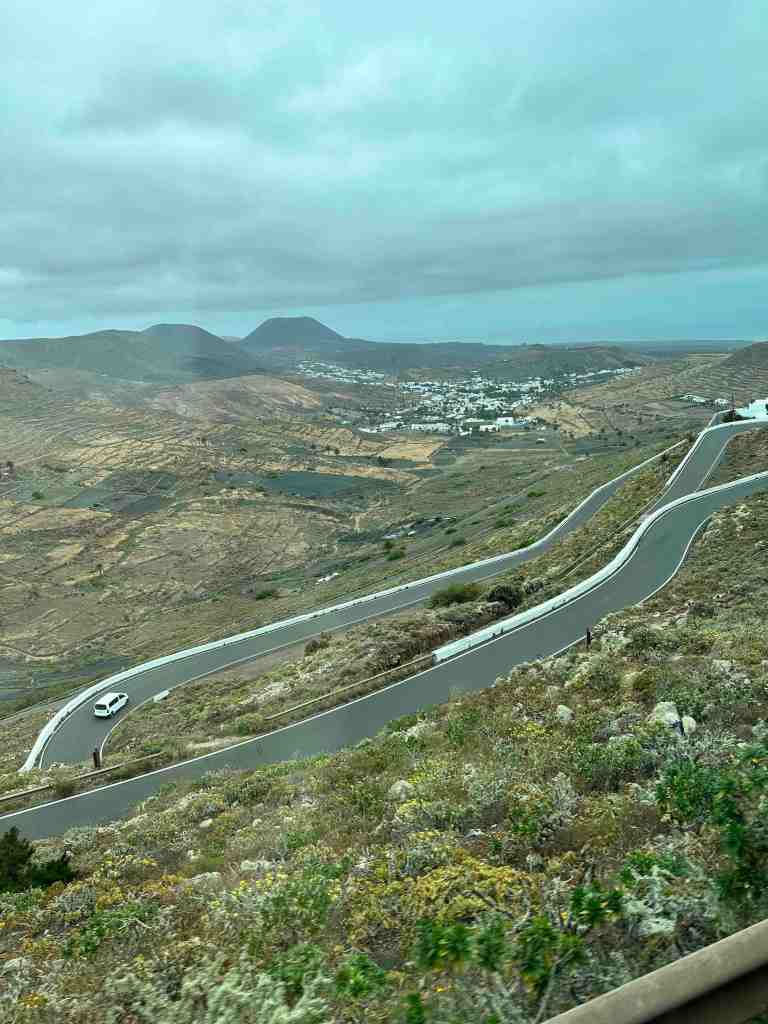
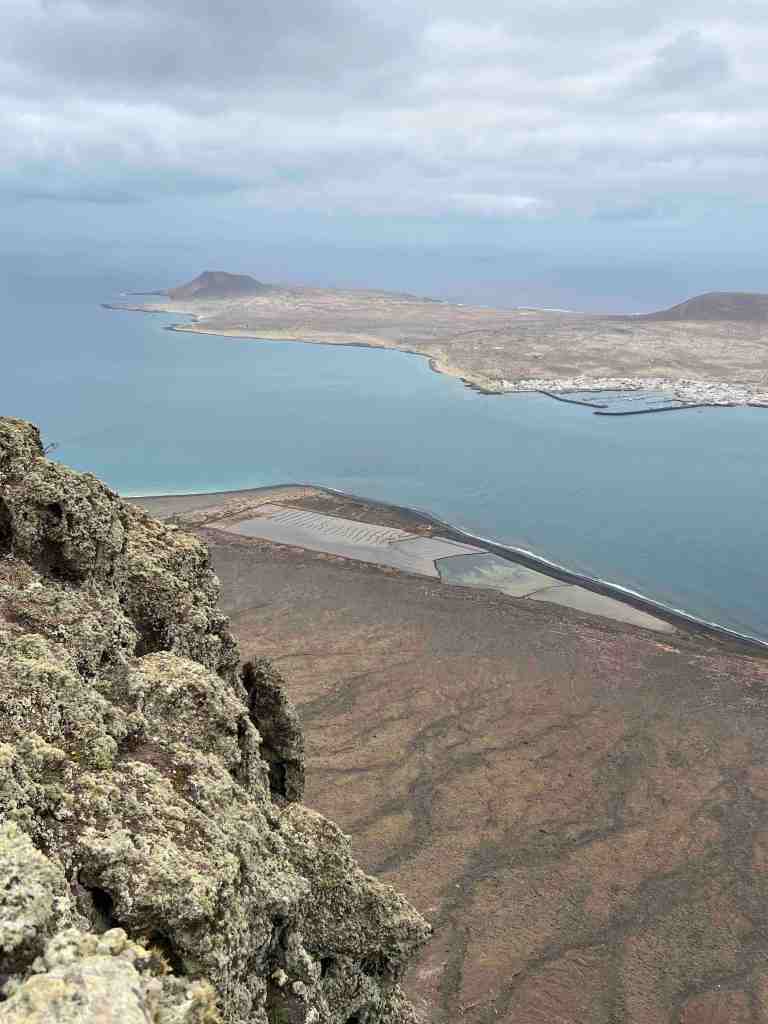
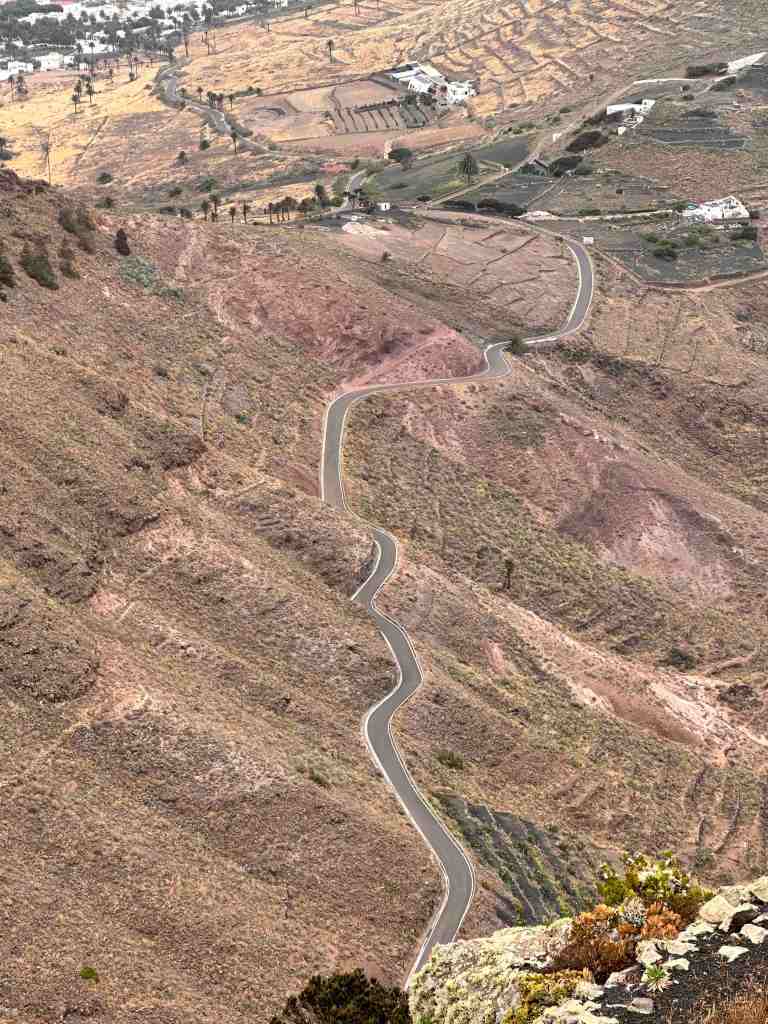
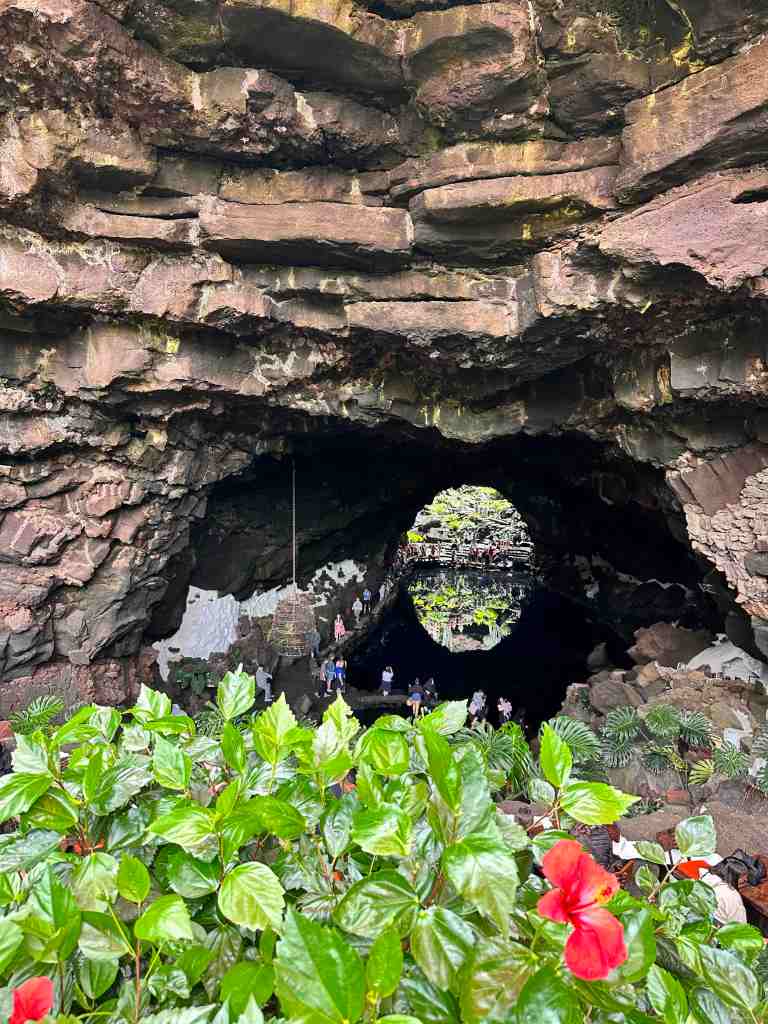
Soon we were high up on a hill looking out over the ocean. The sun would poke through the thick gray clouds and form a bright light on the water. At first, you didn’t realize what it was. Really quite stunning. The road descended with hairpin turns and soon we were at our destination. Los Jameos del Agua, a massive open-air cavern. This destination is connected to a stunning four-mile long volcanic tunnel. Formed over 3,000 years ago by molten lava during the eruption of the La Corona volcano, the structure has since been radically changed. Ever since its 1968 discovery, these openings have been transformed into a tropical garden, a pool, a bar and even a 600-seat auditorium by artist, painter and sculptor, Cesar Manrique.
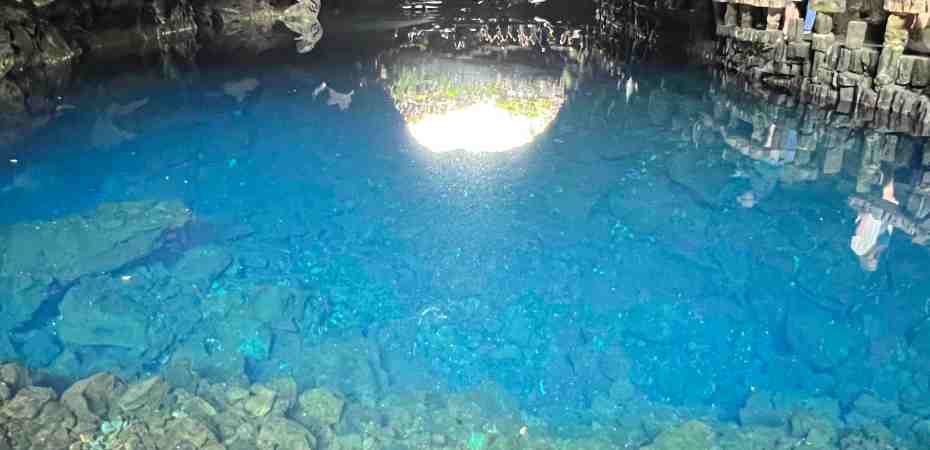
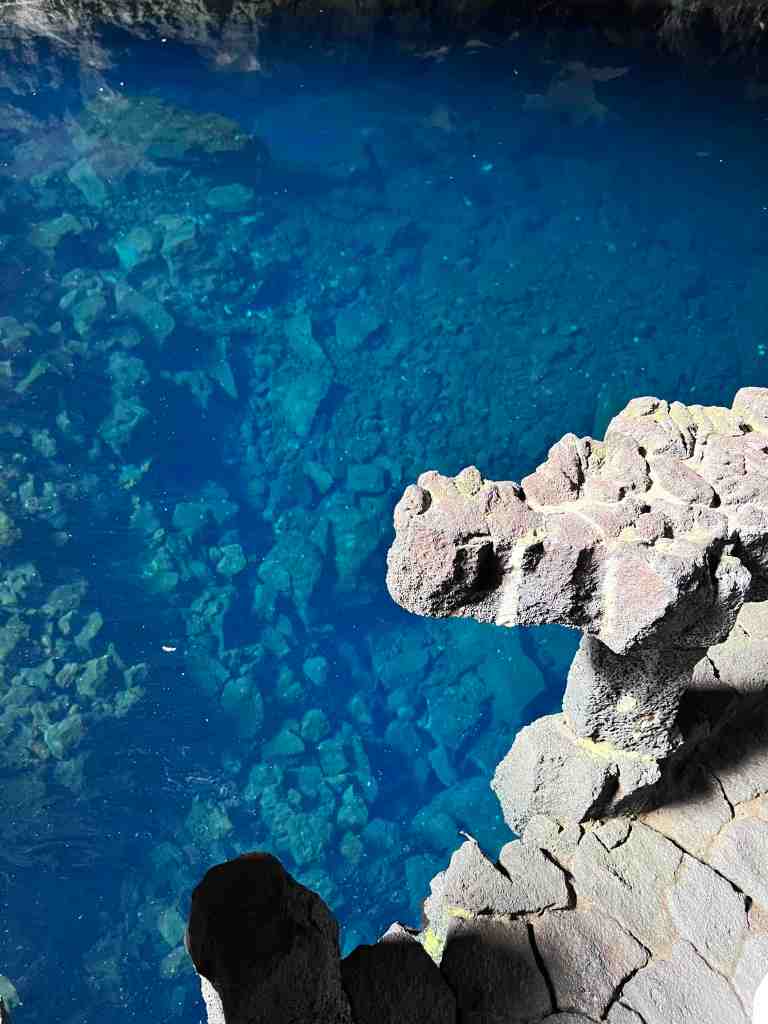
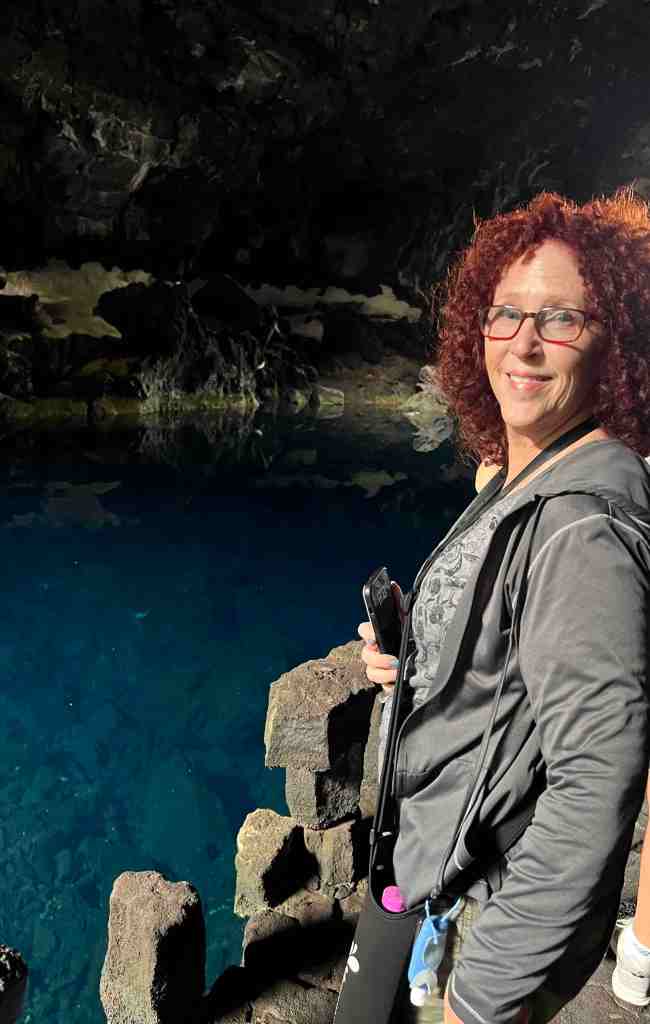
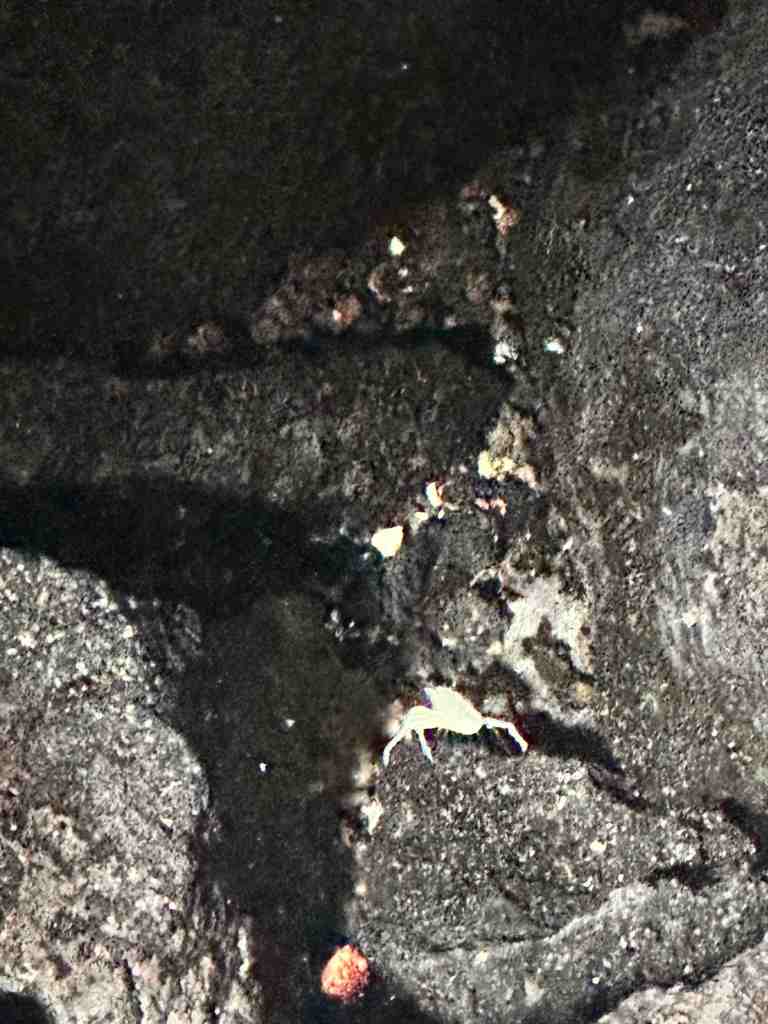
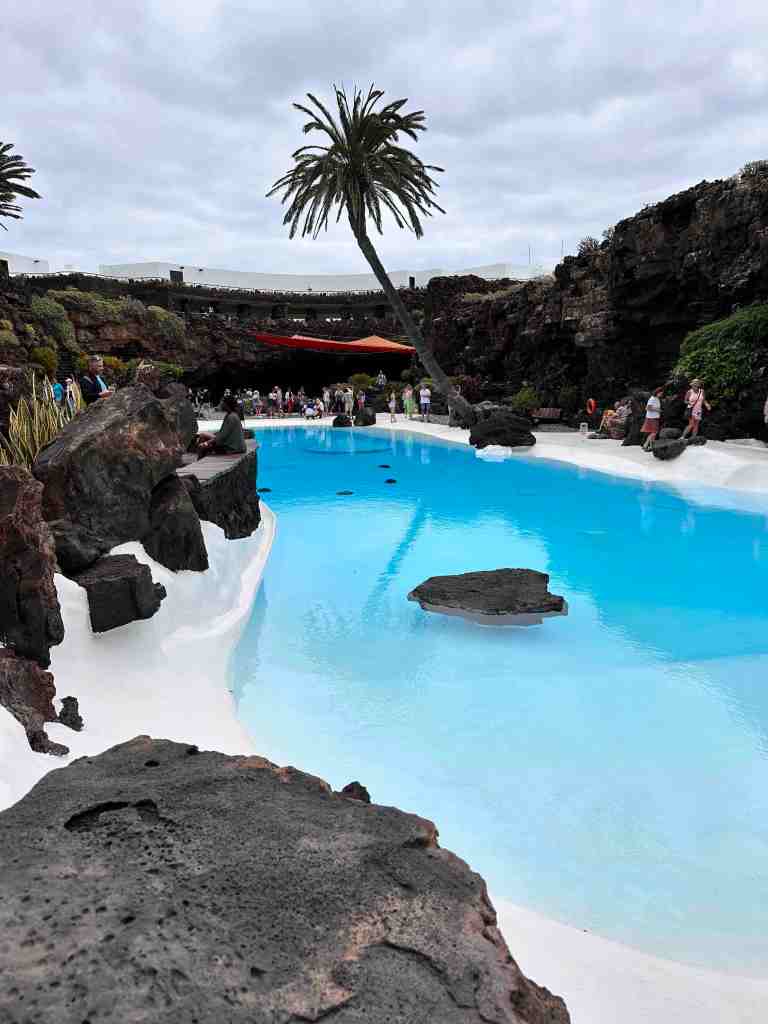
We got off the bus and followed our guide to the entrance of this volcanic cavern. We wound our way down a path, descending gradually into this open-air space. At first, you couldn’t believe what you were looking at. It’s a lava tube! It’s huge and imagine that it’s 4-miles long. We are only walking through a short section and enjoying the sight of a blue, crystalline lagoon of about 23 feet deep. There’s a hole in the cavern where part of the ceiling had collapsed. If you’re there during the right time of day, the rays of sunshine coming through and hitting the blue lake would be stunning. The lake originated by marine filtration, changes in the tide can be seen from inside the tunnel, especially at high tide, when the water level rises so high it floods the access corridor. Also, if you look very close, you’ll see the famous blind crabs. Whitish in color due to the darkness. I’d say they were about the size of a dime.
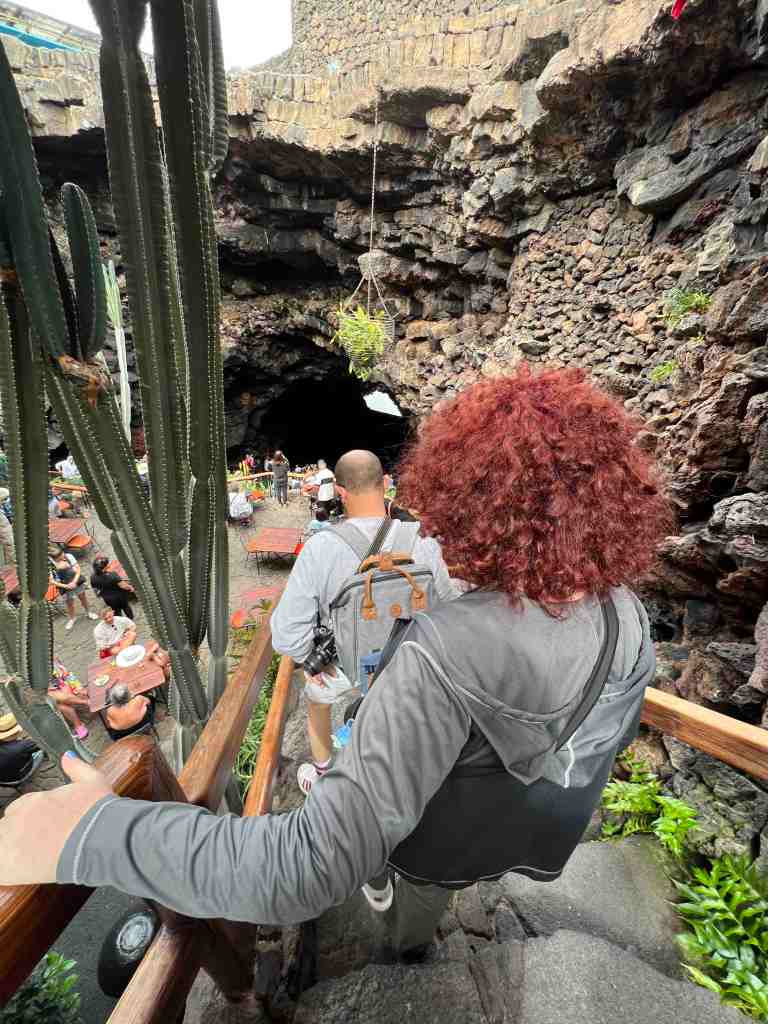
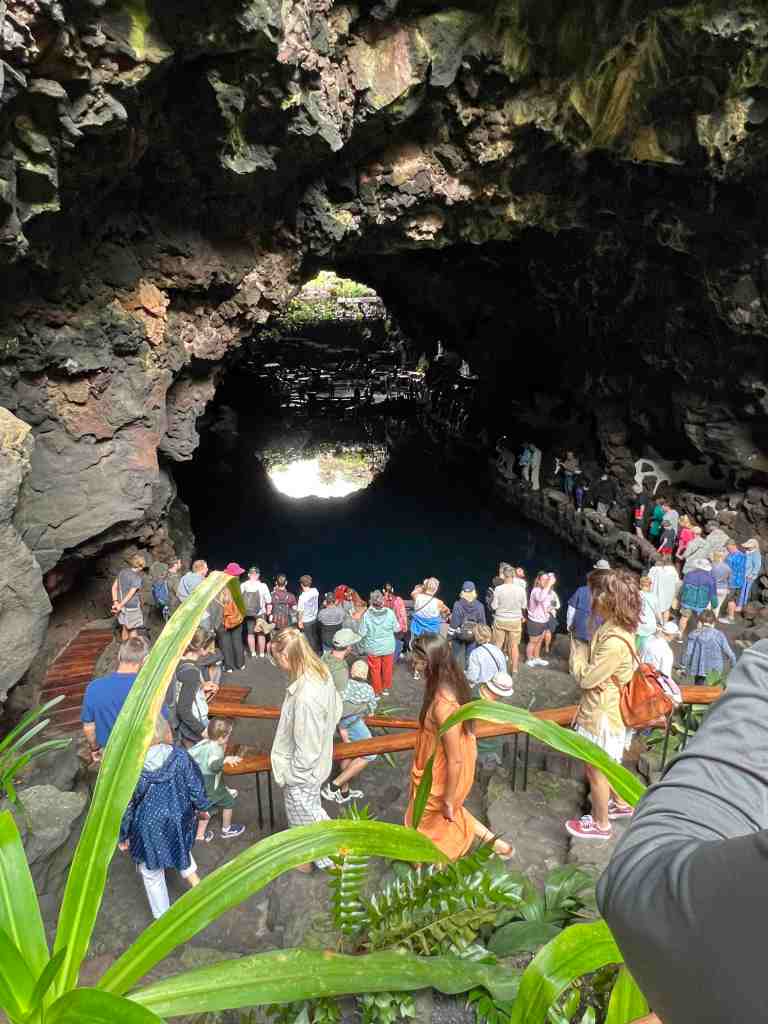
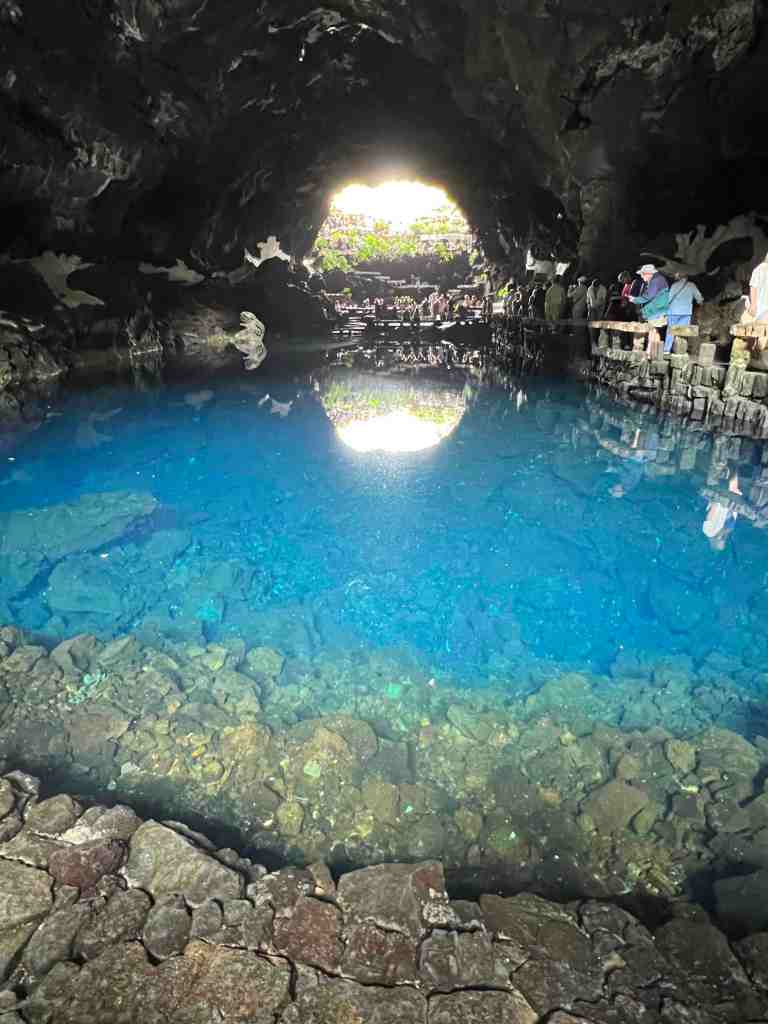
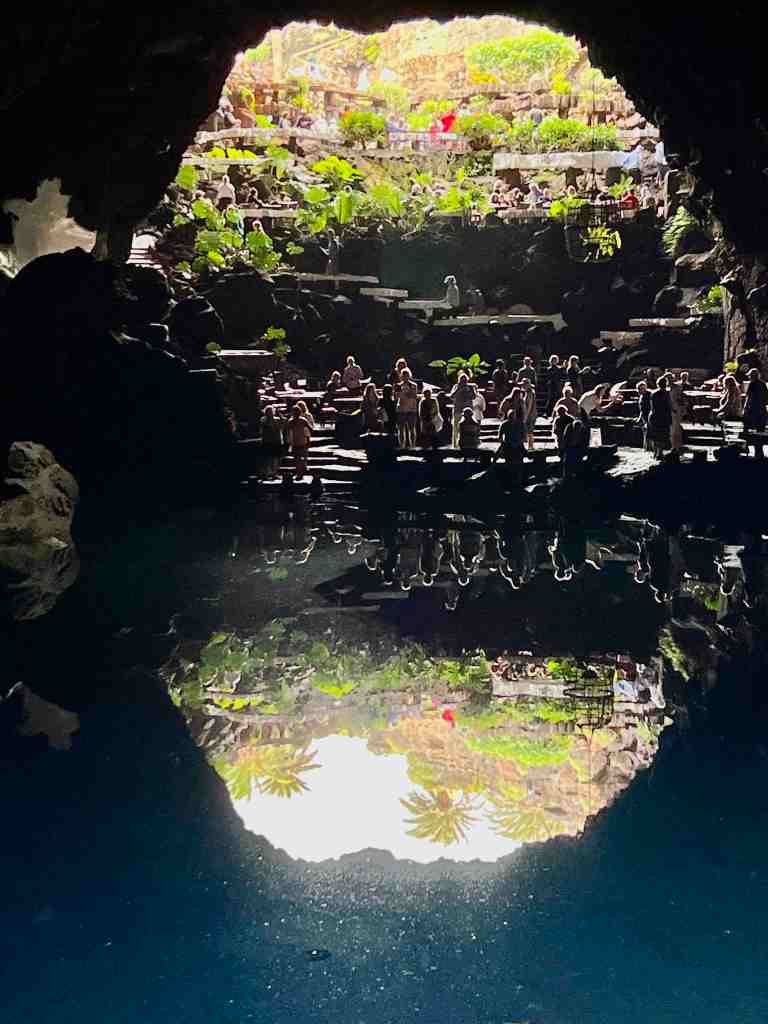

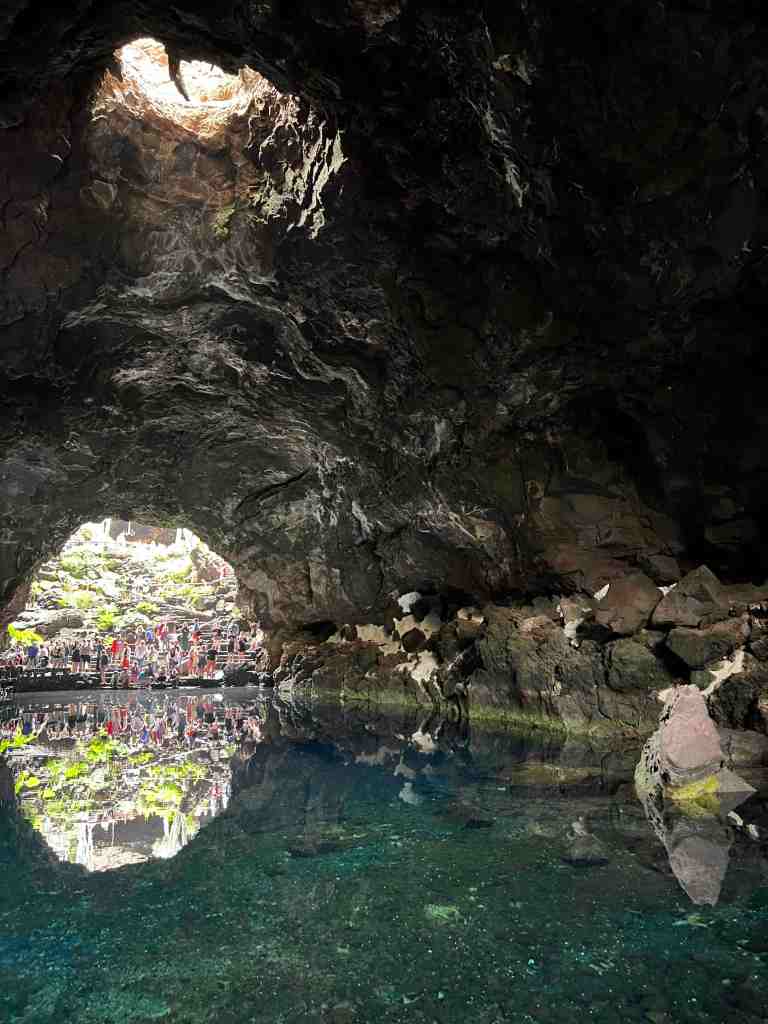

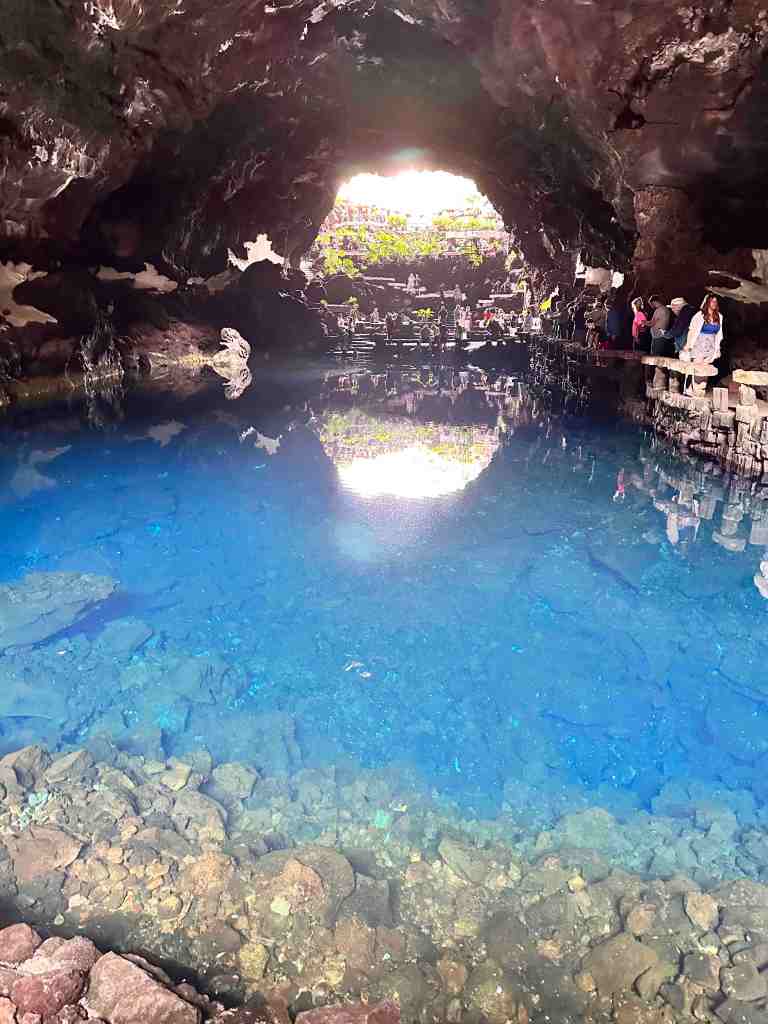
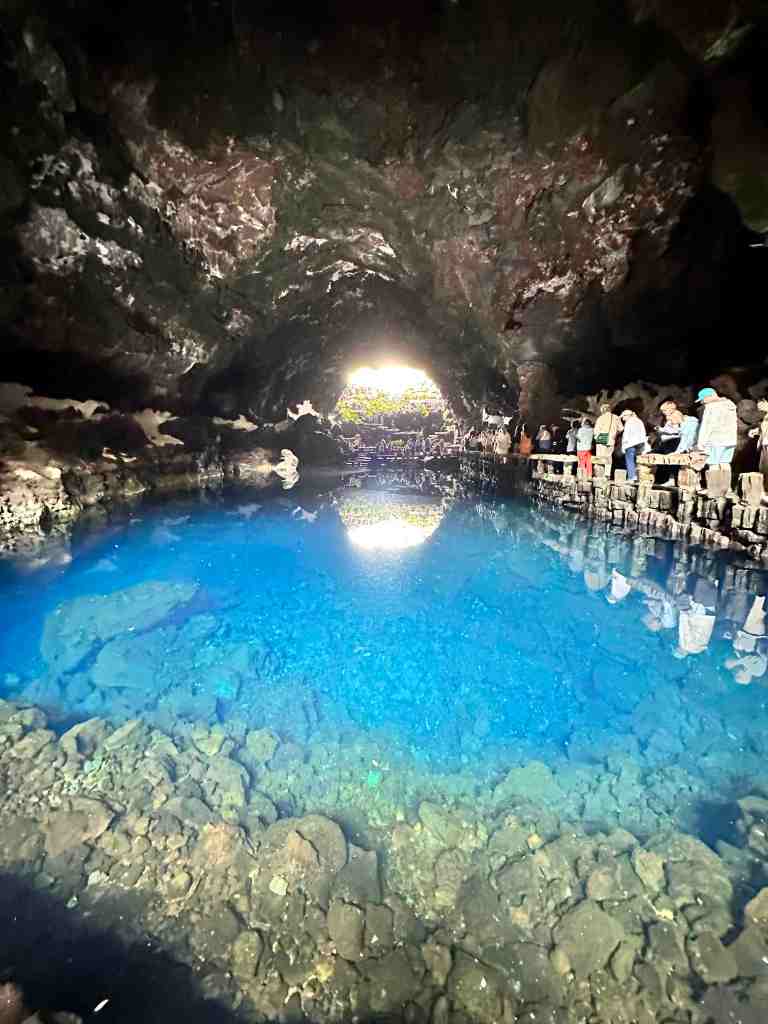
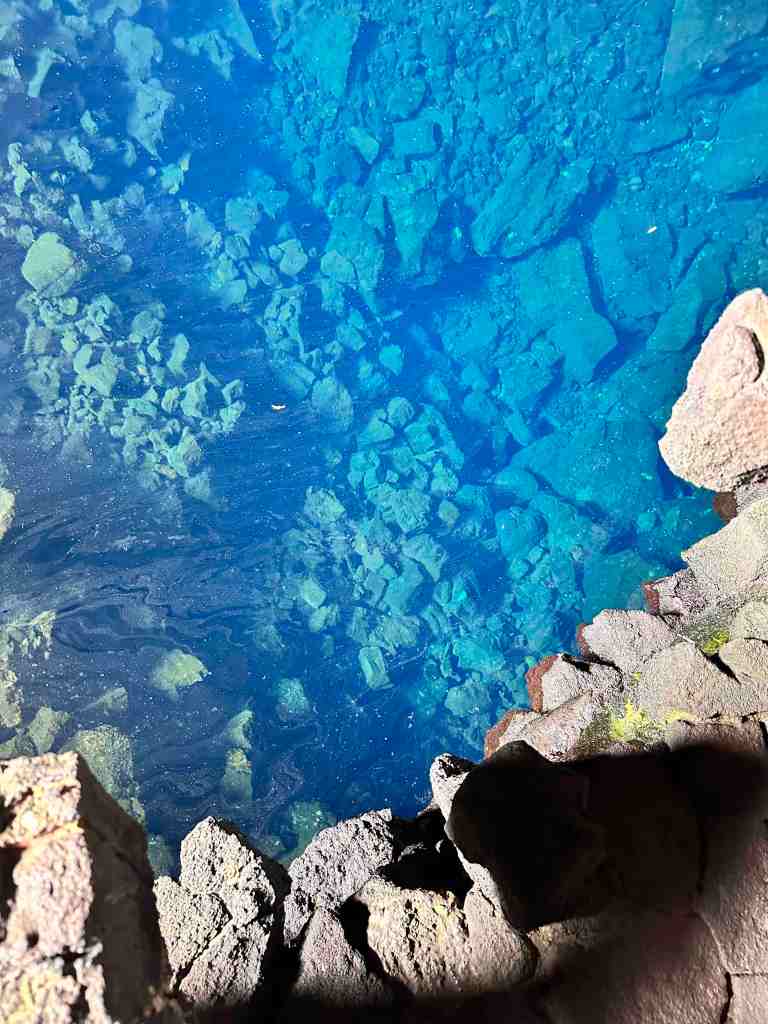
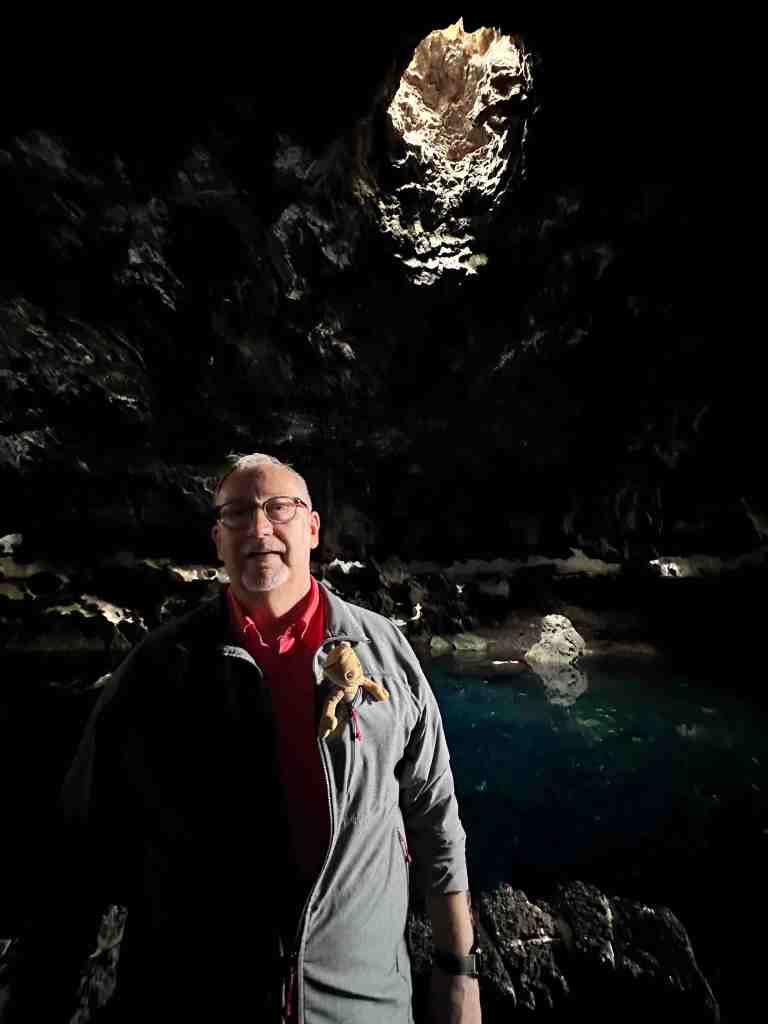
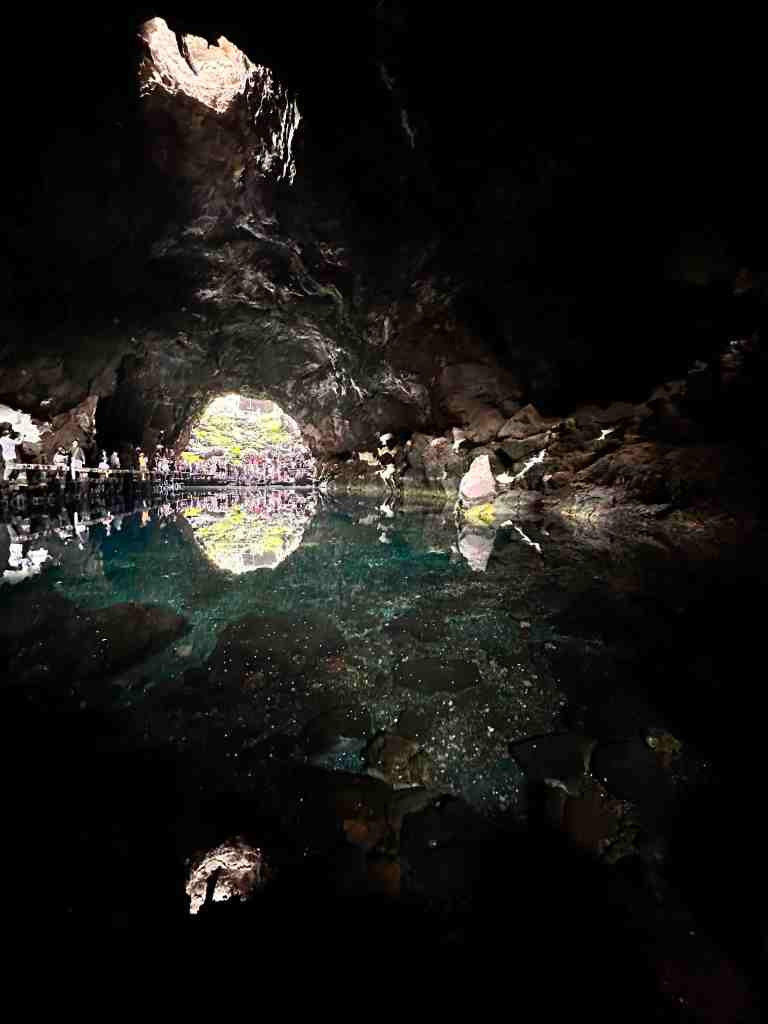

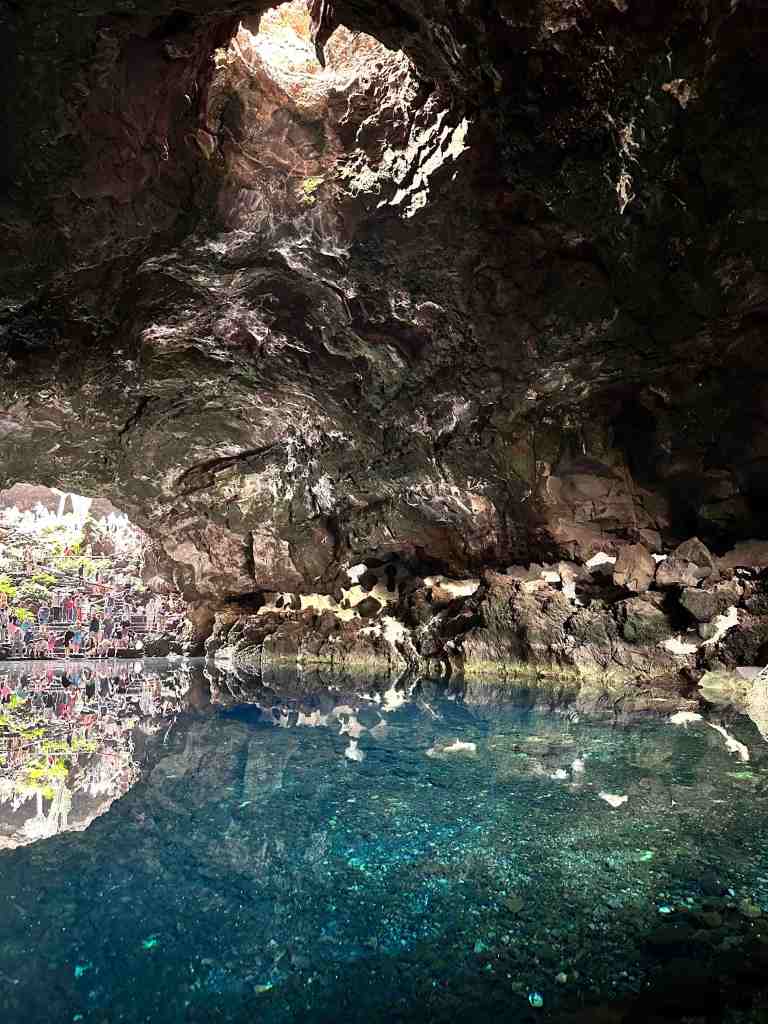
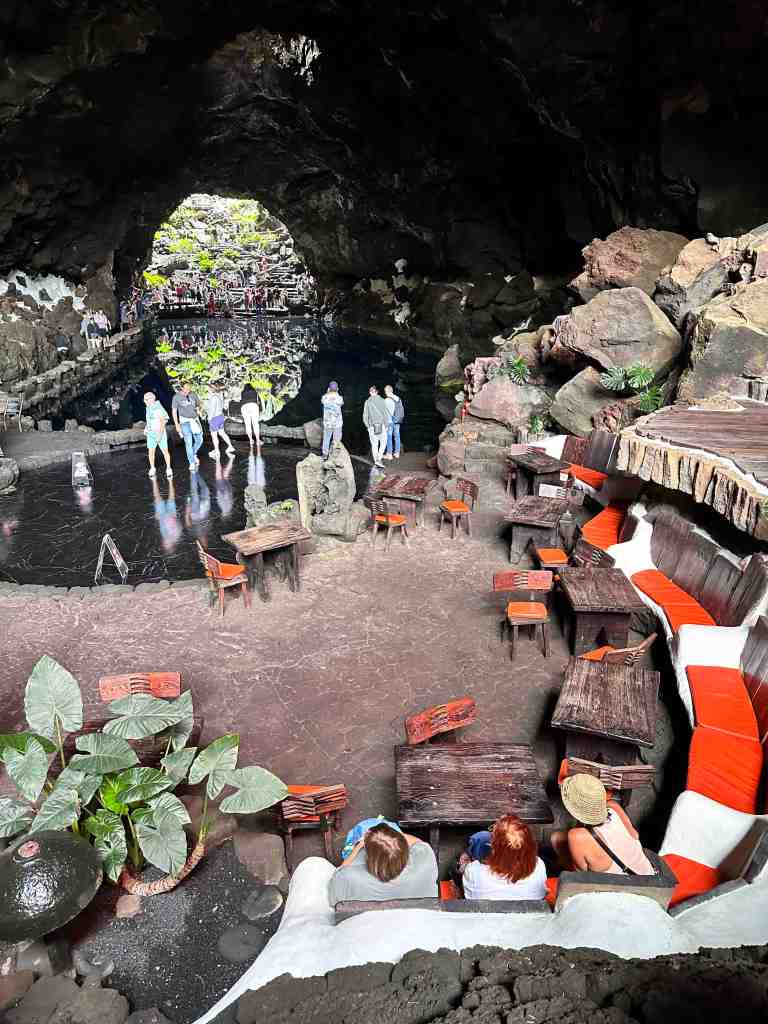
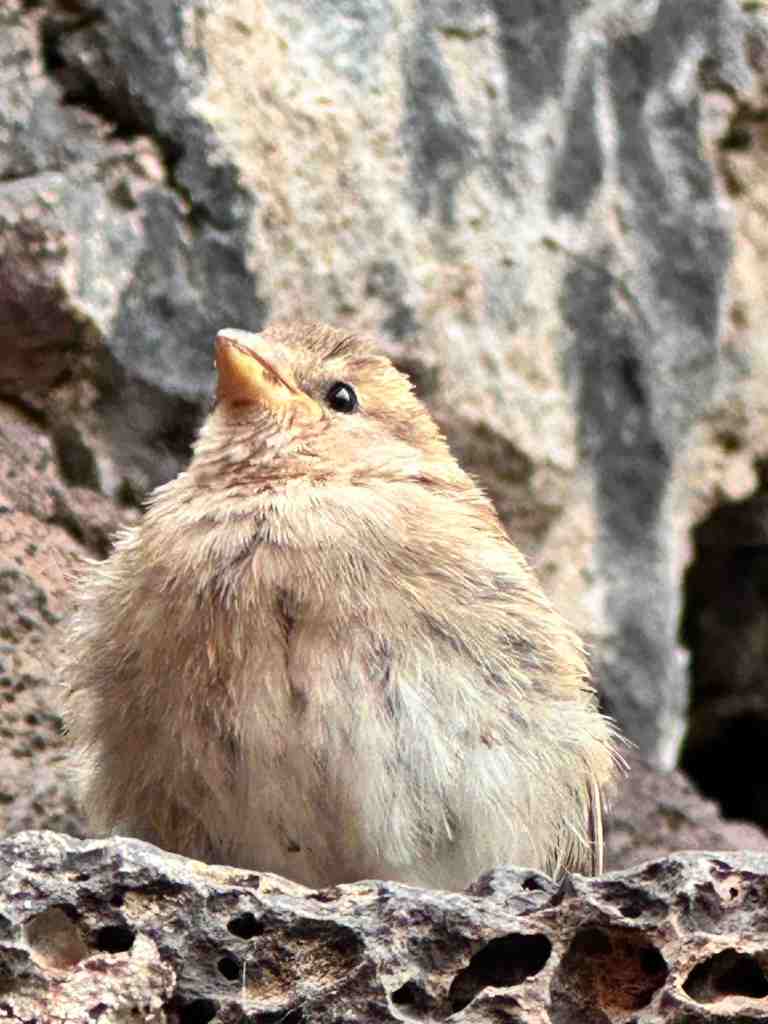
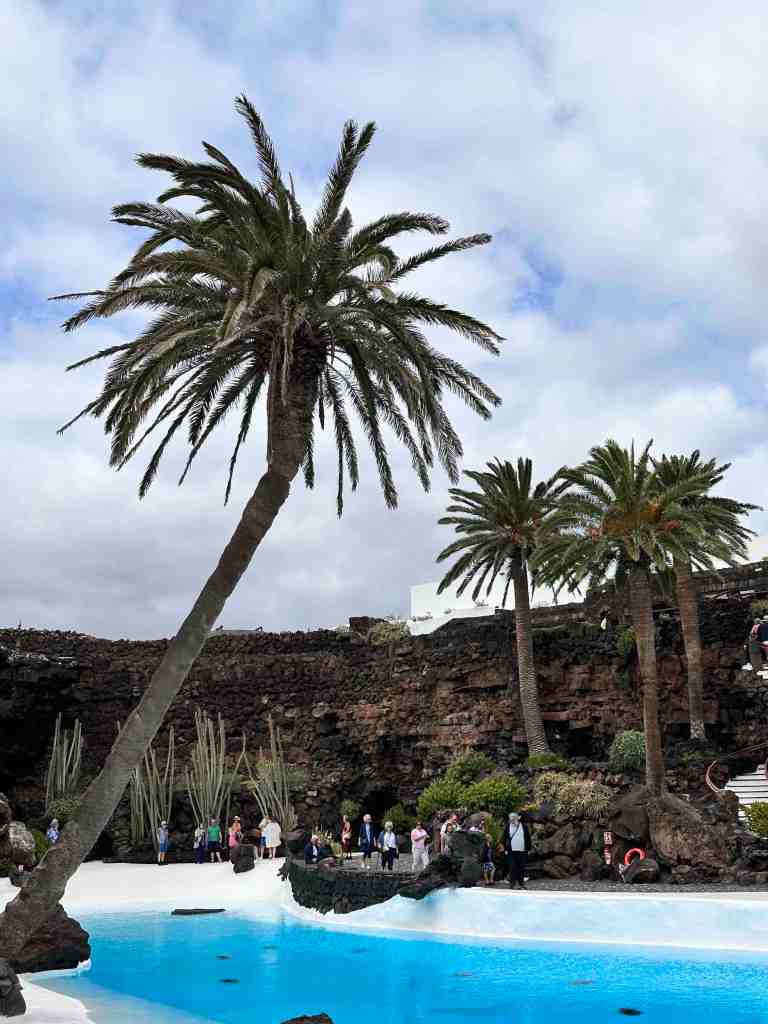
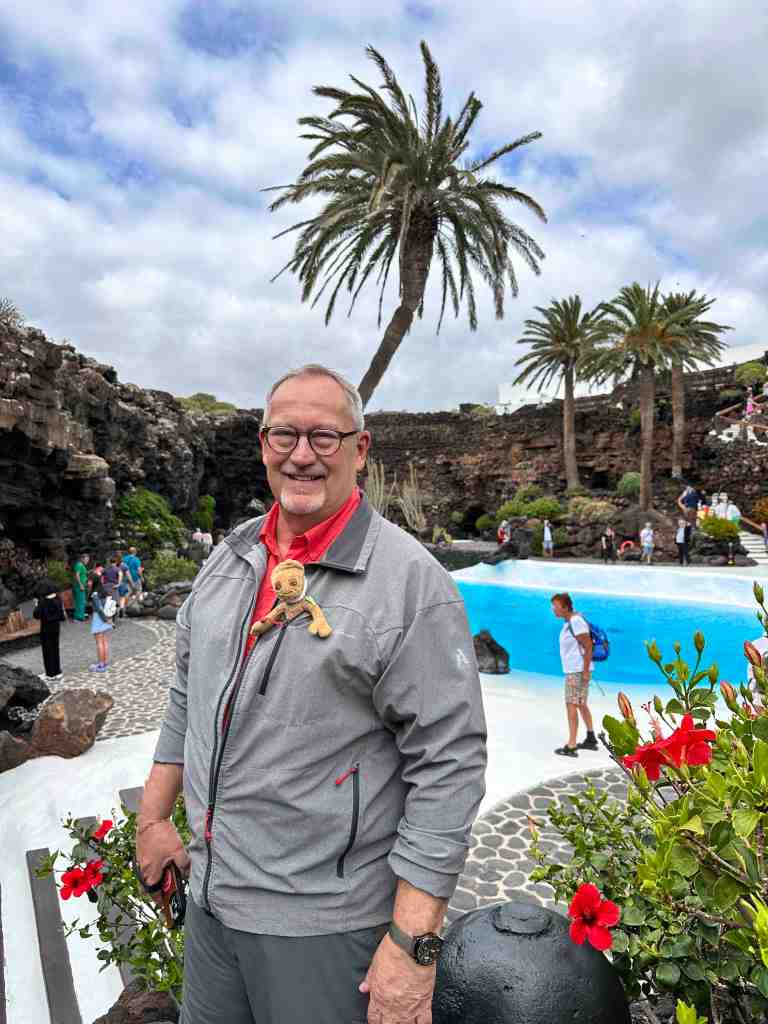
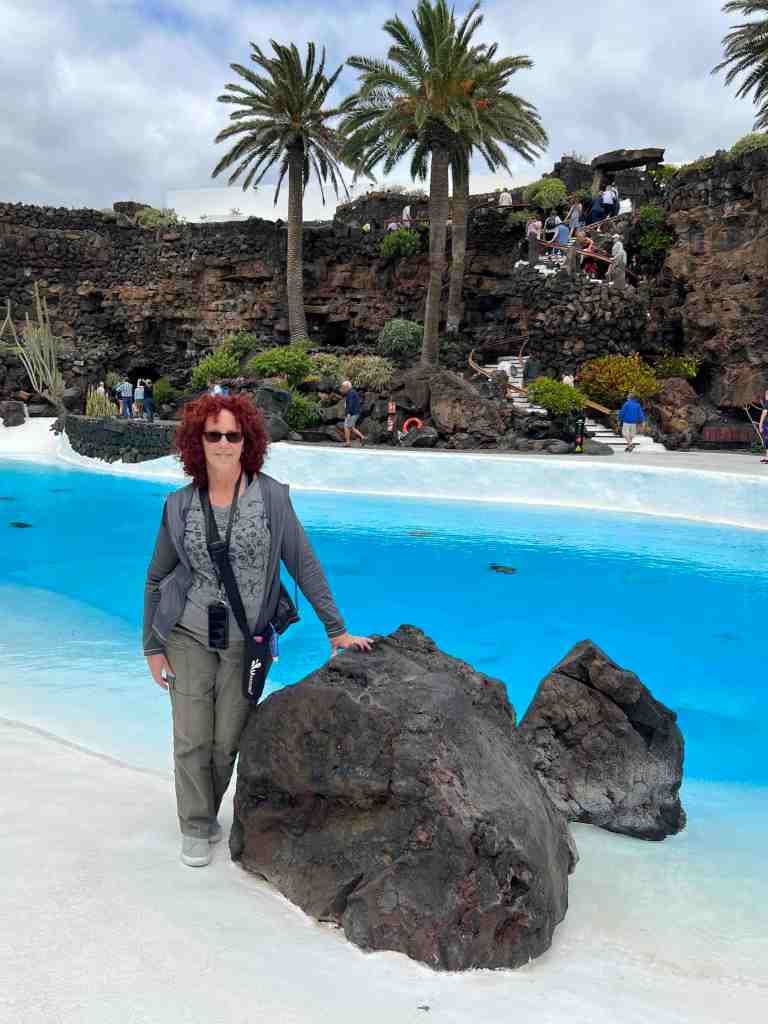
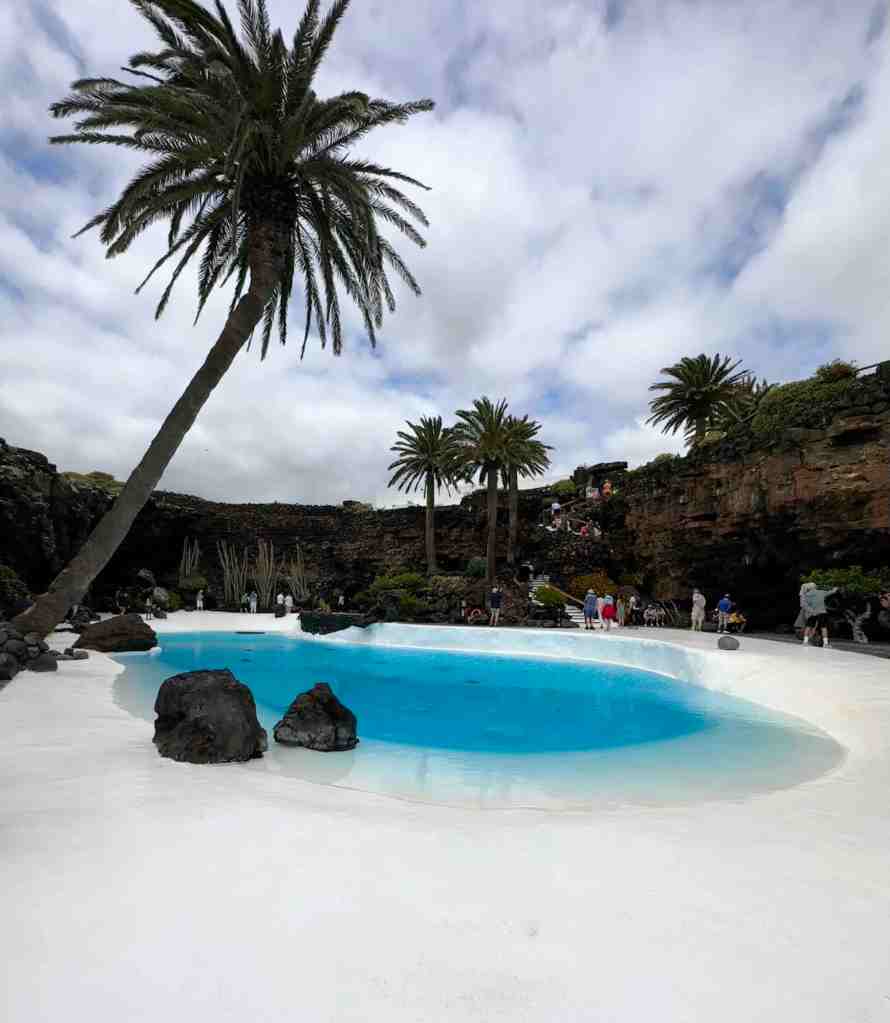
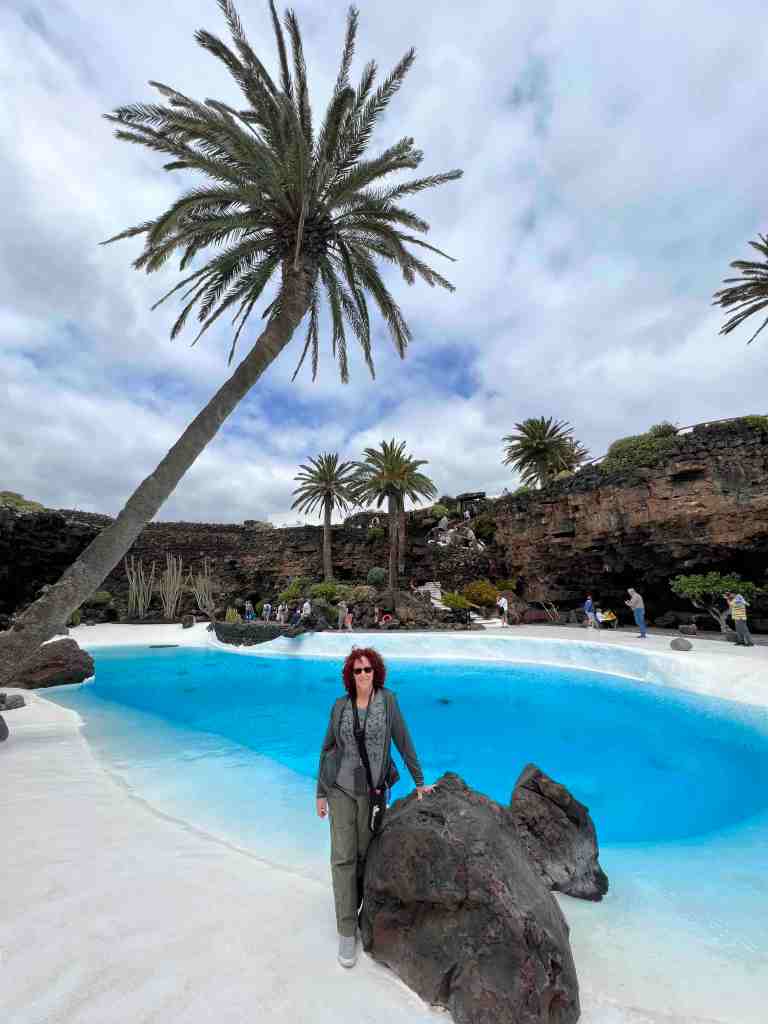
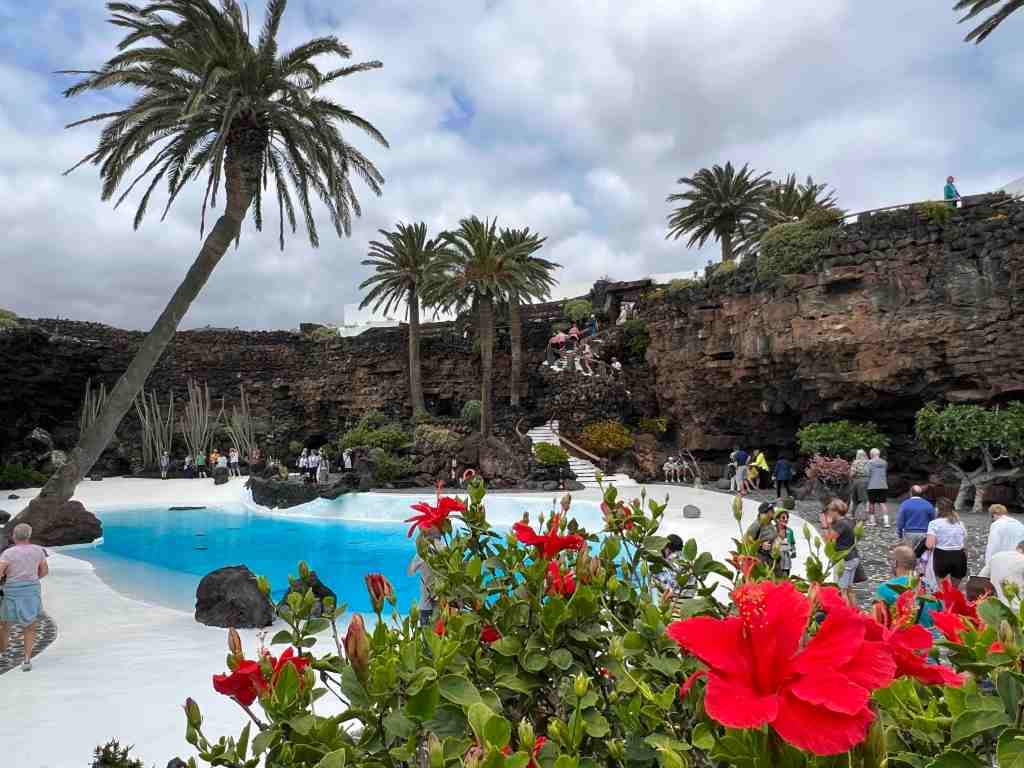
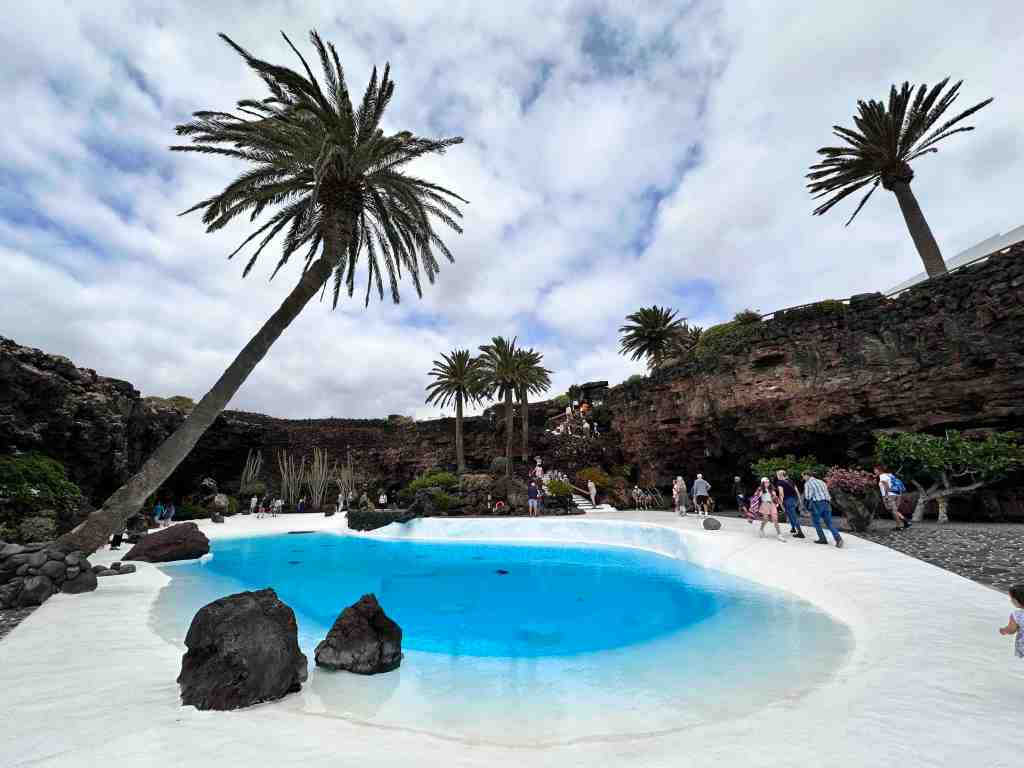
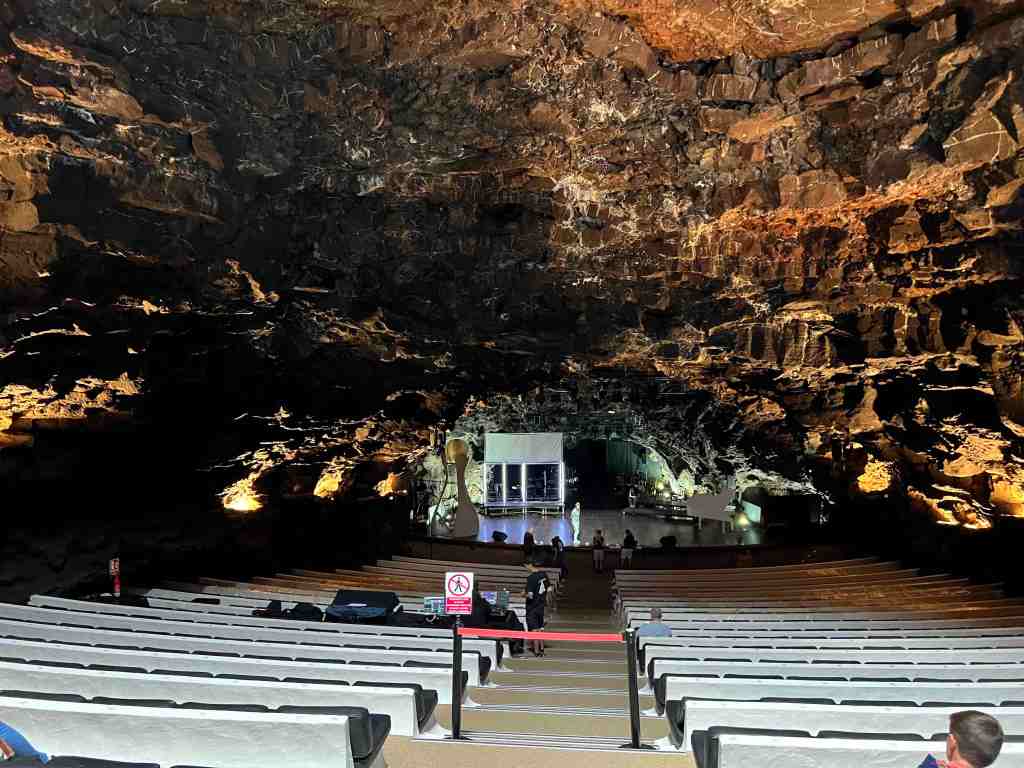
There is a lovely restaurant just outside the opening of the cavern. You can sit and enjoy the beautiful view of the blue lagoon. We walked along the water and exited the other side. Little birds were flying in and out, chirping along the way. People were sitting in chairs having a drink and enjoying their day. As we climbed the path out of the cavern, suddenly, you see a pool, white bottom and sides and that lovely blue water we saw in the lagoon. Of course, it’s brilliant with the white background and dazzling color of various flowers. We walked around the pool and saw the entrance to the auditorium. It’s a space of immeasurable beauty created to take advantage of the magnificent and extraordinary acoustics of the natural cavern. It has a capacity for 550 people. The stage is located inside a section of the volcanic tube and the seats are positioned following the natural slope of the floor. Many events are performed here, including The Chamber Orchestra of the Canary Islands. I bet it’s fabulous.


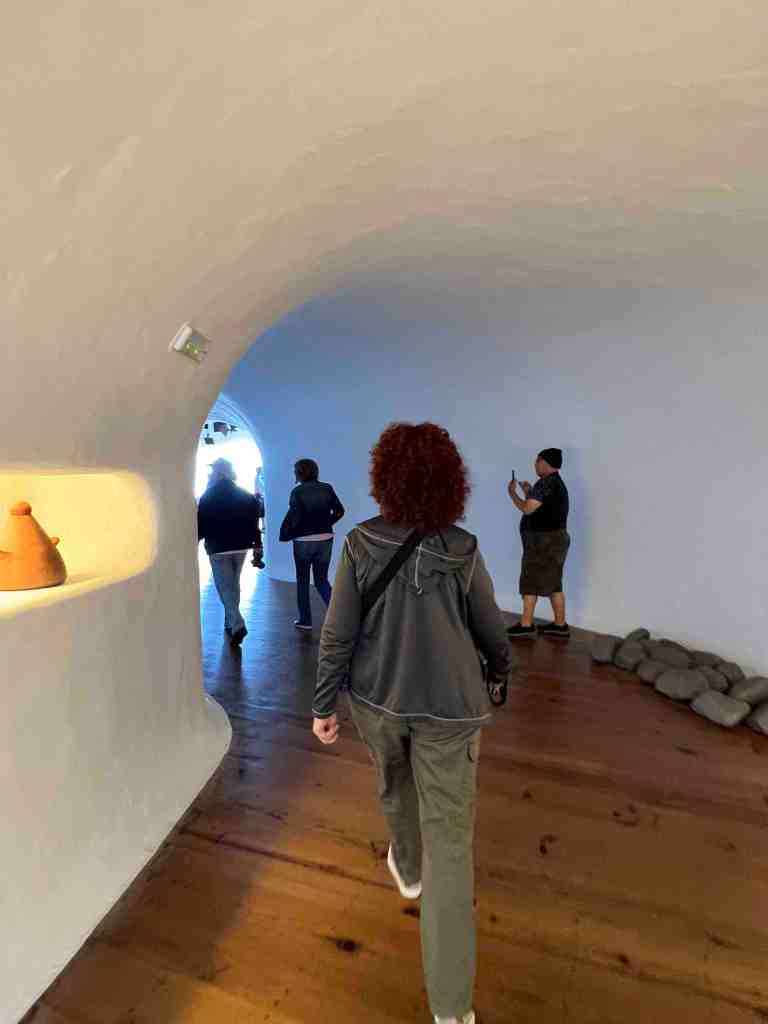
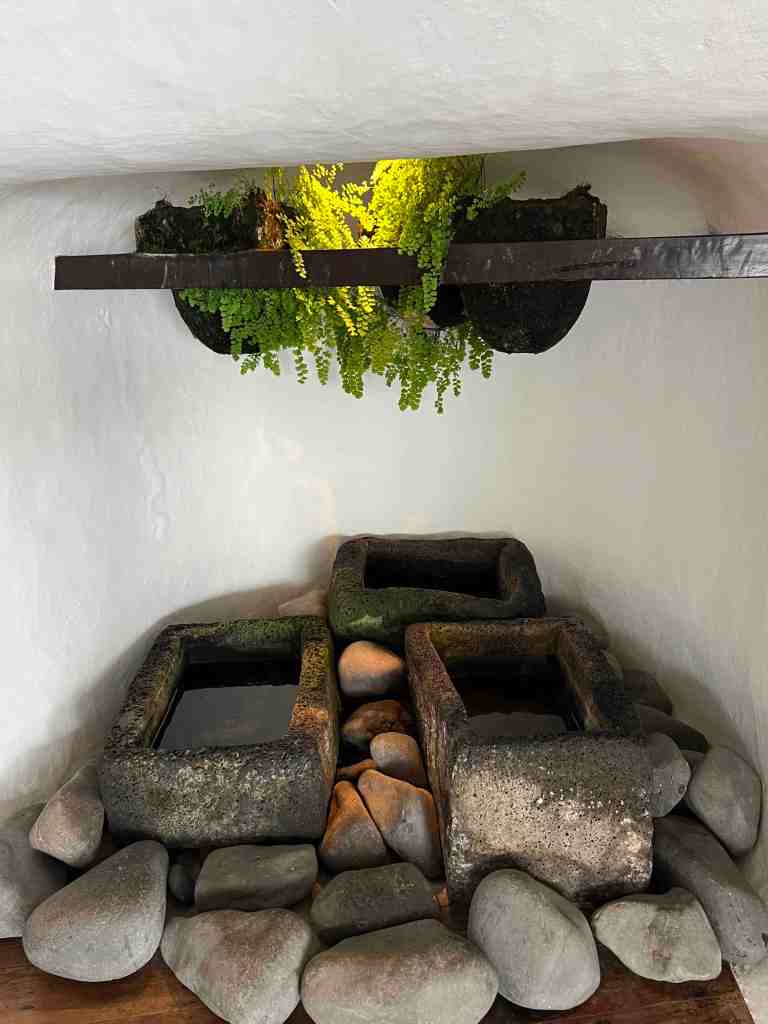
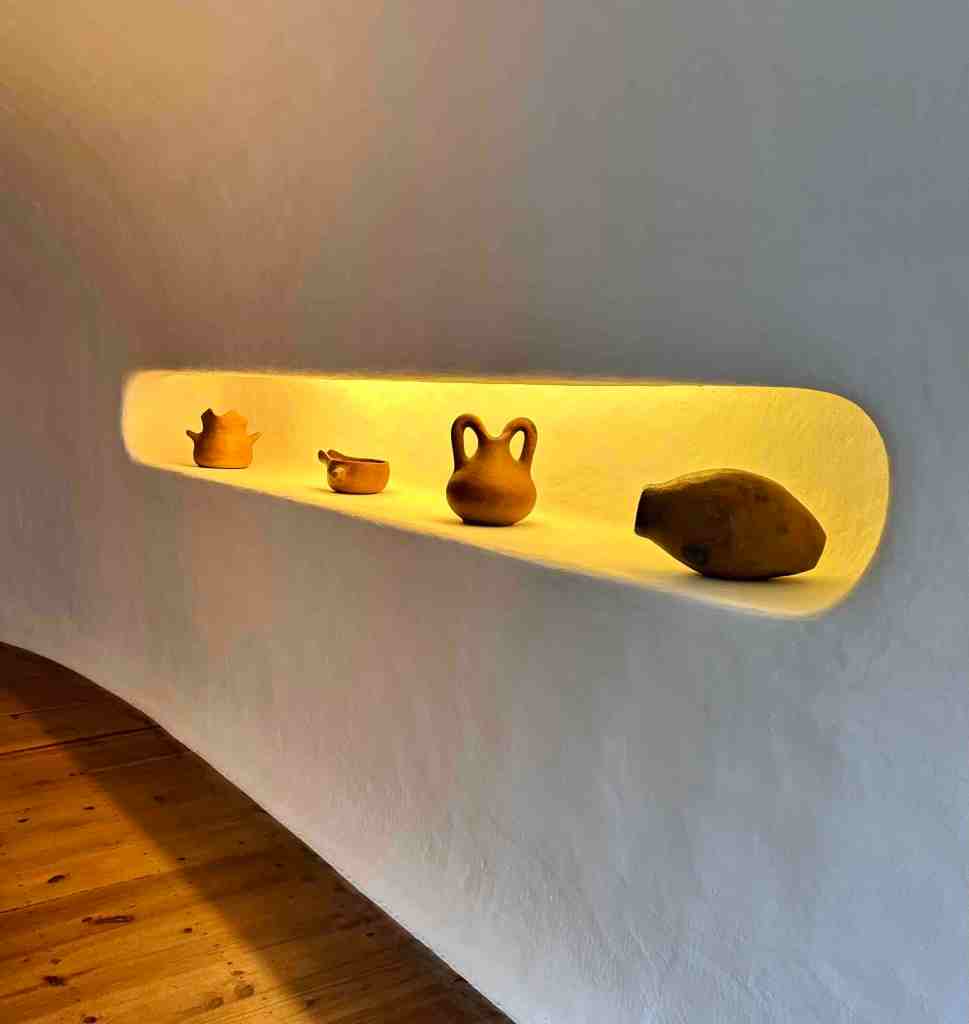
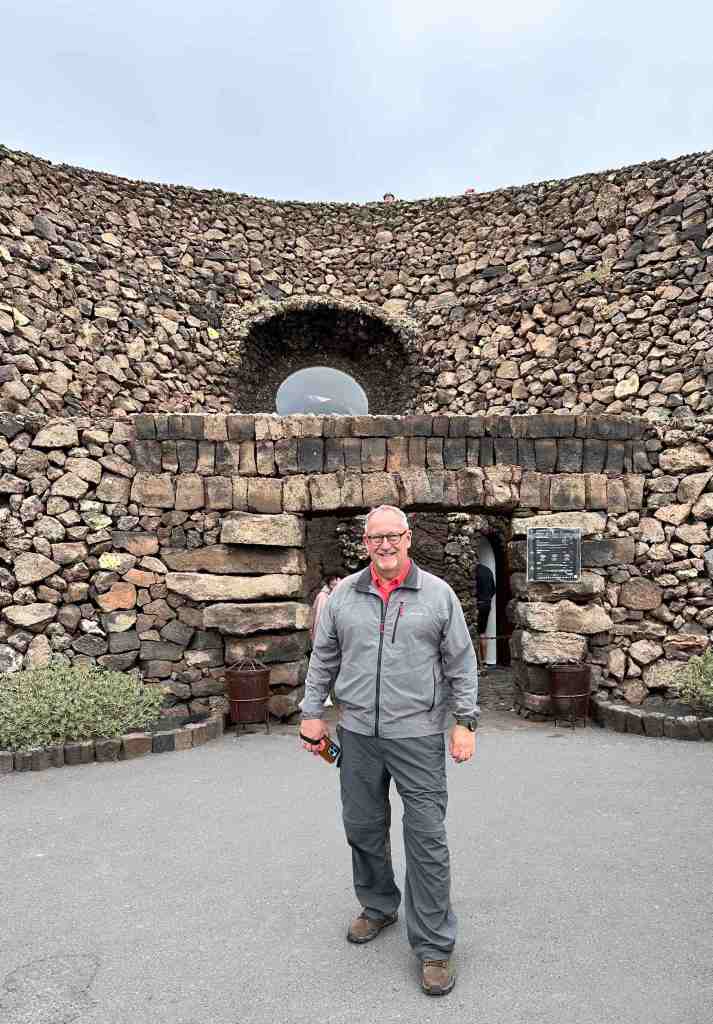
After ascending to the parking lot, we entered a volcanic rock structure. Rough on the outside but a surprise on the inside. The structure includes a museum and gift shop. It was time to head back to port, so we boarded the bus and enjoyed the views of this very unique island.
We enjoyed our visit to Lanzarote and look forward to visiting another of the Canary Islands tomorrow.
 Bob and Karen's Wild Hair Journey
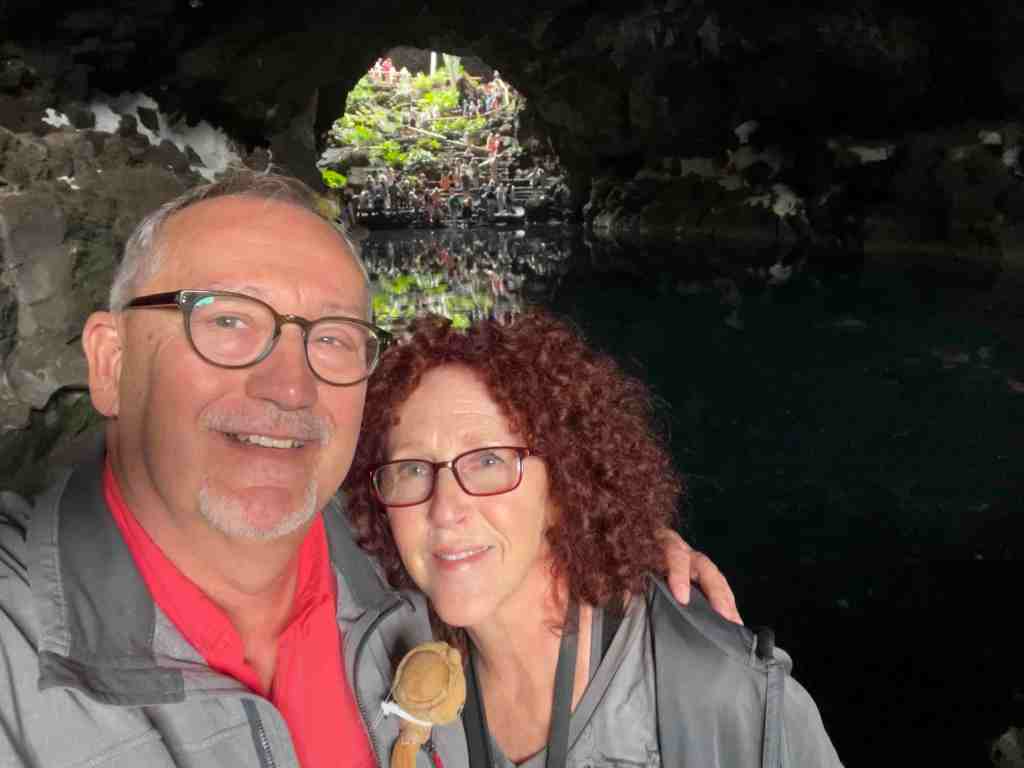
Fabulous pics and description (as always). Loved little Groot in Bob’s jacket – glad he didn’t fall in the water in the cave!
LikeLike